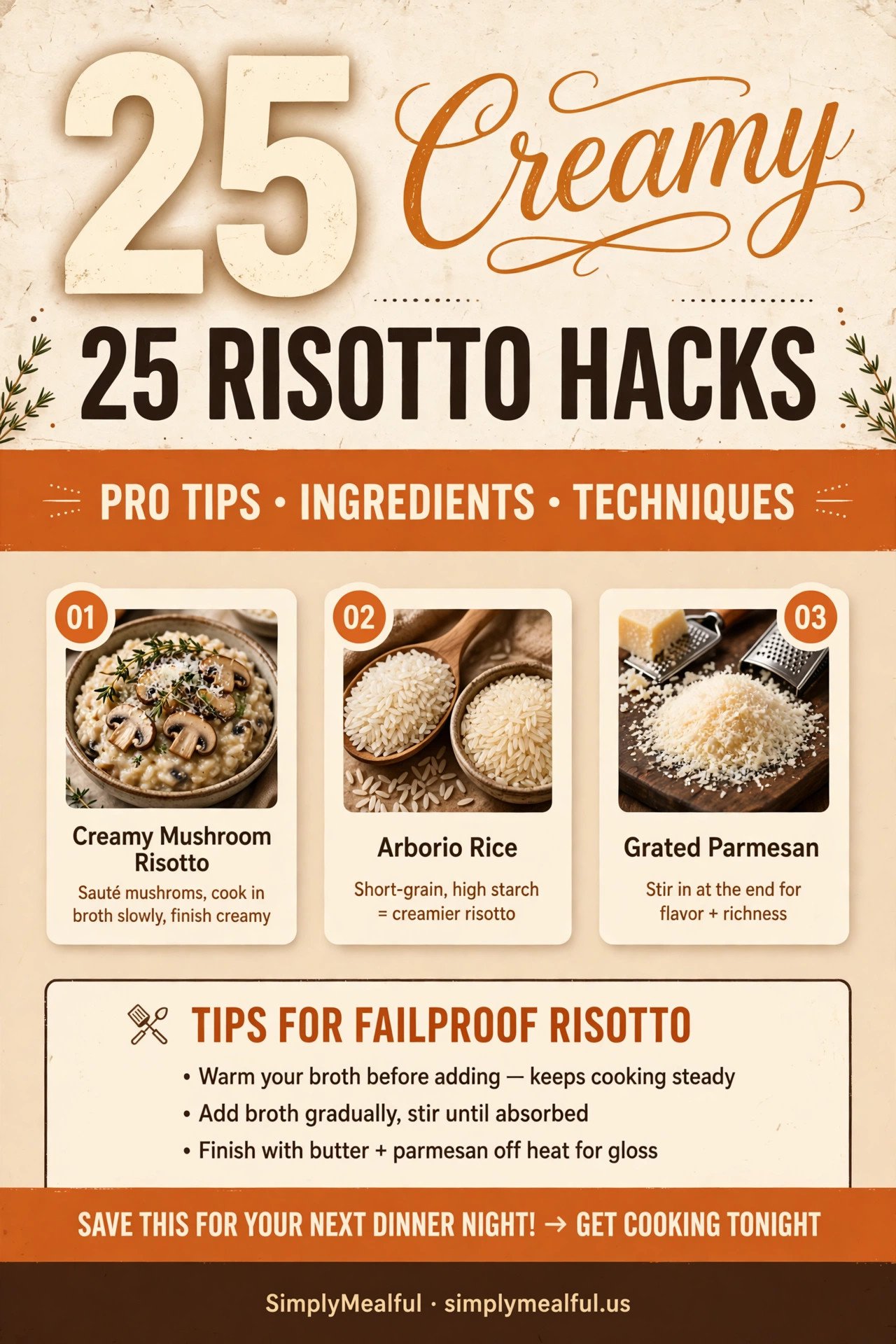
25 Risotto Hacks for Creamy, Restaurant-Quality Risotto at Home
Risotto intimidates home cooks, but it is mostly patience plus a few key techniques. These 25 risotto hacks cover rice choice, stock temperature, stirring, and finishing so your risotto turns out creamy and al dente — never gluey or soupy.
1. Use Arborio or Carnaroli Rice
Use Arborio or Carnaroli Rice — Buy Arborio or Carnaroli rice, never long-grain or basmati. Short-grain risotto rice releases starch slowly as it cooks, and that starch is what makes risotto creamy without any cream.
2. Keep Stock Hot, Always
Keep Stock Hot, Always — Keep the stock at a gentle simmer in a separate pot the whole time. Cold stock dropped into hot rice shocks the grains, stalls cooking, and turns the texture gummy instead of creamy.
3. Toast the Rice First
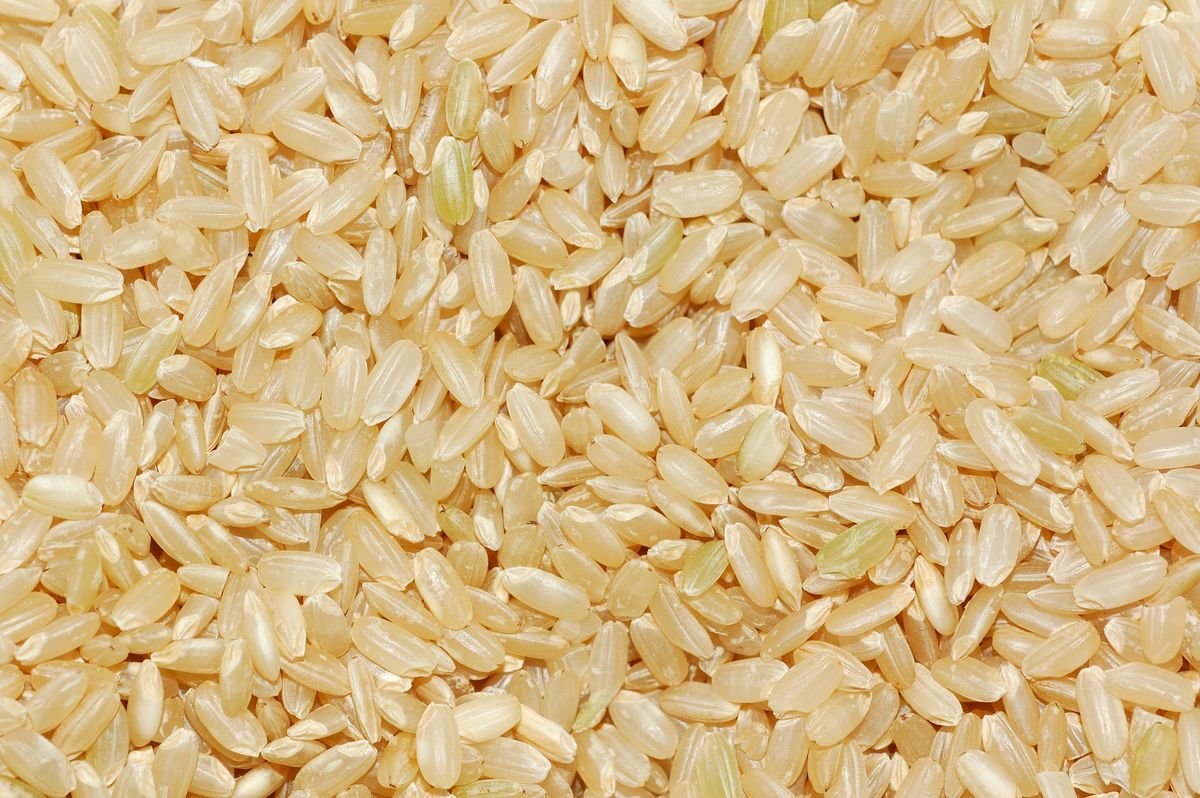
Toast the Rice First — Toast the dry rice in butter or oil for 2 minutes until it smells nutty and the grains look translucent at the edges. Toasting builds a nutty base flavor and helps the grains stay distinct.
4. Deglaze with White Wine
Deglaze with White Wine — Pour in a glass of dry white wine after toasting and stir until it mostly evaporates. The wine adds acidity that cuts the richness, and the alcohol carries flavors that water cannot.
5. Add Stock One Ladle at a Time
Add Stock One Ladle at a Time — Add stock a ladle at a time, stirring until each addition is nearly absorbed before adding more. This slow hydration coaxes starch out gradually — the whole secret of creamy risotto.
6. Stir Often, Not Constantly
Stir Often, Not Constantly — Stir every minute or so, not frantically nonstop. You need enough agitation to release starch, but constant violent stirring breaks grains and turns risotto into wallpaper paste.
7. Cook to Al Dente, Then Stop
Cook to Al Dente, Then Stop — Taste early and often from minute 15 onward. Risotto is done when the grains are creamy on the outside with a slight bite in the center — carryover cooking finishes it, so pull it just before you think it is ready.

8. Finish with Cold Butter (Mantecatura)
Finish with Cold Butter (Mantecatura) — Off the heat, beat in cold butter cubes vigorously until glossy. This final emulsion step, called mantecatura, is what gives restaurant risotto its silky shine and luxurious mouthfeel.
9. Add Parmesan Off the Heat
Add Parmesan Off the Heat — Stir parmesan in after the butter, off the heat. Cheese added over active heat clumps and turns stringy; off the heat it melts smoothly into the creamy base.
10. Serve on Warm, Flat Plates
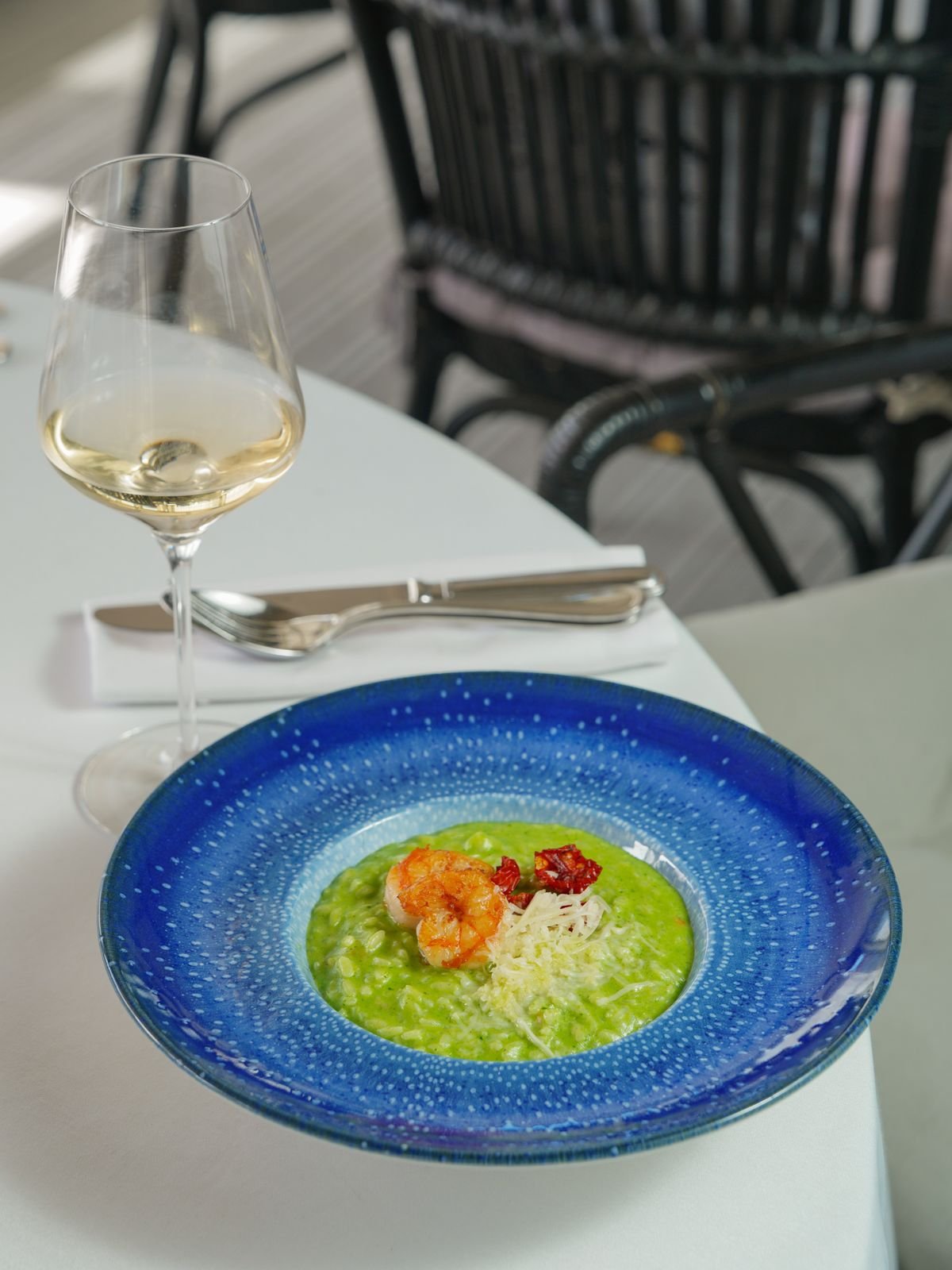
Serve on Warm, Flat Plates — Ladle risotto onto warm, wide, flat plates and tap the plate to spread it. Risotto should flow like a wave, not sit in a mound — a flat plate shows off the creamy, all'onda texture.
11. Never Rinse Risotto Rice
Never Rinse Risotto Rice — Never rinse Arborio or Carnaroli before cooking. The surface starch you would wash away is exactly what creates the creamy sauce — rinsing is the fastest way to ruin risotto.
12. Use a Wide, Heavy Pot
Use a Wide, Heavy Pot — Cook risotto in a wide, heavy-bottomed pot or Dutch oven, not a tall saucepan. A wide surface lets liquid evaporate evenly and gives you room to stir without sloshing.

13. Add Saffron Soaked in Stock
Add Saffron Soaked in Stock — Steep saffron threads in a ladle of warm stock for 10 minutes before adding. Soaking blooms the color and flavor evenly; threads tossed in dry distribute patchily and waste expensive saffron.
14. Roast Vegetables Separately
Roast Vegetables Separately — Roast mushrooms, squash, or asparagus separately and fold them in at the end. Vegetables cooked in the risotto release water and dilute the creaminess; roasted ones keep their texture and flavor.
15. Make Stock from Scraps
Make Stock from Scraps — Simmer vegetable peels, mushroom stems, and parmesan rinds into a quick stock. Homemade stock adds a depth that boxed stock cannot match, and it costs nothing but the scraps you would throw away.
16. Do Not Add Cream
Do Not Add Cream — Real risotto gets its creaminess from starch, butter, and cheese — never cream. Cream dulls the rice flavor, makes the dish heavy, and masks the delicate texture you worked to build.
17. Rest Risotto Two Minutes Before Serving
Rest Risotto Two Minutes Before Serving — Let risotto rest, covered, for 2 minutes after the mantecatura. The brief rest lets the starches settle into a cohesive creaminess instead of a loose, soupy pool.
18. Fix Stiff Risotto with Hot Stock
Fix Stiff Risotto with Hot Stock — If risotto tightens up before serving, stir in a splash of hot stock until it flows again. Risotto waits for no one — it thickens by the minute — so keep hot stock ready until plates are served.
19. Turn Leftovers into Arancini
Turn Leftovers into Arancini — Roll cold leftover risotto around a cube of mozzarella, bread, and fry. Arancini are the ultimate risotto leftovers: crispy outside, molten and creamy inside, and better than the original for many people.
20. Add Lemon Zest at the End
Add Lemon Zest at the End — Finish with lemon zest and a squeeze of juice off the heat. Bright citrus lifts the richness and makes every other flavor — butter, cheese, stock — taste more vivid.
21. Use Shallots Instead of Onion
Use Shallots Instead of Onion — Cook minced shallots instead of onion as the base. Shallots are sweeter and more delicate, dissolving into the rice without the sharper bite that diced onion can leave behind.
22. Season Stock, Not Just Rice
Season Stock, Not Just Rice — Taste and season your stock before you start ladling. Under-seasoned stock makes under-seasoned risotto no matter how much salt you add later, because the rice absorbs stock throughout cooking.

23. Keep Portions Modest
Keep Portions Modest — Serve risotto as a first course or a modest main with salad. A huge mound of rich risotto overwhelms the palate; a proper portion leaves you satisfied, not weighed down.
24. Add Peas in the Last Two Minutes
Add Peas in the Last Two Minutes — Stir frozen peas in during the final 2 minutes of cooking. They cook perfectly in the residual heat, stay bright green, and add sweet pops of color without watering the risotto down.
25. Freeze Risotto Flat in Bags
Freeze Risotto Flat in Bags — Freeze leftover risotto flat in zip bags for easy reheating. Reheat with a splash of stock and a knob of butter, stirring until creamy again — it comes back remarkably close to fresh.