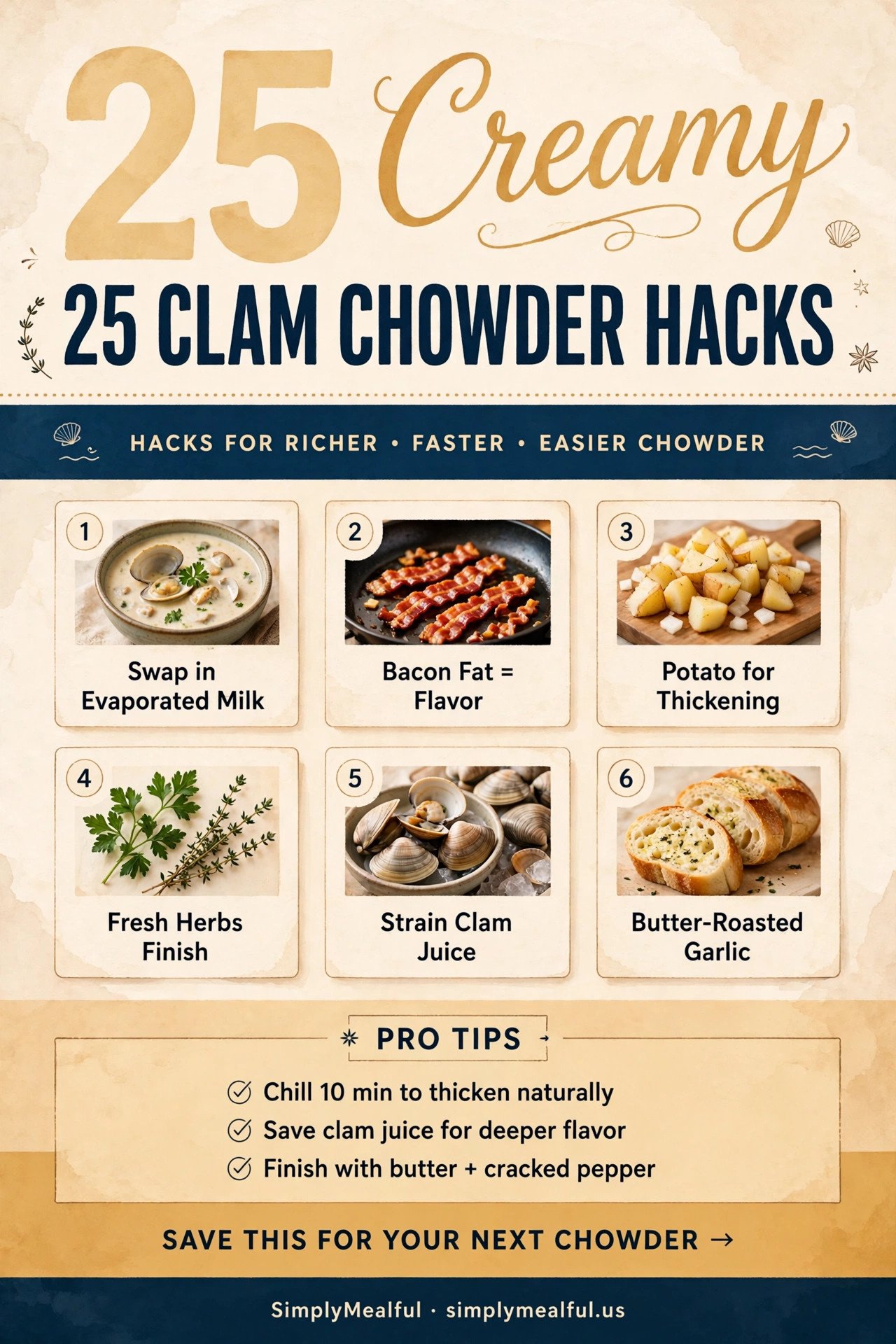
25 Clam Chowder Hacks for Thick, Creamy, Restaurant-Style Chowder
Clam chowder should be thick enough to coat a spoon, packed with tender clams, and never floury or fishy. These 25 hacks cover clam prep, potato choice, thickening, and finishing so your chowder tastes like a New England classic.
1. Use Fresh Clams When Possible
Use Fresh Clams When Possible — Fresh littleneck or cherrystone clams give chowder a clean ocean sweetness that canned clams cannot match. Steam them open, chop the meat, and save every drop of the briny cooking liquid for the pot.
2. Save All the Clam Liquor
Save All the Clam Liquor — Strain and save the liquid from steaming clams — it is liquid gold. Clam liquor carries the entire ocean flavor of the chowder; discarding it and using water leaves the soup tasting flat.
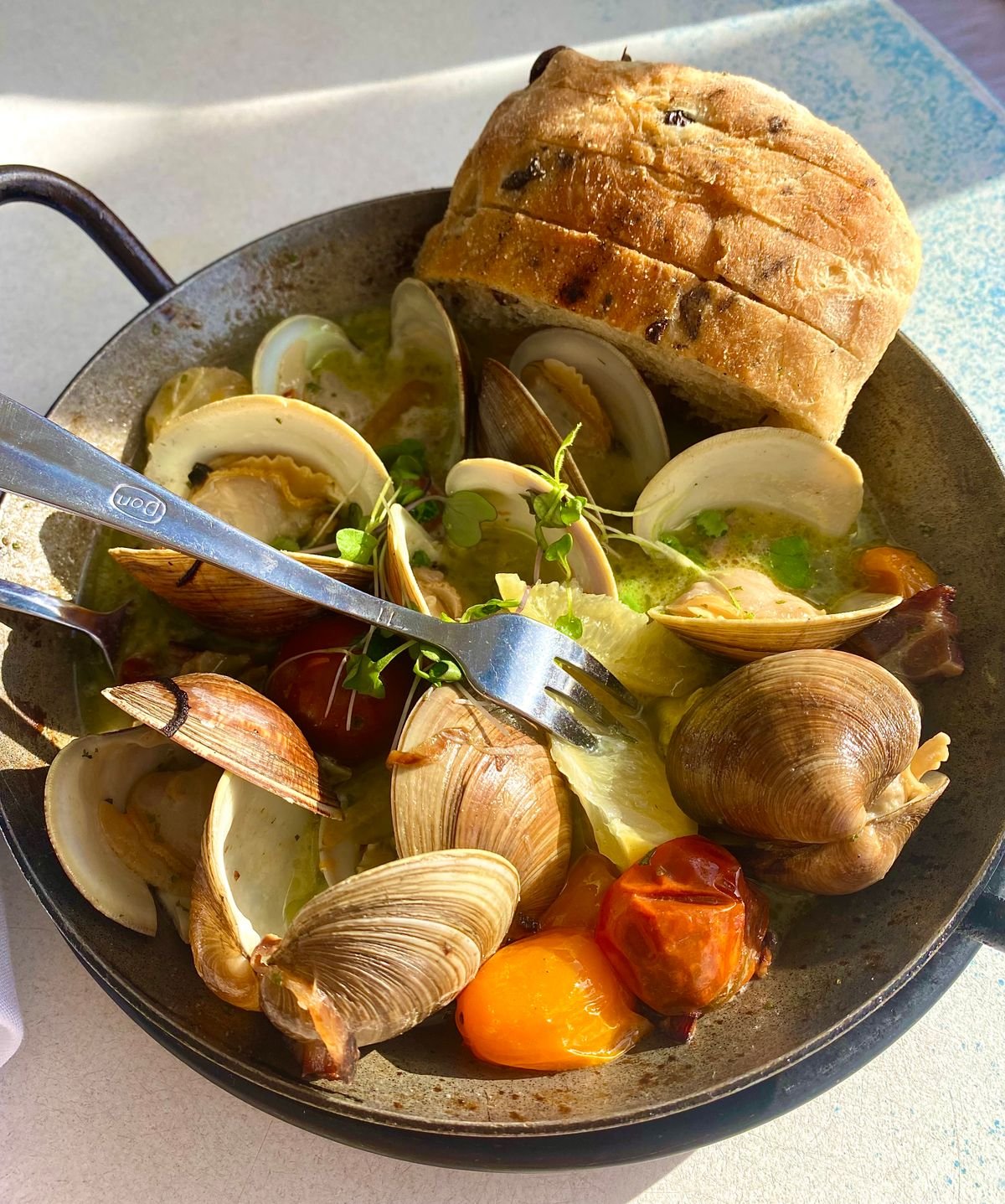
3. Discard Any Clams That Stay Closed
Discard Any Clams That Stay Closed — After steaming, throw away any clam that does not open. A closed clam was dead before cooking and can be unsafe; never pry one open to use it.
4. Chop Clams, Do Not Leave Whole
Chop Clams, Do Not Leave Whole — Chop steamed clams into bite-size pieces before adding them. Whole clams are awkward in a spoon and chewy; chopped clams distribute evenly so every spoonful has seafood.
5. Add Clams at the Very End
Add Clams at the Very End — Stir clams in during the last 2 to 3 minutes of cooking, off high heat. Clams cooked for an hour turn into rubber erasers; brief gentle warming keeps them tender and sweet.
6. Use Yukon Gold Potatoes
Use Yukon Gold Potatoes — Yukon Gold potatoes hold their shape while turning creamy at the edges. Russets disintegrate into starch and red potatoes stay too waxy; Yukon Golds give the ideal chowder texture.
7. Cut Potatoes Small and Even
Cut Potatoes Small and Even — Dice potatoes into half-inch cubes so they cook evenly in 12 to 15 minutes. Uneven pieces mean some dissolve while others stay hard — uniform dice, uniform chowder.

8. Render Bacon First for the Base
Render Bacon First for the Base — Cook diced bacon until crisp, remove it, and build the chowder in the rendered fat. Bacon fat is the traditional flavor base, and the crisp bits sprinkled on top add a smoky crunch.
9. Cook Flour in the Fat for Two Minutes
Cook Flour in the Fat for Two Minutes — Whisk flour into the bacon fat and vegetables and cook it for a full 2 minutes before adding liquid. Raw flour tastes pasty; cooked flour thickens cleanly and disappears into the soup.
10. Warm Dairy Before Adding
Warm Dairy Before Adding — Warm the cream and milk before stirring them in. Cold dairy dropped into a hot pot can curdle or separate, especially with acidic clam liquor in the mix; warm dairy blends smoothly.
11. Never Boil Chowder After Dairy
Never Boil Chowder After Dairy — Once cream is in, keep the chowder at a gentle simmer, never a rolling boil. Boiling curdles cream, toughens clams, and breaks the emulsion you worked to build.
12. Use Half Cream, Half Milk
Use Half Cream, Half Milk — Use a mix of heavy cream and whole milk instead of all cream. All cream makes chowder heavy and greasy; the milk lightens it while the cream keeps it rich and silky.
13. Add a Splash of Sherry
Add a Splash of Sherry — Finish with a tablespoon of dry sherry stirred in off the heat. Sherry adds a nutty, sophisticated depth that makes homemade chowder taste like a restaurant version.
14. Season with Old Bay, Lightly
Season with Old Bay, Lightly — A pinch of Old Bay seasoning adds the classic coastal warmth — celery salt, paprika, and pepper — without overpowering the clams. Add it early so the flavors meld, and taste before adding more.
15. Let Chowder Rest Before Serving
Let Chowder Rest Before Serving — Rest chowder off the heat for 10 minutes before serving. The rest lets the starches settle, the flavors marry, and the temperature even out to a perfect eating warmth.
16. Fix Thin Chowder with Potato Starch
Fix Thin Chowder with Potato Starch — If the chowder is thin, mash a few cooked potato cubes against the pot wall and stir. Potato starch thickens naturally and tastes like chowder, unlike a floury slurry added at the end.
17. Fix Salty Chowder with Potato
Fix Salty Chowder with Potato — Added too much salt? Simmer a peeled, quartered potato in the chowder for 15 minutes, then remove it. The potato absorbs some salt — not all, but enough to rescue a slightly over-salted pot.
18. Use Bottled Clam Juice for Canned Clams
Use Bottled Clam Juice for Canned Clams — If using canned clams, buy bottled clam juice and use it as part of the liquid. Canned clam liquid alone is thin and tinny; bottled juice restores the briny depth.
19. Add Corn for Sweetness
Add Corn for Sweetness — Stir in a cup of corn kernels near the end for sweetness and color. Corn is a classic New England addition that balances the salt and richness beautifully.
20. Serve with Oyster Crackers
Serve with Oyster Crackers — Serve chowder with oyster crackers, not bread. The small, crisp crackers are the traditional companion — they float, stay crunchy briefly, and add a salty crunch to each spoonful.
21. Make Chowder a Day Ahead
Make Chowder a Day Ahead — Chowder tastes better the next day after the flavors meld overnight. Cool it quickly, refrigerate, and reheat gently without boiling — it will taste like it simmered twice as long.
22. Freeze Chowder Without Dairy
Freeze Chowder Without Dairy — Freeze the chowder base before adding cream, then add cream when reheating. Dairy-based soups separate and turn grainy when frozen; the base alone freezes perfectly for months.
23. Add Thyme, Not Dill
Add Thyme, Not Dill — Season chowder with fresh thyme, not dill. Thyme's earthy warmth complements clams and bacon; dill's sharp anise note fights the creamy base and belongs in other seafood dishes.
24. Use a Heavy Pot for Even Heat
Use a Heavy Pot for Even Heat — Cook chowder in a heavy Dutch oven that distributes heat evenly. Thin pots scorch the cream base on the bottom, and scorched dairy ruins the whole batch with a burnt taste.
25. Turn Leftovers into a Bread Bowl
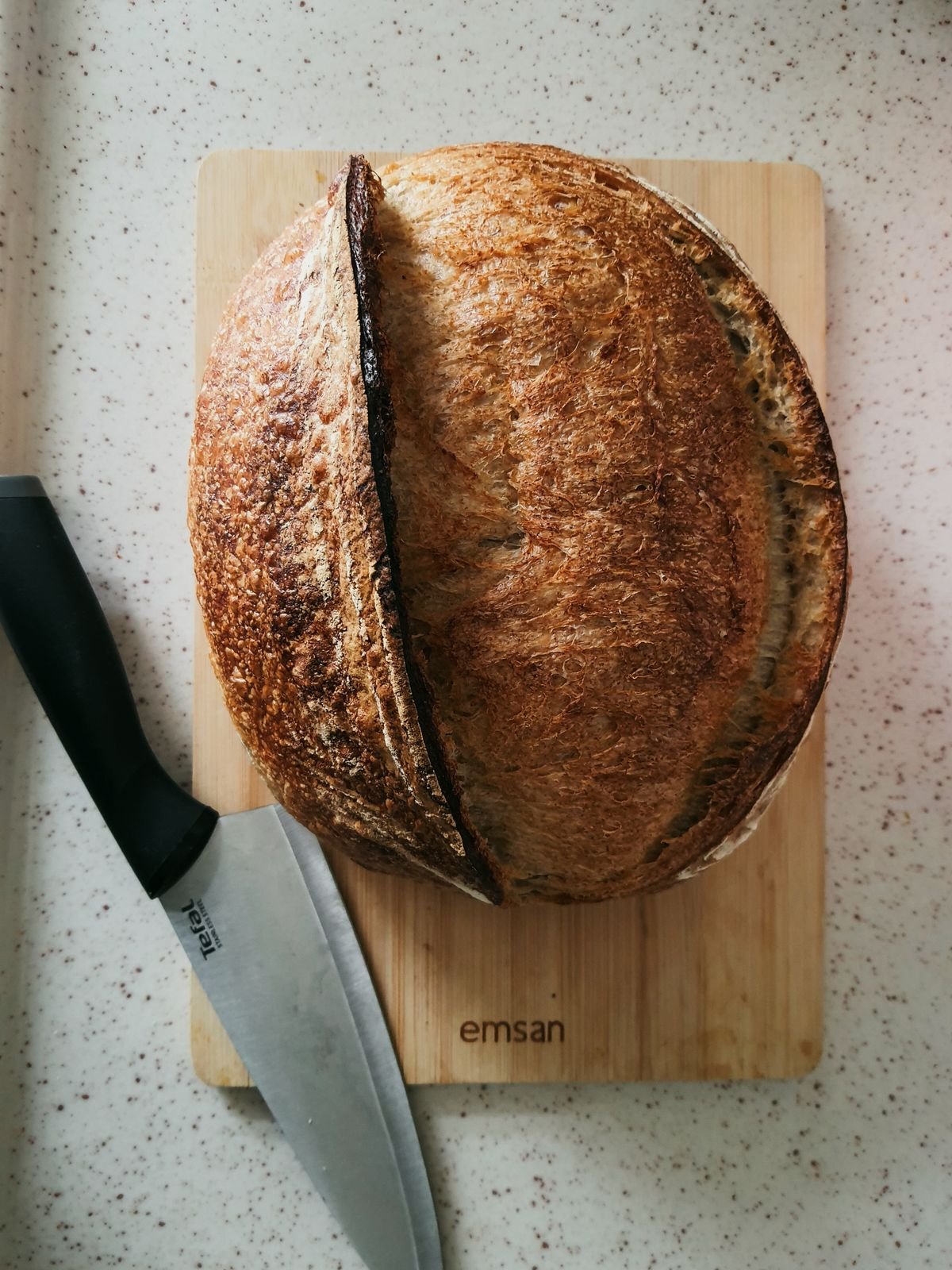
Turn Leftovers into a Bread Bowl — Ladle leftover chowder into a hollowed sourdough round. The bread soaks up the creamy broth as you eat, and the presentation turns an ordinary leftover night into something special.