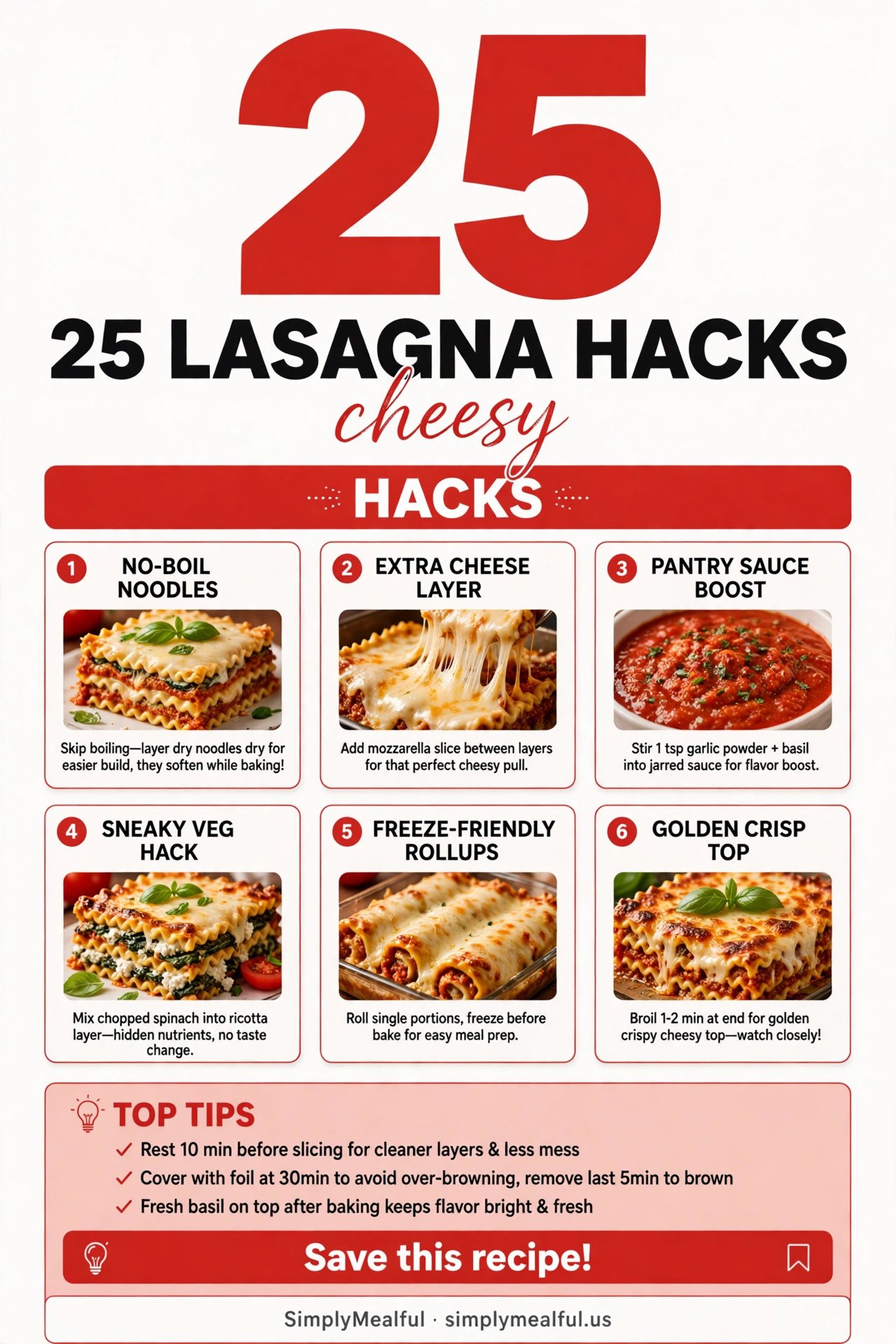
25 Lasagna Hacks for Cheesy, Never-Watery Layers Every Time
Lasagna should be rich, cheesy, and sliceable — not a watery slide of noodles. These 25 lasagna hacks cover no-boil noodles, sauce that actually sticks, cheese that melts without greasiness, and make-ahead tricks, so every pan comes out of the oven looking like a restaurant dish.
1. Salt Your Ricotta Like a Pro
Salt Your Ricotta Like a Pro — Season ricotta with salt, pepper, and a pinch of nutmeg before layering, and taste it on a spoon first. Bland ricotta is the number one reason lasagna tastes flat, and fixing it after baking is impossible.
2. No-Boil Noodles Need Extra Sauce
No-Boil Noodles Need Extra Sauce — No-boil sheets absorb liquid as they bake, so add about a cup more sauce than you think you need. A dry-looking pan before the oven becomes a perfectly saucy lasagna after 45 minutes.
3. Par-Cook Regular Noodles Only 5 Minutes
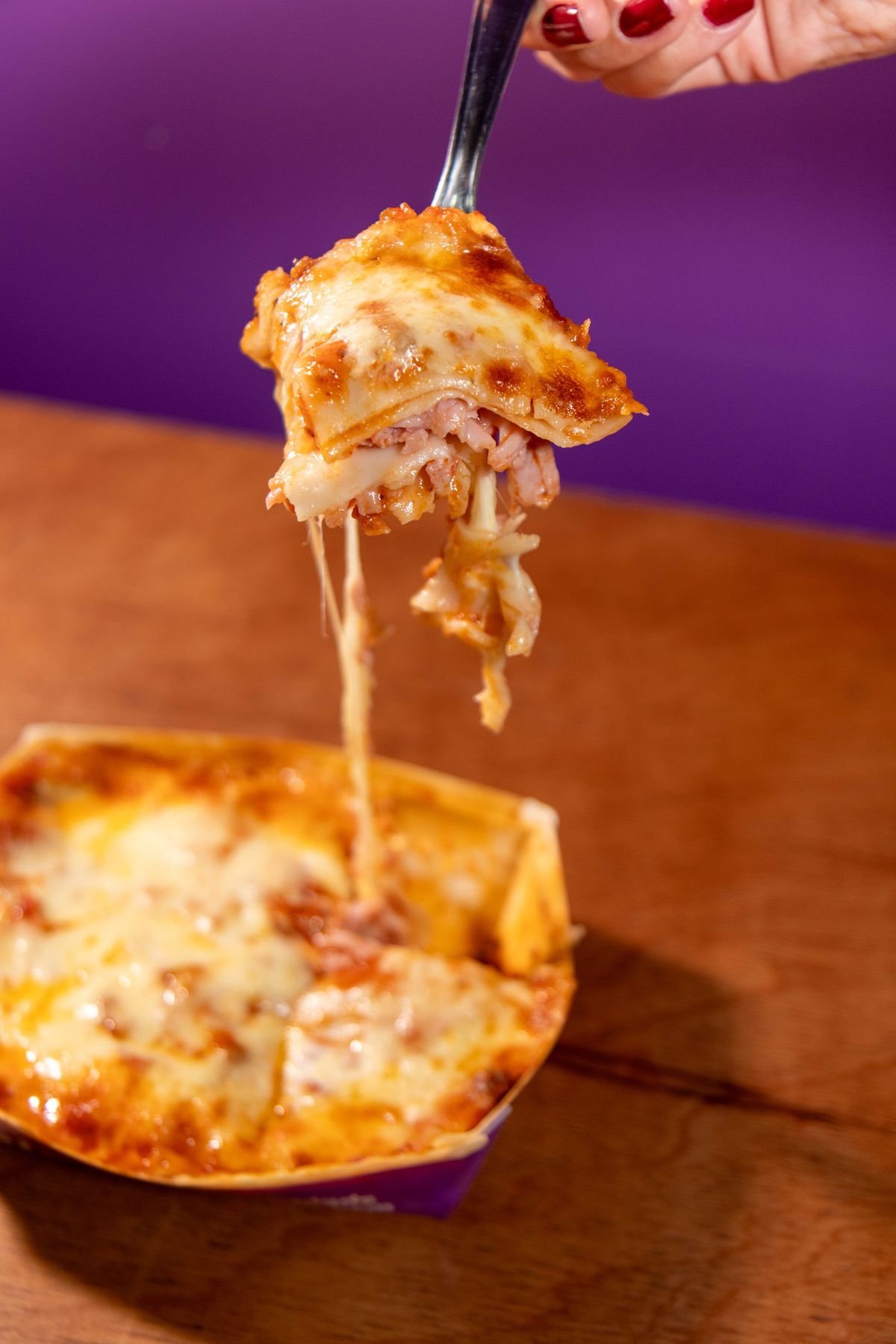
Par-Cook Regular Noodles Only 5 Minutes — Boil standard lasagna noodles for just 5 minutes, until still quite firm. They finish cooking in the sauce, and you avoid the mushy, collapsing layers that fully cooked noodles cause.
4. Drain Spinach Until It Is Bone Dry
Drain Spinach Until It Is Bone Dry — Squeeze thawed spinach in a clean kitchen towel until not a drop comes out. Even a little leftover water turns the cheese layer runny and makes slices slide apart.
5. Brown Meat in Batches, Not One Crowd
Brown Meat in Batches, Not One Crowd — Brown sausage or beef in two batches with space in the pan so it sears instead of steams. Properly browned meat adds deep flavor that one grey, steamed batch never will.
6. Add a Spoonful of Tomato Paste to Jarred Sauce
Add a Spoonful of Tomato Paste to Jarred Sauce — Stir a tablespoon of tomato paste into jarred marinara and simmer it 5 minutes. It deepens the flavor, thickens the sauce, and makes store-bought taste convincingly homemade.
7. Use Low-Moisture Mozzarella on Top
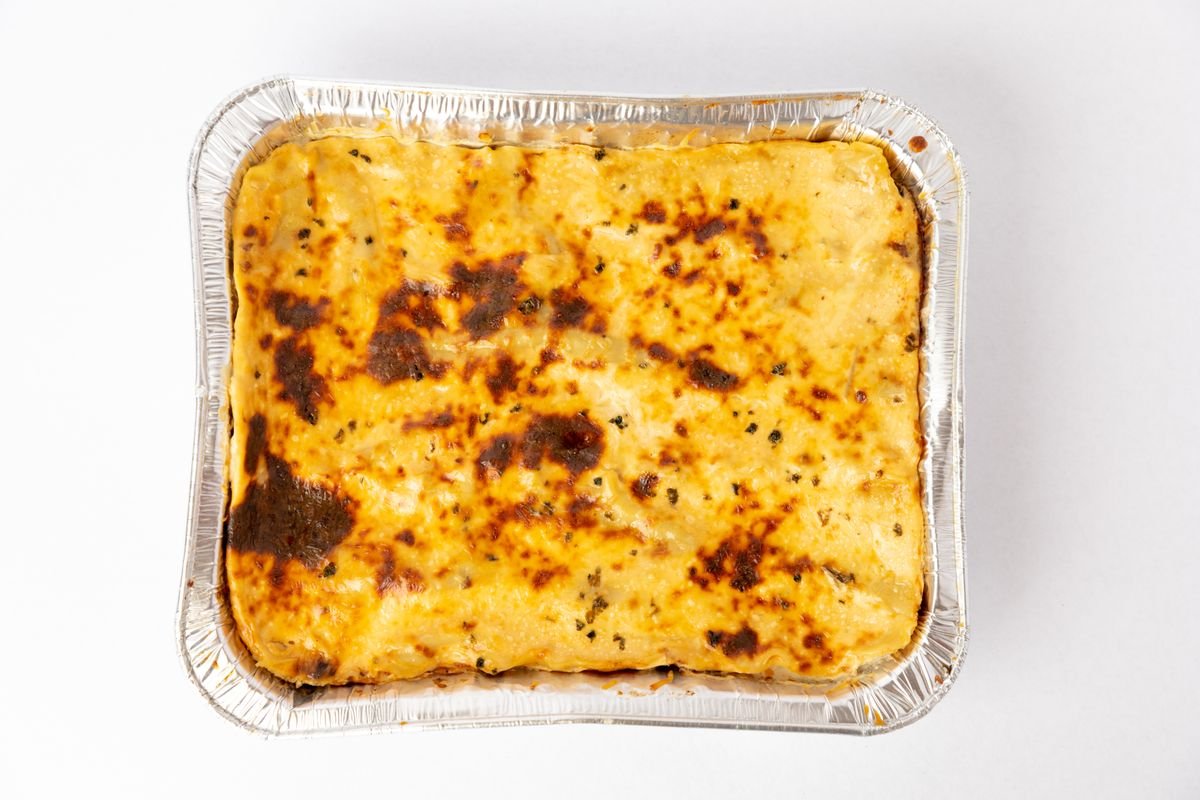
Use Low-Moisture Mozzarella on Top — Fresh mozzarella releases water and makes the top soggy, so save it for the middle and use low-moisture mozzarella on top. It melts evenly and browns into that golden, bubbly crust.
8. Rest Lasagna 20 Minutes Before Cutting
Rest Lasagna 20 Minutes Before Cutting — Let the pan rest at least 20 minutes after baking before slicing. The cheese and sauce set as they cool, so slices hold their shape instead of slumping into a puddle.
9. Line the Pan with Parchment Slings
Line the Pan with Parchment Slings — Lay two strips of parchment across the pan before layering, with ends hanging over the sides. You can lift the whole lasagna out cleanly for beautiful serving slices and easy cleanup.
10. Freeze Individual Slices, Not Whole Pans
Freeze Individual Slices, Not Whole Pans — Cut cooled lasagna into portions, wrap each in plastic then foil, and freeze flat. Single slices reheat in 20 minutes and taste freshly baked, while a whole frozen pan takes over an hour.
11. Layer Sauce First, Always
Layer Sauce First, Always — Spread a thin layer of sauce on the bare pan before the first noodles. It stops sticking, keeps the bottom layer moist, and means no noodle ever bakes dry against the metal.
12. Mix an Egg into the Ricotta
Mix an Egg into the Ricotta — Beat one egg into the ricotta mixture to help it bind and set. Without it, the cheese layer stays loose and oozes out when you cut; with it, slices stay neat and tall.
13. Grate Your Own Cheese
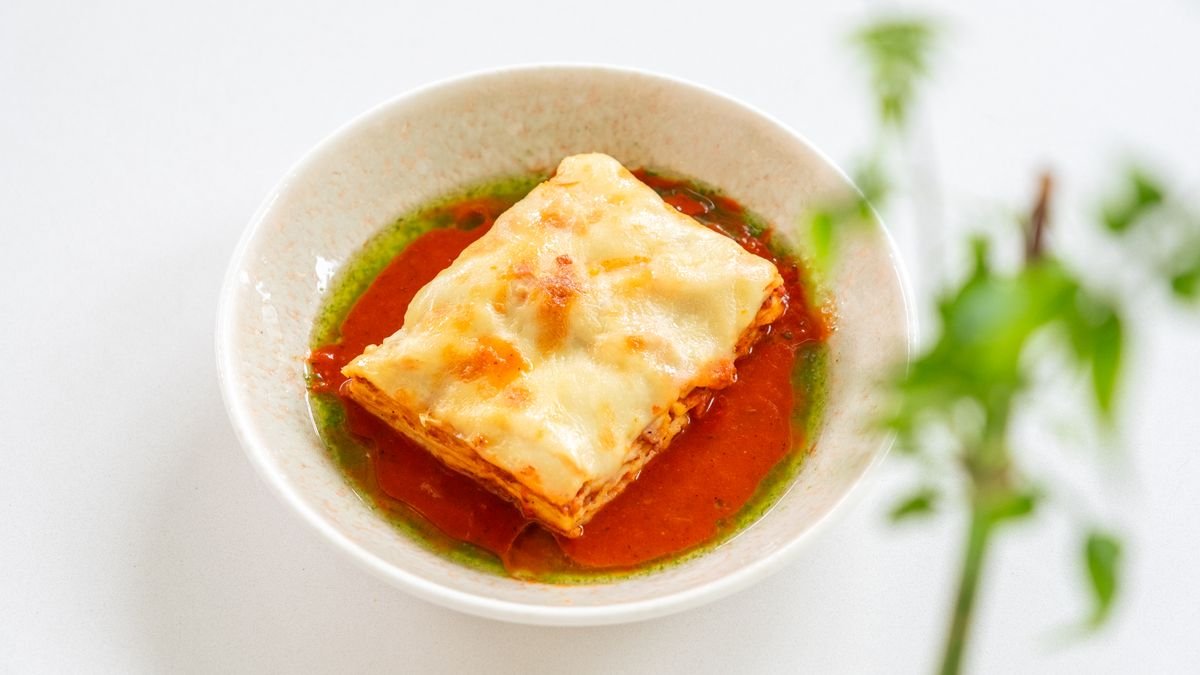
Grate Your Own Cheese — Pre-shredded cheese is coated in anti-caking starch that melts grainy and dull. Grating a block yourself takes two minutes and gives you noticeably smoother, stretchier cheese.
14. Simmer Sauce Until a Spoon Leaves a Trail
Simmer Sauce Until a Spoon Leaves a Trail — Cook sauce until dragging a spoon through it leaves a visible trail that closes slowly. Sauce that is too thin is the main cause of watery lasagna, and this test catches it before assembly.
15. Add Basil at the End, Not the Start
Add Basil at the End, Not the Start — Stir torn fresh basil into the sauce off the heat, not during a long simmer. Long cooking turns basil bitter and dull, while late addition keeps it bright and fragrant.
16. Use a Smaller, Deeper Pan for Tall Slices
Use a Smaller, Deeper Pan for Tall Slices — A 9×9-inch deep pan gives taller, more impressive slices than a wide shallow one, and the middle stays moist. Scale the recipe down slightly rather than spreading it thin.
17. Cover Tight with Foil for the First Bake
Cover Tight with Foil for the First Bake — Bake covered with foil for 35 minutes, then uncovered for 10 to brown. The covered phase steams the noodles tender; uncovering too early dries out the top layer.
18. Oil the Foil Before Covering
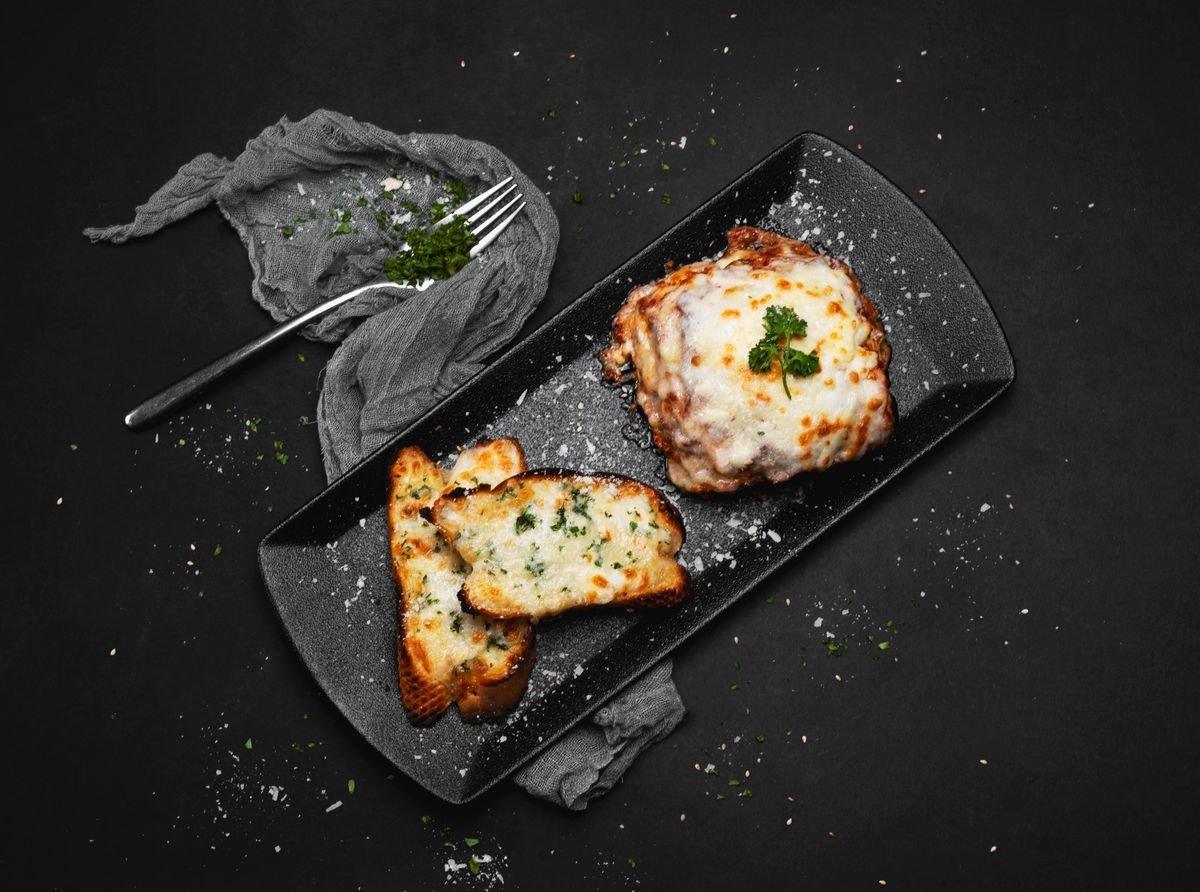
Oil the Foil Before Covering — Spray or brush the underside of the foil with oil before covering the pan. Otherwise the foil sticks to the melted cheese and peels the beautiful top right off.
19. Season Each Layer, Not Just the Sauce
Season Each Layer, Not Just the Sauce — Sprinkle a little salt and pepper over the ricotta and meat layers as you build. Seasoning only the sauce leaves the cheese layers tasting bland by comparison.
20. Let Frozen Lasagna Thaw in the Fridge Overnight
Let Frozen Lasagna Thaw in the Fridge Overnight — Move frozen lasagna to the fridge the night before baking. A fully thawed pan bakes evenly in 40 minutes, while a frozen one stays cold in the middle long after the top browns.
21. Add a Layer of Thinly Sliced Zucchini
Add a Layer of Thinly Sliced Zucchini — Swap one noodle layer for thinly sliced, salted and patted-dry zucchini. It adds vegetable bulk and freshness without watering the dish down, if you salt and drain it first.
22. Use Hot Italian Sausage for Instant Depth
Use Hot Italian Sausage for Instant Depth — Half sweet, half hot Italian sausage gives lasagna a warm, complex flavor with no extra spices needed. Remove the casings and crumble it fine so it distributes evenly.
23. Reheat Slices in a Covered Skillet
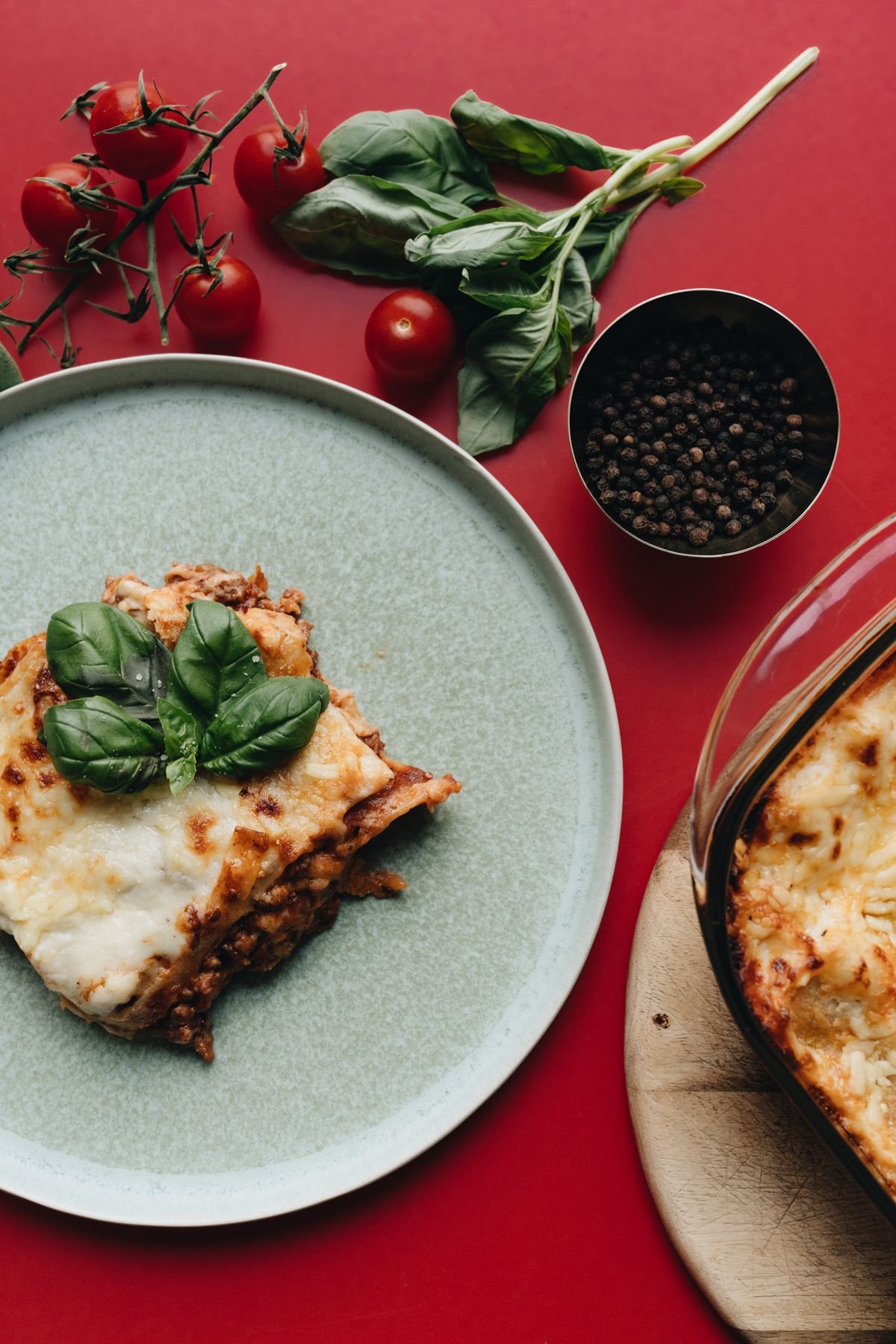
Reheat Slices in a Covered Skillet — Reheat a slice in a covered skillet over medium-low heat with a splash of water. It crisps the bottom, melts the top, and beats the microwave, which makes noodles rubbery.
24. Label Freezer Pans with Bake Time
Label Freezer Pans with Bake Time — Write the bake time and temperature on the foil before freezing. Future-you will not have to guess, and a frozen pan baked at the wrong temperature is the easiest lasagna mistake to avoid.
25. Serve with a Sharp, Simple Salad
Serve with a Sharp, Simple Salad — Pair rich lasagna with a lemony arugula salad and crusty bread. The acid cuts through the cheese and resets your palate, so the second slice tastes as good as the first.