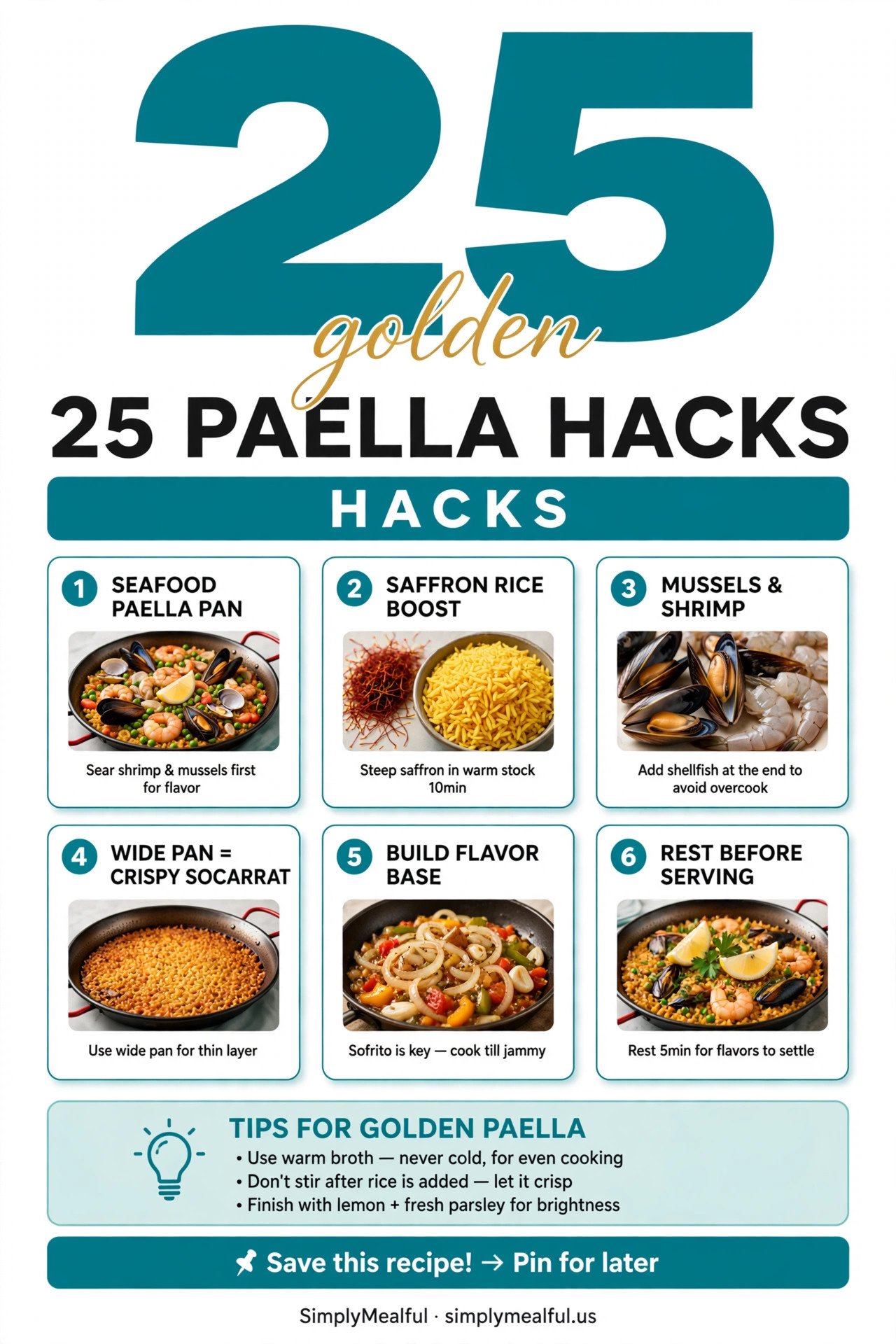
25 Paella Hacks for Perfect Socarrat and Saffron Rice
Paella is Spain's most famous rice dish — saffron-scented, loaded with seafood and vegetables, and crowned with crispy socarrat. These 25 paella hacks cover the right rice, pan, broth, and heat, so your paella gets that prized crispy bottom every time.
1. Use Bomba Rice for Authentic Texture
Use Bomba Rice for Authentic Texture — Use bomba or Calasparra rice, which absorbs three times its volume in broth without getting mushy. Regular long-grain rice cannot absorb enough flavor and turns sticky.
2. Use a Wide, Shallow Paella Pan
Use a Wide, Shallow Paella Pan — A wide, shallow pan maximizes the rice's contact with heat and creates more socarrat. A deep pot steams the rice unevenly and gives you risotto, not paella.

3. Bloom Saffron in Warm Broth
Bloom Saffron in Warm Broth — Steep saffron threads in warm broth for 15 minutes before adding it to the pan. Blooming releases the saffron's color and aroma far better than adding dry threads directly.
4. Never Stir Paella After Adding Rice
Never Stir Paella After Adding Rice — Once the rice and broth are in, do not stir. Stirring releases starch and makes the rice creamy like risotto, while undisturbed rice stays separate and forms socarrat.
5. Use Hot Broth, Not Cold
Use Hot Broth, Not Cold — Add hot, simmering broth to the pan so cooking never stalls. Cold broth drops the temperature, extends cooking time, and makes the rice cook unevenly.
6. Listen for the Crackle of Socarrat
Listen for the Crackle of Socarrat — In the last few minutes, listen for a faint crackling sound from the pan. That crackle means the bottom rice is crisping into socarrat — the most prized part of paella.
7. Rest Paella Covered for 10 Minutes
Rest Paella Covered for 10 Minutes — Cover the pan with a clean towel and rest it for 10 minutes after cooking. Resting lets the rice finish steaming and the flavors settle before serving.

8. Use Smoked Paprika, Not Sweet Only
Use Smoked Paprika, Not Sweet Only — Use smoked paprika (pimentón) for the sofrito base. Sweet paprika adds color, but smoked paprika adds the deep, woodsy flavor that defines Spanish cooking.
9. Make Sofrito Low and Slow
Make Sofrito Low and Slow — Cook onion, tomato, and garlic low and slow until they form a dark, jammy paste. A rushed sofrito tastes raw and acidic, while a slow one adds sweetness and depth.
10. Arrange Seafood on Top, Do Not Bury It
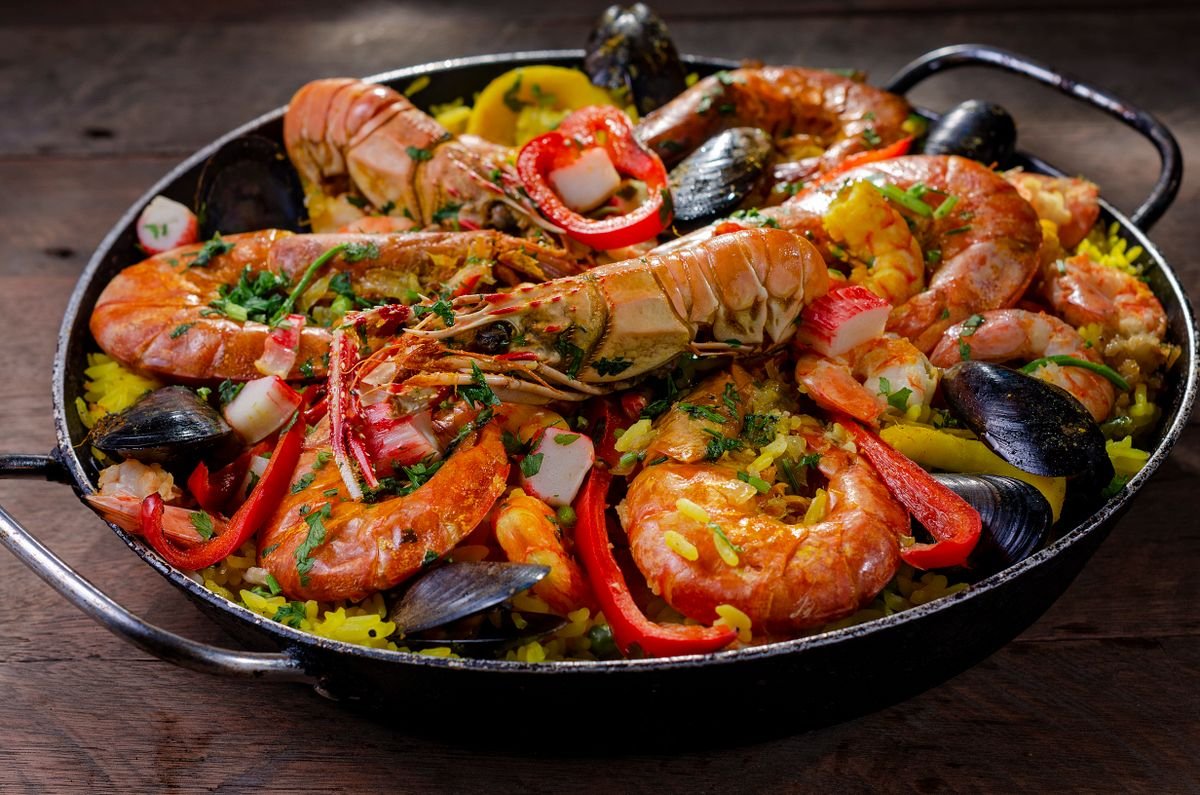
Arrange Seafood on Top, Do Not Bury It — Nestle shrimp and mussels on top of the rice near the end of cooking. Buried seafood overcooks and disappears, while top-placed seafood steams perfectly and looks beautiful.
11. Use Seafood Stock for Seafood Paella
Use Seafood Stock for Seafood Paella — Make or buy seafood stock instead of chicken stock for seafood paella. The stock is the main flavor carrier, and chicken stock makes seafood paella taste generic.
12. Do Not Overload the Pan
Do Not Overload the Pan — Keep the rice layer no more than about an inch thick. Too much rice in a small pan cooks unevenly, with mushy top layers and undercooked bottom layers.
13. Add Lemon Wedges at Serving
Add Lemon Wedges at Serving — Serve paella with lemon wedges for squeezing over each portion. The acid brightens the rich, saffron rice and cuts through the seafood's richness.
14. Heat the Pan Evenly with Two Burners
Heat the Pan Evenly with Two Burners — If your paella pan is larger than one burner, straddle it across two burners and rotate it periodically. Even heat is essential for even rice cooking and socarrat.
15. Use Frozen Peas for Color
Use Frozen Peas for Color — Scatter frozen peas over the rice in the last 5 minutes. They add pops of green color and sweetness without needing separate cooking.
16. Clean Mussels and Discard Open Ones
Clean Mussels and Discard Open Ones — Scrub mussels, remove their beards, and discard any that stay open after tapping. Closed mussels are alive and safe; open ones may be spoiled.
17. Add Artichoke Hearts for Authenticity
Add Artichoke Hearts for Authenticity — Add quartered artichoke hearts to the sofrito for a traditional Valencian touch. They absorb the saffron broth beautifully and add earthy depth.

18. Do Not Cover During Cooking
Do Not Cover During Cooking — Cook paella uncovered so steam escapes and the rice stays distinct. Covering traps steam and turns the dish into a wet, risotto-like rice.
19. Measure Broth Carefully
Measure Broth Carefully — Use about two cups of broth per cup of bomba rice, measured precisely. Too much broth makes soup, too little leaves crunchy rice, and guessing is the main paella mistake.
20. Let Guests Eat from the Pan
Let Guests Eat from the Pan — In Spain, paella is traditionally eaten straight from the pan with wooden spoons. Serving family-style from the pan is not just authentic — it keeps the socarrat intact.
21. Use Chicken Thighs for Mixed Paella
Use Chicken Thighs for Mixed Paella — For mixed paella, use boneless chicken thighs, which stay juicy through the full cooking time. Breast meat dries out during the long rice cooking.
22. Add Chorizo Sparingly
Add Chorizo Sparingly — A little chorizo adds smoky depth, but too much overpowers the saffron and seafood. Use it as an accent, not the main protein, in seafood paella.

23. Check Doneness by Tasting, Not Timing
Check Doneness by Tasting, Not Timing — Taste a few grains from different parts of the pan to check doneness. Pan size, heat, and rice age all affect timing, so tasting beats the clock.
24. Save Leftover Paella for Arroz al Horno
Save Leftover Paella for Arroz al Horno — Bake leftover paella with beaten egg and cheese for a Spanish baked rice dish. It is a traditional way to use leftovers that tastes completely different and delicious.
25. Buy Saffron in Small Amounts
Buy Saffron in Small Amounts — Buy saffron in small quantities from a reputable source and store it airtight away from light. A little saffron goes a long way, and stale saffron adds color but no flavor.