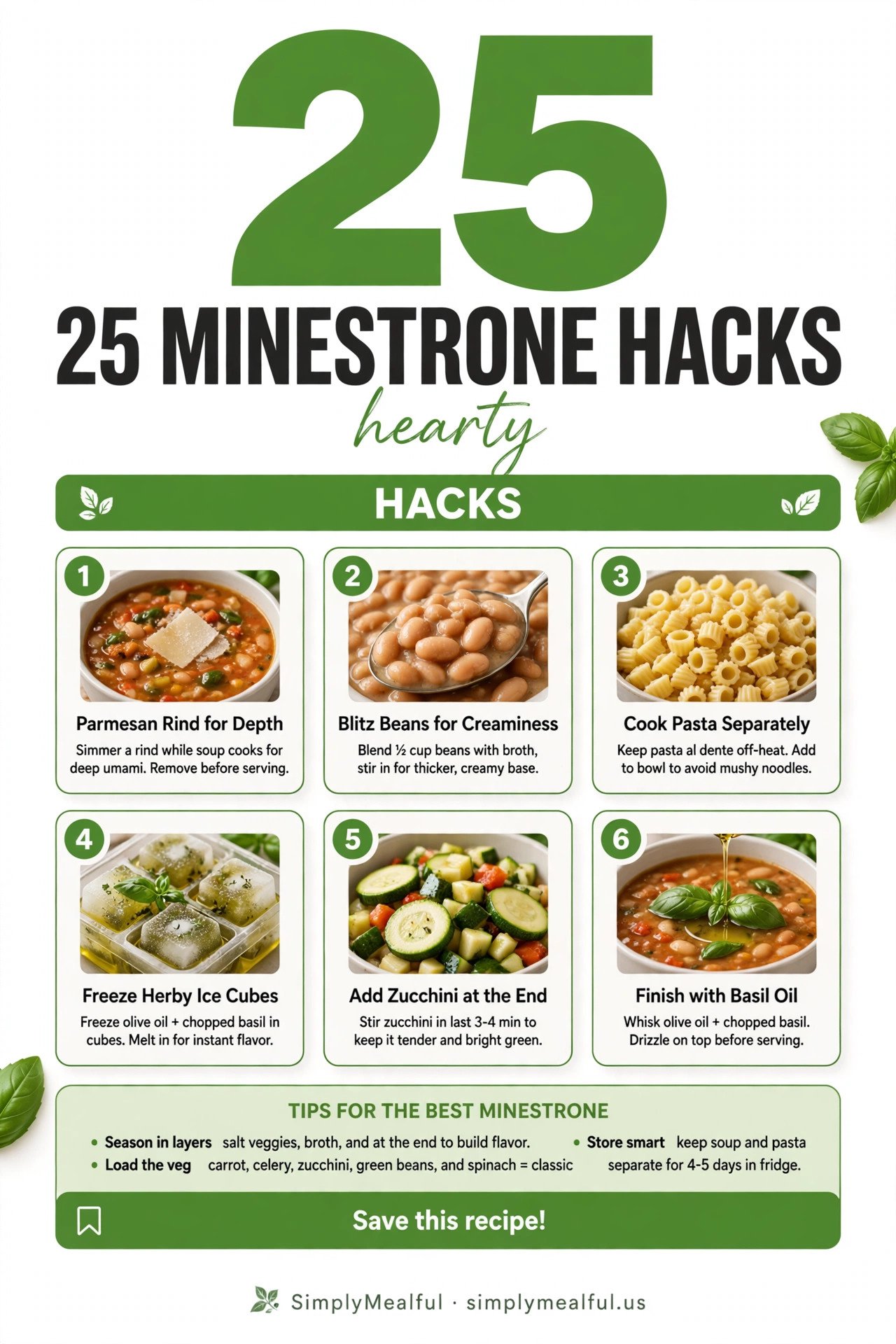
25 Minestrone Hacks for Hearty, Never-Watery Vegetable Soup
Minestrone should be thick, hearty, and packed with vegetables, beans, and pasta — never thin and watery. These 25 minestrone hacks cover building flavor from the base up, cooking pasta separately, and making a pot that tastes even better tomorrow.
1. Cook Pasta Separately, Always
Cook Pasta Separately, Always — Cook pasta separately and add it to individual bowls, never to the whole pot. Pasta left in soup absorbs broth overnight and turns the next day's soup into mush.
2. Use a Parmesan Rind in the Broth
Use a Parmesan Rind in the Broth — Drop a Parmesan rind into the simmering soup and remove it before serving. The rind melts slowly, adding savory depth and body that grated cheese on top cannot.

3. Sauté Vegetables in Stages
Sauté Vegetables in Stages — Cook onions and carrots first until soft, then add celery, zucchini, and greens in stages. Vegetables added all at once cook unevenly, with some mushy and others raw.
4. Use Bean Cooking Liquid for Body
Use Bean Cooking Liquid for Body — If using canned beans, add a splash of their starchy liquid to the soup. The starch thickens the broth naturally and adds a silky body.
5. Add Tomato Paste to the Base
Add Tomato Paste to the Base — Brown tomato paste with the vegetables before adding broth. Cooking the paste removes its tinny taste and gives the soup a deeper, richer tomato flavor.
6. Season with Salt in Stages
Season with Salt in Stages — Salt the vegetables as they cook, salt the broth, then taste and adjust at the end. Minestrone built in salty layers tastes seasoned throughout, not just on the surface.
7. Use Vegetable Stock, Not Water
Use Vegetable Stock, Not Water — Use good vegetable stock instead of water for the soup base. Water makes thin, bland minestrone, while stock adds a foundation of flavor from the start.

8. Add Greens at the Very End
Add Greens at the Very End — Stir in spinach, kale, or chard in the last 5 minutes so they stay bright and slightly firm. Greens simmered for an hour turn dark, slimy, and bitter.
9. Freeze Soup Without Pasta
Freeze Soup Without Pasta — Freeze minestrone in portions without pasta, which goes mushy when frozen. Cook fresh pasta when reheating, and the soup tastes freshly made.
10. Add a Splash of Vinegar at the End
Add a Splash of Vinegar at the End — Stir in a tablespoon of red wine vinegar or balsamic at the end of cooking. Acid brightens the whole pot and makes the vegetable flavors pop.
11. Use Small Pasta Shapes
Use Small Pasta Shapes — Choose small shapes like ditalini, orzo, or small shells that fit on a spoon with vegetables. Large pasta shapes dominate the bowl and make the soup hard to eat.
12. Soak Dried Beans Overnight
Soak Dried Beans Overnight — Soak dried beans overnight and cook them separately before adding to the soup. Unsoaked beans take forever to soften and can stay hard even after an hour of simmering.

13. Add Potatoes for Natural Thickness
Add Potatoes for Natural Thickness — Dice a potato into the soup and let it break down slightly during cooking. The released starch thickens the broth without any flour or cream.
14. Make a Double Batch for the Week
Make a Double Batch for the Week — Double the recipe and refrigerate half for lunches all week. Minestrone tastes better on day two and three as the flavors meld, making it ideal meal prep.
15. Top with Pesto, Not Just Cheese
Top with Pesto, Not Just Cheese — Spoon a dollop of basil pesto on each bowl instead of only grated cheese. Pesto adds fresh herbal brightness that transforms the whole bowl.
16. Use Seasonal Vegetables
Use Seasonal Vegetables — Swap vegetables with the seasons: spring peas and asparagus, summer zucchini and green beans, fall squash and kale. Minestrone is meant to use what is fresh and available.
17. Do Not Boil the Soup Hard
Do Not Boil the Soup Hard — Simmer gently, never at a rolling boil. Hard boiling breaks vegetables apart, clouds the broth, and can make beans split and turn mushy.

18. Add Cannellini Beans for Creaminess
Add Cannellini Beans for Creaminess — Use cannellini beans, which break down slightly and add a creamy texture. Kidney beans stay firmer and do not contribute the same silky body.
19. Toast Garlic Bread for Dipping
Toast Garlic Bread for Dipping — Serve minestrone with thick, garlicky toasted bread for dipping. The bread soaks up broth and turns a simple soup into a satisfying meal.
20. Use Fresh Herbs at Serving
Use Fresh Herbs at Serving — Top each bowl with fresh basil or parsley just before serving. Fresh herbs added at the table keep their aroma, while herbs cooked for an hour lose it.
21. Add a Pinch of Chili Flakes
Add a Pinch of Chili Flakes — A pinch of chili flakes in the base adds gentle warmth without making the soup spicy. It deepens the flavor and makes the soup taste more complex.
22. Label and Date Freezer Containers
Label and Date Freezer Containers — Write the contents and date on freezer containers before filling them. Frozen soups all look similar, and labels prevent mystery meals.
23. Use Leeks for a Milder Onion Flavor
Use Leeks for a Milder Onion Flavor — Swap half the onion for sliced leeks for a sweeter, more delicate allium flavor. Leeks add sophistication that plain onion cannot, and they melt beautifully into soup.
24. Add Barley for Heartiness
Add Barley for Heartiness — Stir in pearl barley instead of pasta for a heartier, nuttier minestrone. Barley holds its texture better than pasta and makes the soup more filling.
25. Serve with a Simple Green Salad
Serve with a Simple Green Salad — Pair minestrone with a light salad dressed in lemon and olive oil. The fresh crunch and acidity balance the warm, hearty soup perfectly.