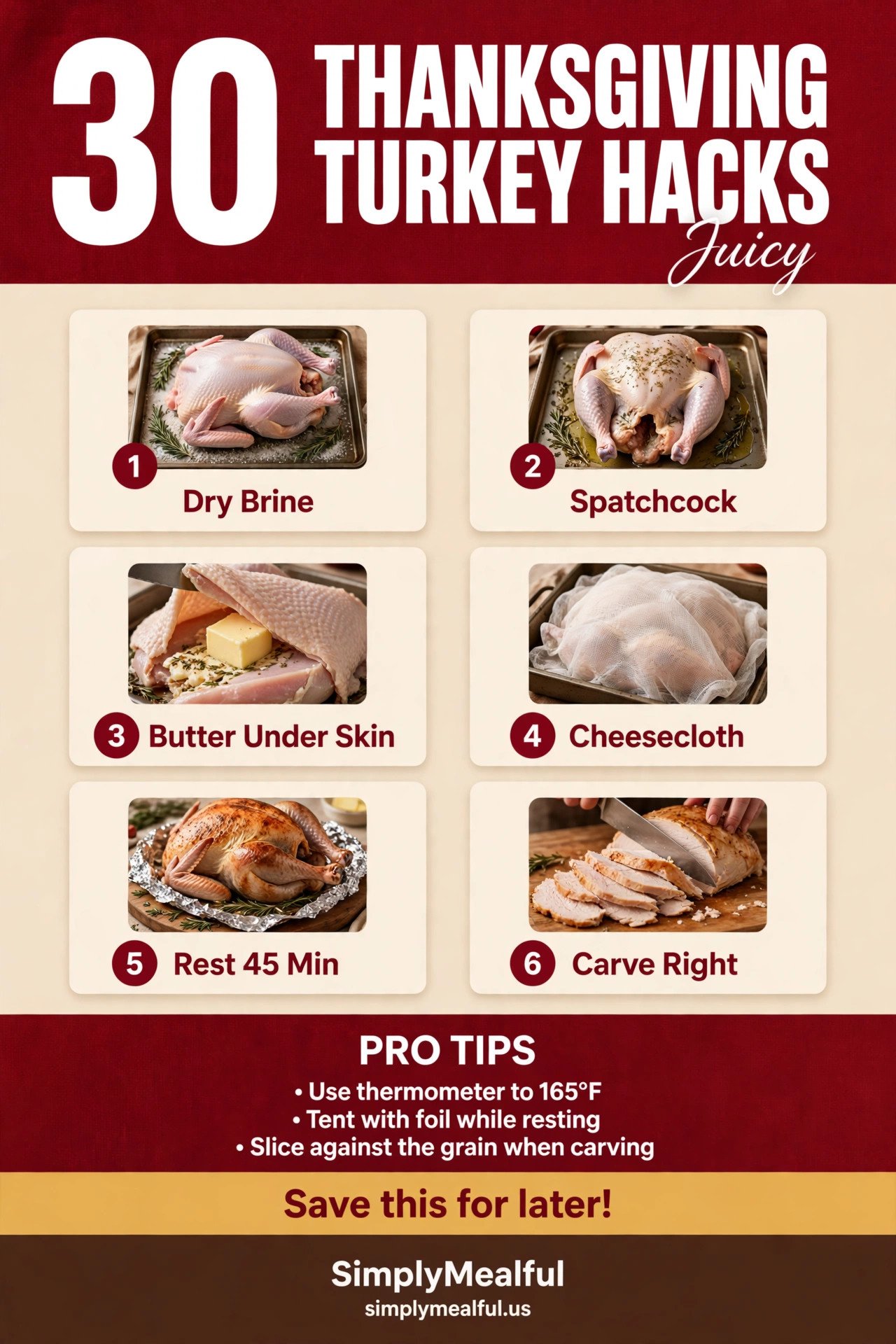
30 Thanksgiving Turkey Hacks for a Juicy, Golden Bird
The turkey is the whole show, and small technique changes make the biggest difference. These 30 Thanksgiving turkey hacks cover brining, roasting, resting, and carving — everything for a bird that is juicy, golden, and on time.
1. Dry Brine 48 Hours Ahead
Dry Brine 48 Hours Ahead — Rub the bird all over with 1 tablespoon kosher salt per 5 lbs plus baking powder, and refrigerate uncovered for 2 days. The salt seasons deep and the dry skin roasts crisper than any wet brine can manage.
2. Spatchcock for Even Cooking
Spatchcock for Even Cooking — Cut out the backbone with kitchen shears and flatten the bird — it roasts in about 90 minutes at 450°F with the breast and legs finishing together. No more dry breast waiting on underdone thighs.
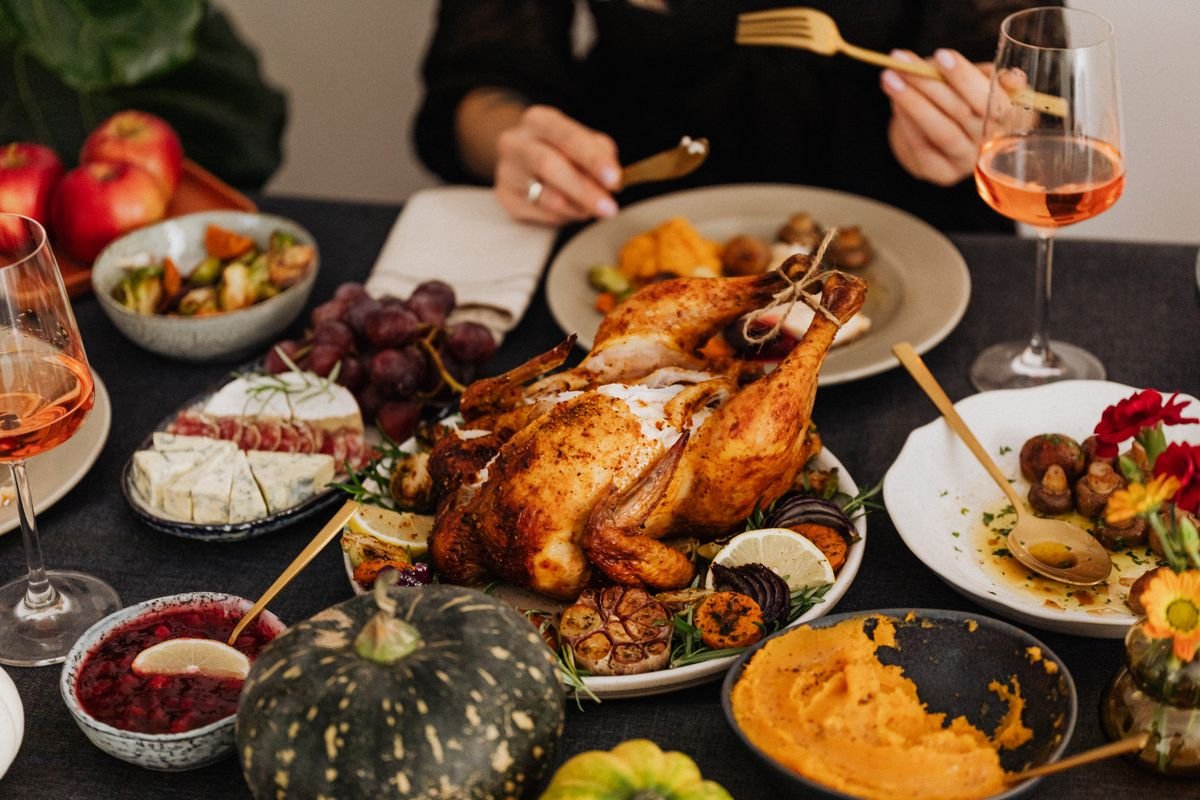
3. Start Breast-Side Down
Start Breast-Side Down — Roast the turkey breast-side down for the first hour so the back fat bastes the breast meat. Flip it for the final hour to brown the skin — noticeably juicier white meat.
4. Butter Under the Skin
Butter Under the Skin — Slide compound butter (butter, garlic, thyme, lemon zest) under the breast skin before roasting. It bastes the meat from the inside and the herbs perfume every slice.
5. Room Temp for 2 Hours
Room Temp for 2 Hours — Pull the turkey from the fridge 2 hours before roasting. A bird that starts at room temperature cooks more evenly — the legs don’t lag 20 degrees behind the breast.
6. The Cheesecloth Trick
The Cheesecloth Trick — Soak cheesecloth in melted butter and wine, drape it over the breast, and roast. It self-bastes the breast for the first 2 hours; remove it for the last 45 minutes for deep golden color.
7. Roast on a Bed of Vegetables
Roast on a Bed of Vegetables — Onion, carrot, celery, and herbs under the rack become instant gravy gold — the drippings land on flavor instead of burning on the pan. Add a cup of water to keep them from scorching.
8. 325°F Is Too Low for Crisp Skin
325°F Is Too Low for Crisp Skin — Roast at 425°F for the first 30 minutes to set and brown the skin, then drop to 325°F. The initial blast renders fat fast, which is what makes skin shatter-crisp.

9. Pull at 150°F Breast, 175°F Thigh
Pull at 150°F Breast, 175°F Thigh — Carryover cooking adds 5–10 degrees, so pull the breast at 150°F and thighs at 175°F. The breast stays juicy and safe after resting — 165°F in the oven means 175°F on the plate and dry meat.
10. Rest a Full 45 Minutes
Rest a Full 45 Minutes — Tent loosely with foil and rest the bird 45 minutes before carving. The juices redistribute instead of flooding the cutting board, and it stays hot — use the time to finish gravy.
11. Carve the Breast Off Whole
Carve the Breast Off Whole — Remove each breast half in one piece, then slice across the grain into medallions. You get clean, even slices instead of the ragged shreds that come from carving on the bone.
12. Separate Legs Before Slicing Thighs
Separate Legs Before Slicing Thighs — Pop the thigh joint, remove the whole leg quarter, then slice the thigh meat off the bone. Dark meat slices cleaner off the bone and the drumstick makes a dramatic platter piece.
13. Save the Backbone for Gravy
Save the Backbone for Gravy — If you spatchcock, roast the backbone alongside the bird and simmer it into stock. That stock becomes gravy with real roasted flavor — no pale, floury gravy.
14. Baste Only Twice
Baste Only Twice — Constant basting drops the oven temperature every time you open the door. Baste at the 1-hour and 2-hour marks only; the butter under the skin does the rest of the work.
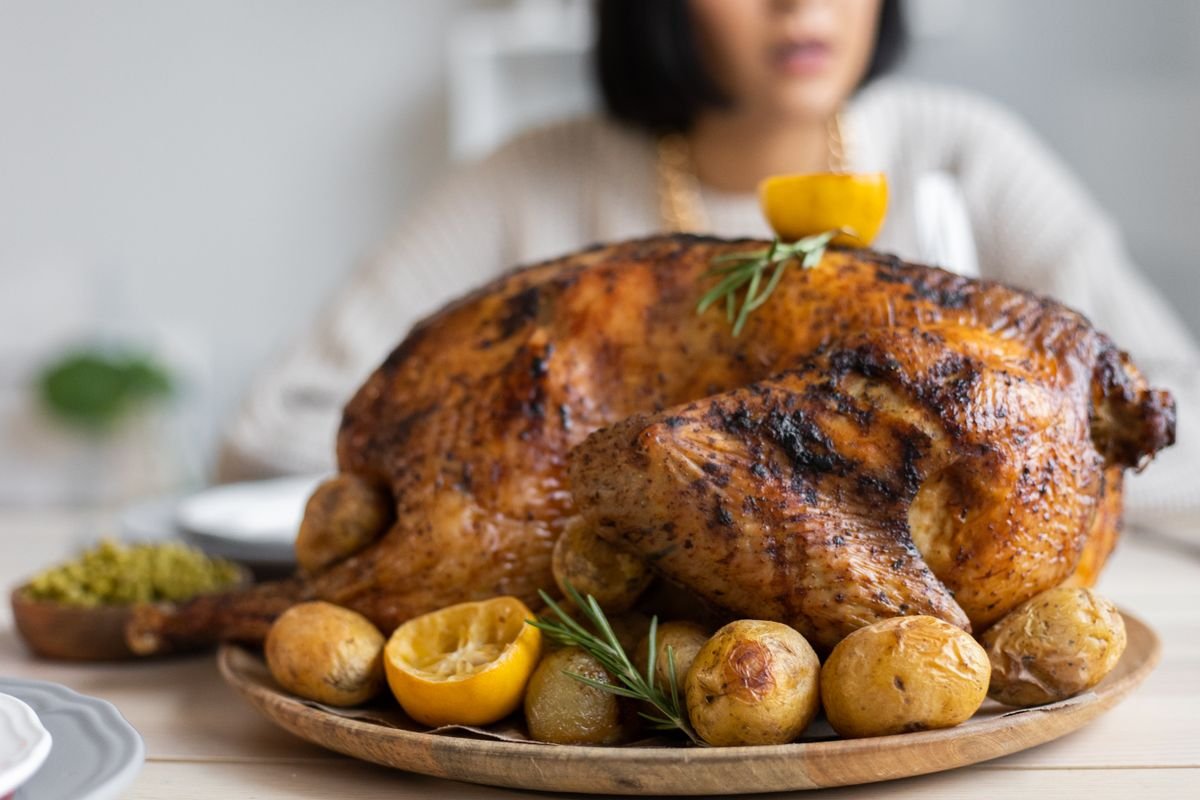
15. No Stuffing in the Cavity
No Stuffing in the Cavity — Stuffing inside the bird forces you to overcook the meat waiting for the stuffing to hit 165°F. Cook dressing separately — it gets crustier edges anyway — and put aromatics in the cavity instead.
16. Aromatics, Not Stuffing
Aromatics, Not Stuffing — Fill the cavity with quartered onion, apple, lemon, and a big handful of herbs. They steam flavor into the meat from the inside without the food-safety gamble of cavity stuffing.
17. Tent with Foil, Not Tight
Tent with Foil, Not Tight — If the breast browns too fast, tent loosely with foil — tight foil steams the skin soft. Loose tenting blocks direct heat while letting steam escape.
18. Use a Real Thermometer
Use a Real Thermometer — The pop-up timer that comes in the bird pops at 180°F+ — guaranteed dry breast. A $15 instant-read thermometer is the single best turkey investment you will ever make.
19. Inject for Insurance
Inject for Insurance — Inject melted butter and broth into the breast and thighs the night before. It is the fastest insurance policy against dryness, especially for turkeys over 18 lbs.
20. Brine in a Cooler
Brine in a Cooler — No fridge space? A brined turkey in a cooler with ice packs holds safely below 40°F for 24 hours. Double-bag the bird so the brine never touches the ice directly.
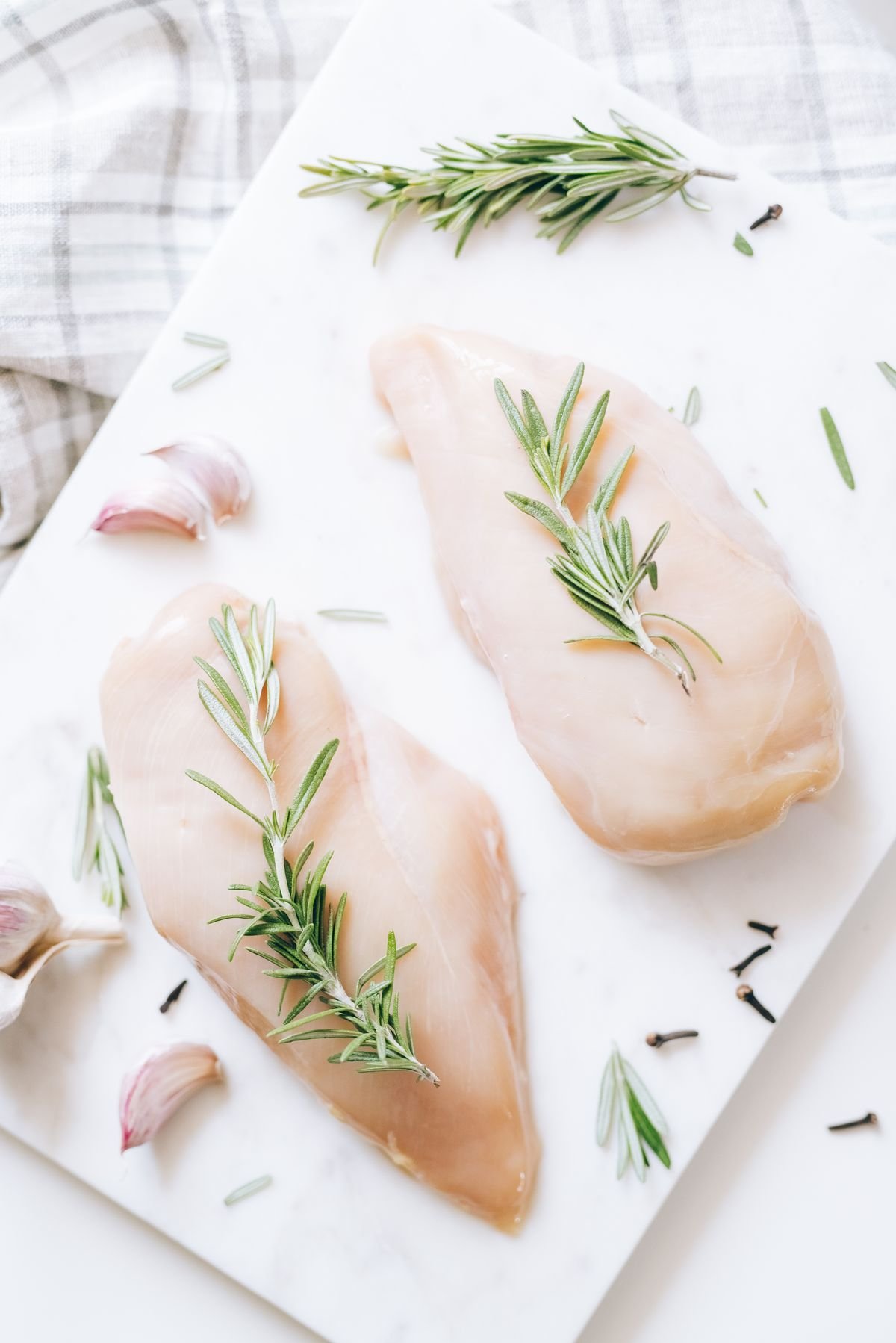
21. Turkey Breast Only for Small Crowds
Turkey Breast Only for Small Crowds — Feeding 6 or fewer? A bone-in breast roasts in 2 hours with zero waste and no leg-meat logistics. Rub it exactly like a whole bird — nobody misses the drumsticks.
22. Dry the Skin Aggressively
Dry the Skin Aggressively — Pat the bird completely dry with paper towels before seasoning — then let it air-dry uncovered in the fridge overnight. Dry skin is the entire secret to crisp, golden skin.
23. Mayo Instead of Butter
Mayo Instead of Butter — A thin coat of mayonnaise under the seasonings browns beautifully and keeps the breast moist. The egg and oil emulsion behaves like butter but clings better to the skin.
24. Roast Two Small Birds
Roast Two Small Birds — Two 12-lb turkeys roast faster and more evenly than one 24-lb monster, and you get double the drumsticks and wings. They also fit in a standard oven side by side.
25. Gravy from Wings Ahead
Gravy from Wings Ahead — Roast extra turkey wings a week before, freeze the drippings and stock, and make gravy on Tuesday. Thursday’s pan drippings just enrich what is already done.
26. Warm Carving Platter
Warm Carving Platter — Heat your serving platter in a 200°F oven while the turkey rests. Cold platters steal heat from sliced meat fast — a warm platter keeps everything steaming at the table.
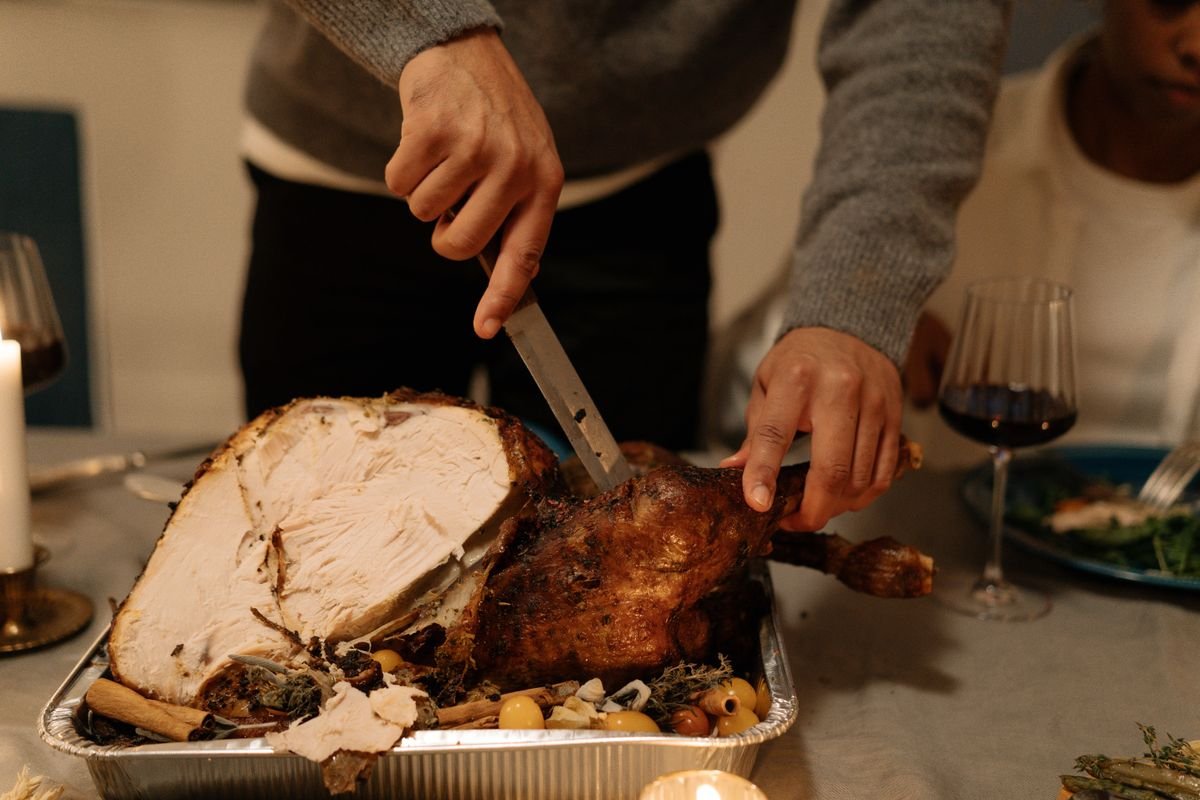
27. Slice Against the Grain
Slice Against the Grain — Turkey breast has visible grain lines — slice perpendicular to them in ¼-inch medallions. With-the-grain slices chew tough even on a perfectly cooked bird.
28. Save Drippings in a Fat Separator
Save Drippings in a Fat Separator — Pour pan juices into a fat separator and let the fat rise. Use the clear drippings for gravy and save the schmaltz-like turkey fat for roasting potatoes — liquid gold.
29. Leftover Turkey Pot Pie Night
Leftover Turkey Pot Pie Night — Plan the sequel before the meal: reserve 4 cups of diced turkey and a quart of stock for Friday pot pie. Announcing it at dinner makes the leftovers feel like an event, not an afterthought.
30. Freeze Carcass Stock in Muffin Tins
Freeze Carcass Stock in Muffin Tins — Freeze concentrated turkey stock in muffin tins, then bag the pucks. Each puck is about ⅓ cup — perfect for deglazing pans and enriching weeknight sauces all winter.