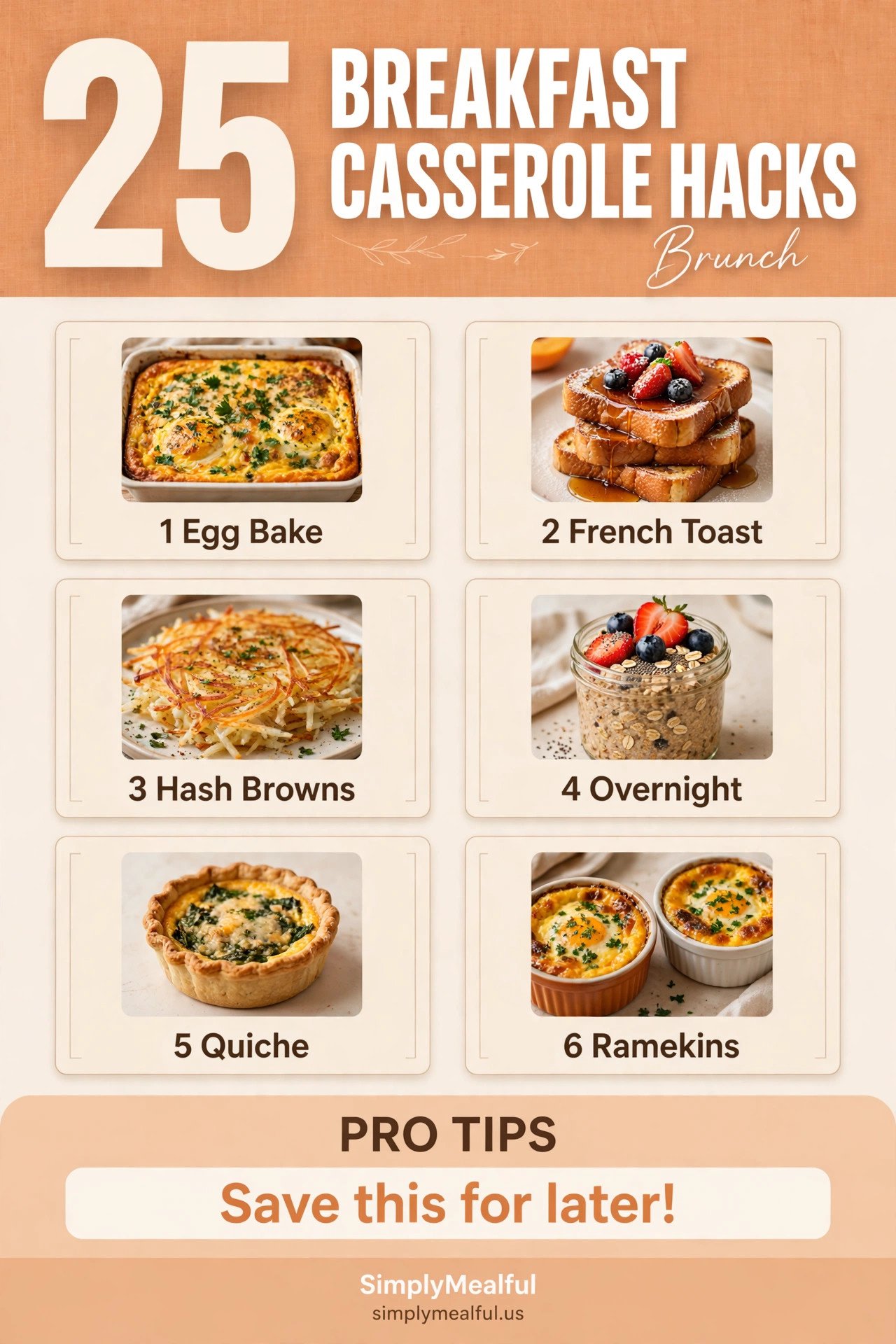
25 Breakfast Casserole Hacks for Effortless Mornings
Breakfast casserole is the ultimate feed-a-crowd morning move — if you nail the ratios. These 25 hacks fix soggy centers, rubbery eggs and bland bakes so your casserole comes out golden, custardy and perfect every time.
1. Use the 1:1 Egg-to-Milk Ratio
Use the 1:1 Egg-to-Milk Ratio — For a custardy set, use roughly 1 cup of milk or half-and-half per 6 eggs. More dairy makes it silky like quiche; less makes it firm like frittata. Memorize this ratio and improvise freely.
2. Assemble It the Night Before
Assemble It the Night Before — Layer everything in the dish, cover and refrigerate overnight. The bread or hash browns absorb the custard fully, so you bake straight from the fridge while coffee brews — and the texture is better for the soak.
3. Squeeze Moisture from Vegetables
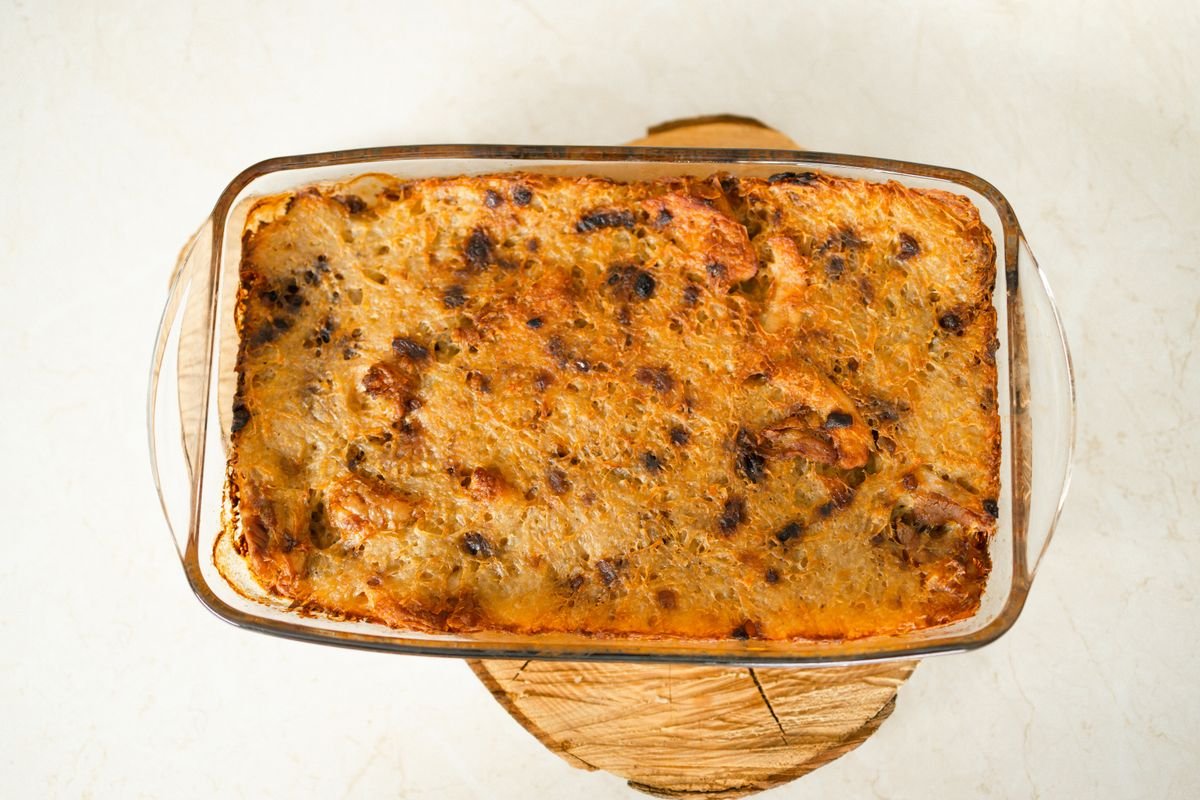
Squeeze Moisture from Vegetables — Spinach, mushrooms and zucchini release water that turns casseroles soupy. Sauté them first or squeeze them in a towel — this one step is the difference between set and soggy.
4. Day-Old Bread Beats Fresh
Day-Old Bread Beats Fresh — Stale bread drinks up custard without disintegrating; fresh bread turns to mush. Leave cubed bread out overnight, or toast fresh cubes 10 minutes at 300°F before assembling.
5. Butter the Dish, Then Flour It
Butter the Dish, Then Flour It — Grease with butter and dust lightly with flour or breadcrumbs like a cake pan. The casserole releases in clean squares instead of welding itself to the corners.
6. Cook the Sausage First, Always
Cook the Sausage First, Always — Raw sausage never fully cooks inside a casserole and greases the whole dish. Brown it, drain it on paper towels, then add — you control the fat and guarantee it’s done.
7. Grate Your Own Cheese
Grate Your Own Cheese — Pre-shredded cheese is coated in anti-caking starch that makes it melt grainy. Grate a block yourself and it melts into silky pockets instead of rubbery clumps.
8. Let It Rest 10 Minutes
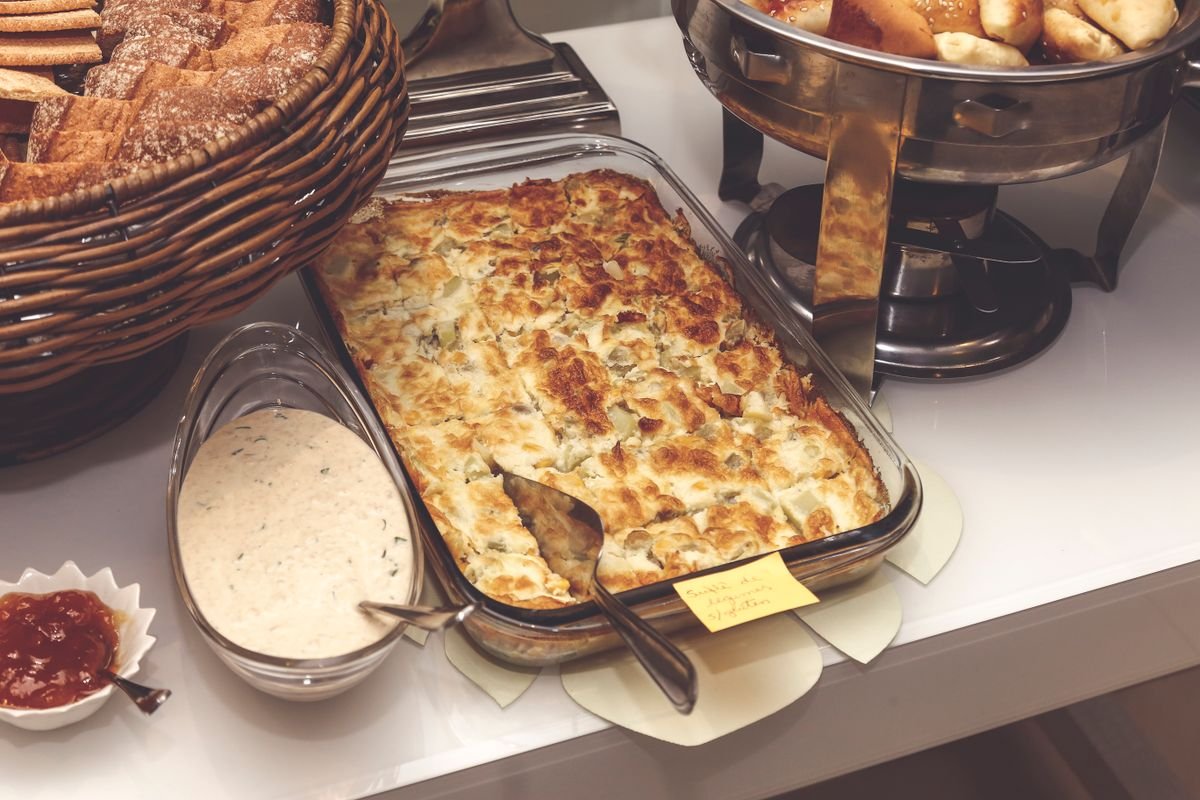
Let It Rest 10 Minutes — Pull the casserole and wait 10 minutes before cutting. The custard finishes setting as it cools slightly, so slices hold their shape instead of slumping into a puddle.
9. Add a Crispy Topping Last
Add a Crispy Topping Last — Sprinkle buttered breadcrumbs, crushed cornflakes or extra cheese on top in the final 15 minutes. Early toppings sink and go soggy; late toppings stay golden and crunchy.
10. Test Doneness with a Knife
Test Doneness with a Knife — Insert a thin knife in the center — it should come out mostly clean with no liquid egg running. A little jiggle is fine; liquid sloshing means 10 more minutes.
11. Season the Custard, Not Just the Layers
Season the Custard, Not Just the Layers — Whisk salt, pepper, mustard powder and hot sauce directly into the eggs. Unseasoned custard makes even great fillings taste flat — the eggs carry the seasoning through every bite.
12. Use Half-and-Half for Richness
Use Half-and-Half for Richness — Swap milk for half-and-half in the custard for a noticeably silkier, more indulgent result. It’s a holiday-morning upgrade that costs one ingredient change.

13. Layer Cheese in the Middle Too
Layer Cheese in the Middle Too — Don’t just top with cheese — tuck a layer halfway through the fillings. Melty pockets in the center make every forkful interesting instead of only the top.
14. Par-Cook Dense Vegetables
Par-Cook Dense Vegetables — Potatoes, sweet potatoes and butternut squash won’t cook through in casserole time. Dice small and par-boil or roast 15 minutes first, then they finish perfectly in the bake.
15. Add Fresh Herbs After Baking
Add Fresh Herbs After Baking — Chives, parsley and dill lose their punch in a hot oven. Shower them over the finished casserole instead — bright, fresh contrast against the rich eggs.
16. Make Individual Ramekin Bakes
Make Individual Ramekin Bakes — Divide the mixture into buttered ramekins for personal casseroles that bake in 20 minutes instead of 45. They look adorable for brunch and solve the portioning problem entirely.
17. Freeze Unbaked for Later
Freeze Unbaked for Later — Assemble in a foil pan, wrap tightly, and freeze up to 2 months. Thaw overnight in the fridge, then bake as usual — future you gets a homemade breakfast with zero morning work.

18. Cover with Foil, Then Uncover
Cover with Foil, Then Uncover — Bake covered for the first 30 minutes so the center cooks through, then uncover for the last 15 to brown the top. This prevents a burnt top with a raw middle.
19. Add a Splash of Hot Sauce to Eggs
Add a Splash of Hot Sauce to Eggs — A teaspoon of hot sauce whisked into the custard doesn’t make it spicy — it adds background warmth and complexity. Mustard powder does the same trick for savory depth.
20. Use a Water Bath for Delicate Ones
Use a Water Bath for Delicate Ones — For custardy French-toast-style bakes, set the dish in a roasting pan with an inch of hot water. The gentle heat prevents curdling and gives a silky, even set.
21. Double It in Two Pans, Not One Deep One
Double It in Two Pans, Not One Deep One — A double batch in one deep dish cooks unevenly. Split across two 9×13 pans for the same timing as a single — freezing the second gives you a backup breakfast.
22. Swap Bread for Hash Browns
Swap Bread for Hash Browns — A layer of thawed shredded hash browns replaces bread for a gluten-free base with crispy edges. Press them into the dish and par-bake 10 minutes before adding custard.
23. Add Citrus Zest to Sweet Versions
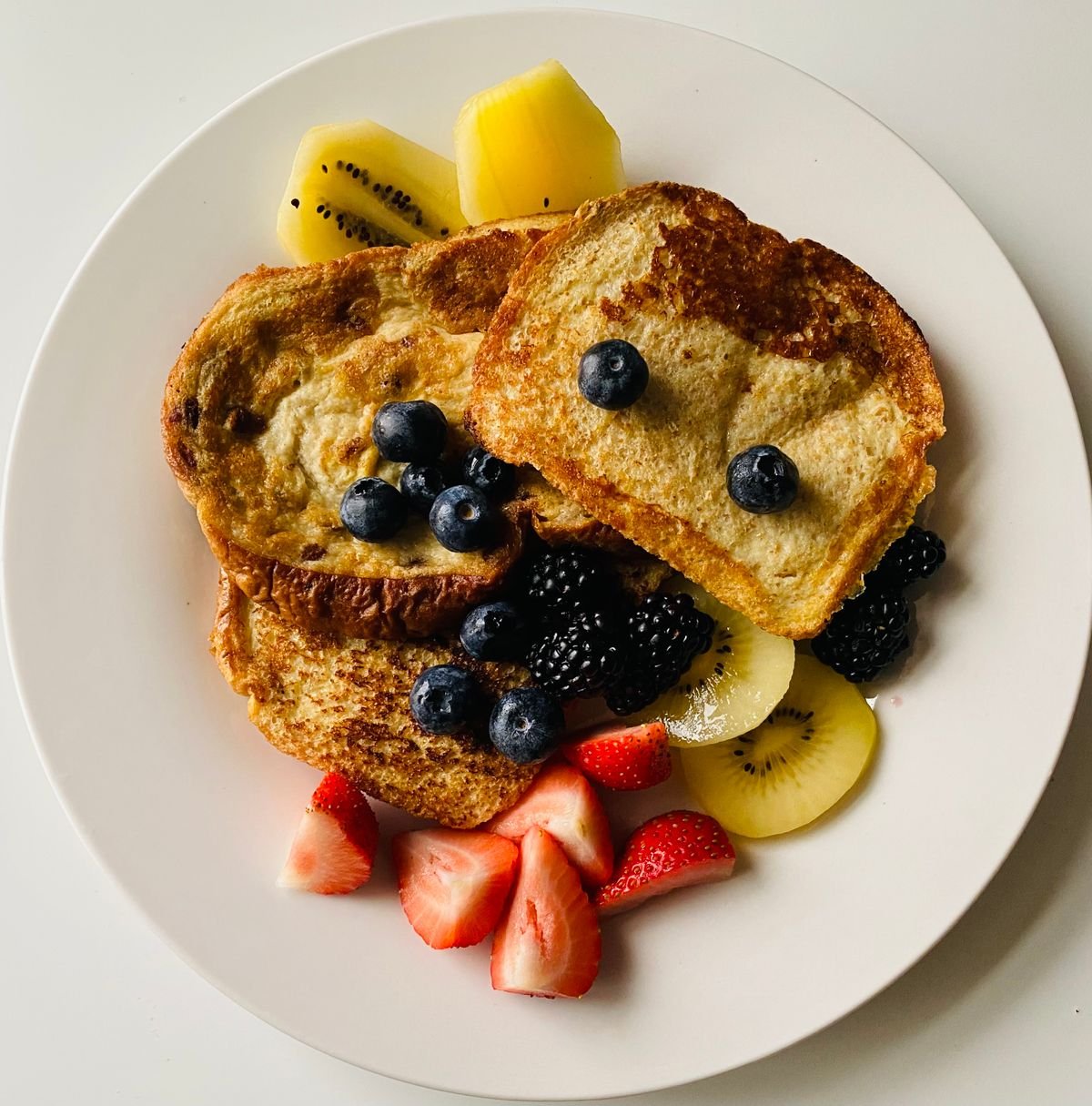
Add Citrus Zest to Sweet Versions — A teaspoon of orange or lemon zest in a French toast casserole cuts the richness and makes it taste bright and bakery-fresh. Nobody identifies it; everyone notices it.
24. Reheat Slices in the Air Fryer
Reheat Slices in the Air Fryer — Leftover squares reheat best 5 minutes at 350°F in the air fryer — edges re-crisp while the center warms through. The microwave makes them rubbery; don’t do it.
25. Label the Freezer Pan
Label the Freezer Pan — Write the bake temp, time and date on the foil with a marker before freezing. Three weeks later you won’t remember if it was 350 or 375 — the label saves the breakfast.