25 Kids Cooking Hacks for Little Kitchen Helpers
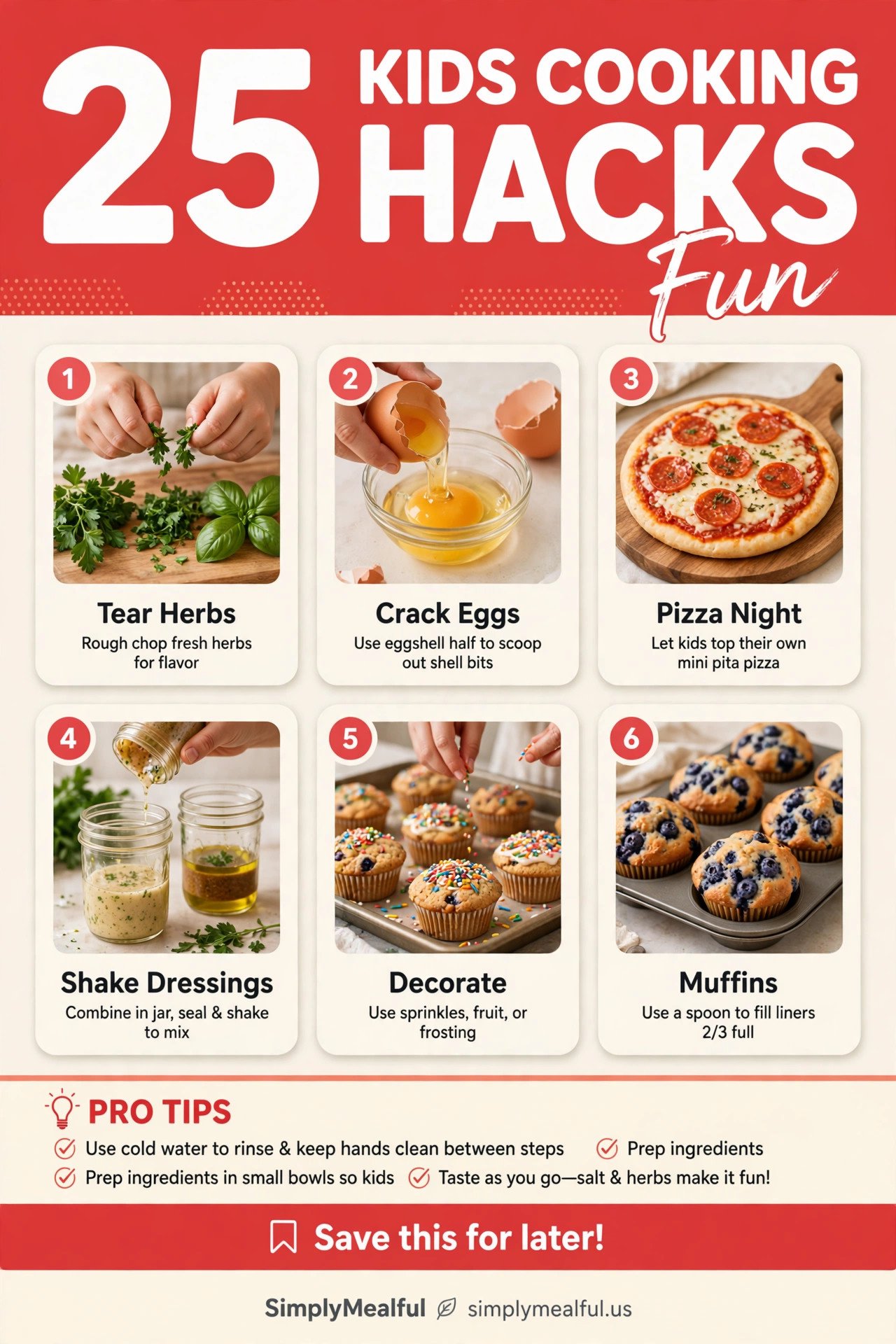
Kids who help cook are kids who try new foods, but the kitchen needs to stay safe and fun. These 25 kids cooking hacks give little helpers real jobs matched to their age, so cooking together builds skills instead of stress.
1. Start with Tearing, Not Cutting
Start with Tearing, Not Cutting — Let young kids tear herbs, lettuce, and bread for salads and stuffing. Tearing builds hand strength and coordination safely, and children feel genuinely useful long before they can handle a knife.
2. Use a Butter Knife for Soft Foods
Use a Butter Knife for Soft Foods — Give preschoolers a butter knife to cut bananas, strawberries, and cooked potatoes. The dull blade teaches the sawing motion safely, and soft foods give quick success that builds confidence.
3. Set Up a Low Workstation
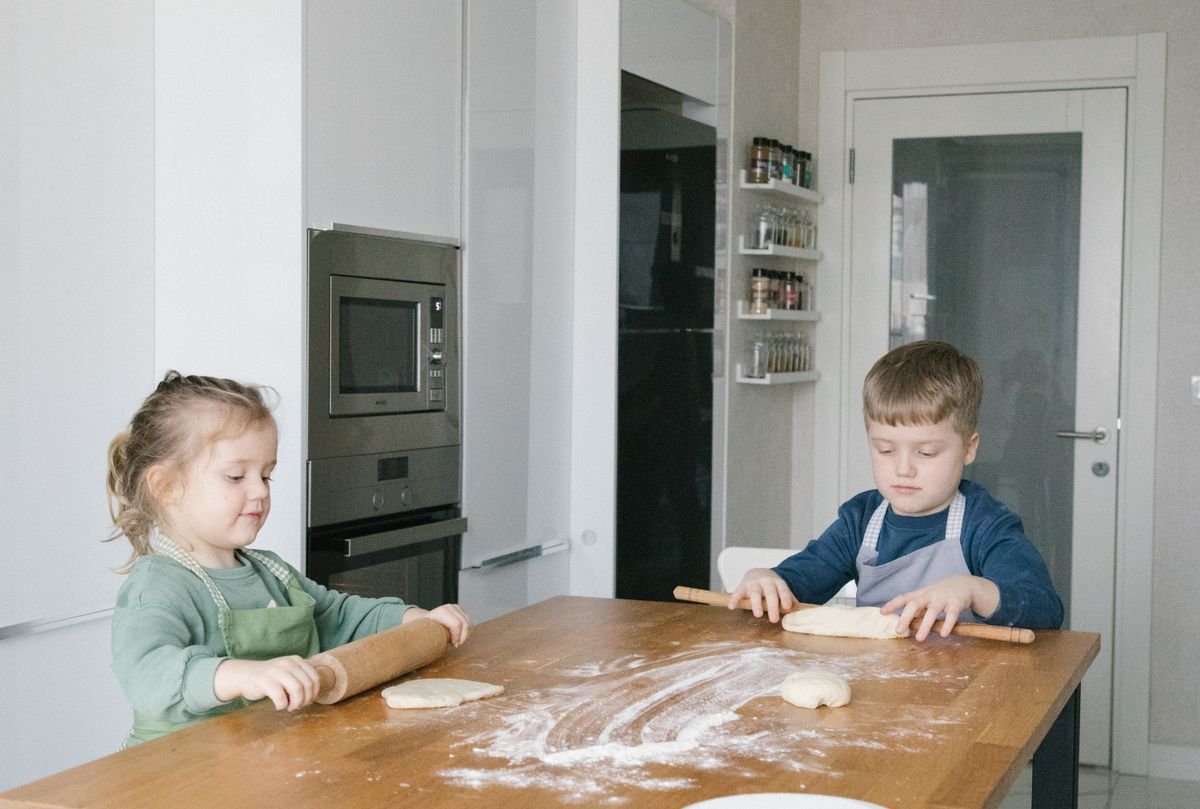
Set Up a Low Workstation — Place a sturdy step stool at the counter or set up a table at your child’s height. Working at the right height prevents spills and frustration, and kids who can see their work stay engaged much longer.
4. Let Kids Wash Fruit and Vegetables
Let Kids Wash Fruit and Vegetables — Washing produce is a perfect first kitchen job because it is safe, sensory, and genuinely helpful. Kids who wash their own vegetables are also more likely to taste them at dinner.
5. Use Measuring Cups as Scoops
Use Measuring Cups as Scoops — Let kids scoop flour, sugar, and oats with measuring cups instead of pouring from heavy bags. Scooping is easier to control, spills less, and teaches measuring without a lecture.
6. Pre-Measure Ingredients into Small Bowls
Pre-Measure Ingredients into Small Bowls — Set out ingredients in small bowls like a cooking show so kids can dump and stir. The setup removes the hardest parts for small hands and makes the recipe feel like an exciting assembly project.
7. Give Kids Their Own Apron and Tools
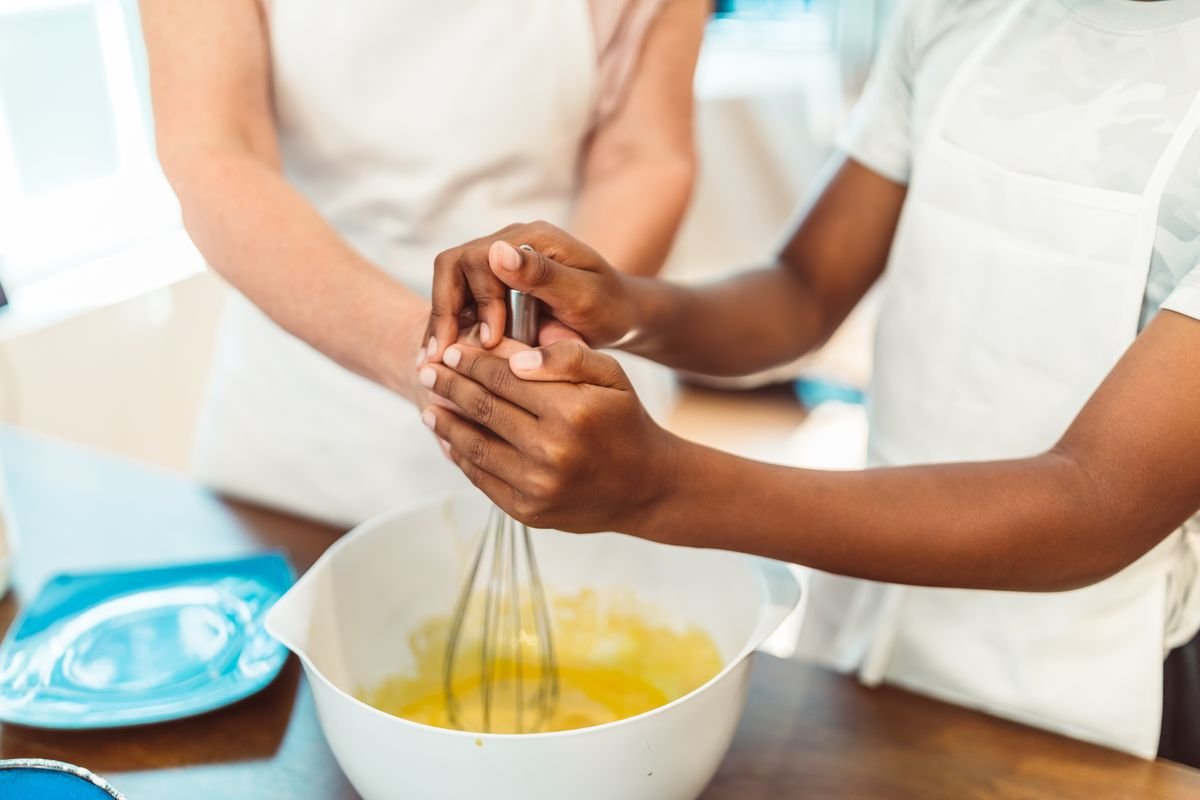
Give Kids Their Own Apron and Tools — A child-sized apron, whisk, and spatula make cooking feel like their own activity rather than borrowing yours. Ownership increases focus, and kids take better care of tools that are theirs.

8. Teach the Claw Grip with Play Dough First
Teach the Claw Grip with Play Dough First — Practice the safe claw grip on play dough before introducing real food and a child-safe knife. The muscle memory transfers directly, and practice without stakes removes the fear for both of you.
9. Let Kids Crack Eggs into a Separate Bowl
Let Kids Crack Eggs into a Separate Bowl — Cracking eggs into a small bowl first means shell pieces can be fished out before they reach the batter. Kids learn the technique faster when a mistake does not ruin the whole recipe.
10. Use Cookie Cutters for Sandwiches and Fruit
Use Cookie Cutters for Sandwiches and Fruit — Let kids cut sandwiches, cheese, and melon with cookie cutters. The shapes make lunch fun, and the cutting practice builds the same hand skills as more advanced prep.
11. Assign One Job Per Child
Assign One Job Per Child — Give each child a single clear job, like stirring the batter or sprinkling cheese. One job prevents crowding and arguments, and each child can proudly claim their contribution at dinner.
12. Make Pizza Night a Build-Your-Own Event
Make Pizza Night a Build-Your-Own Event — Set out dough, sauce, cheese, and toppings, and let kids build their own pizzas. The format teaches topping combinations, accommodates picky eaters, and produces a dinner everyone eats happily.
13. Let Kids Shake Dressings in a Jar
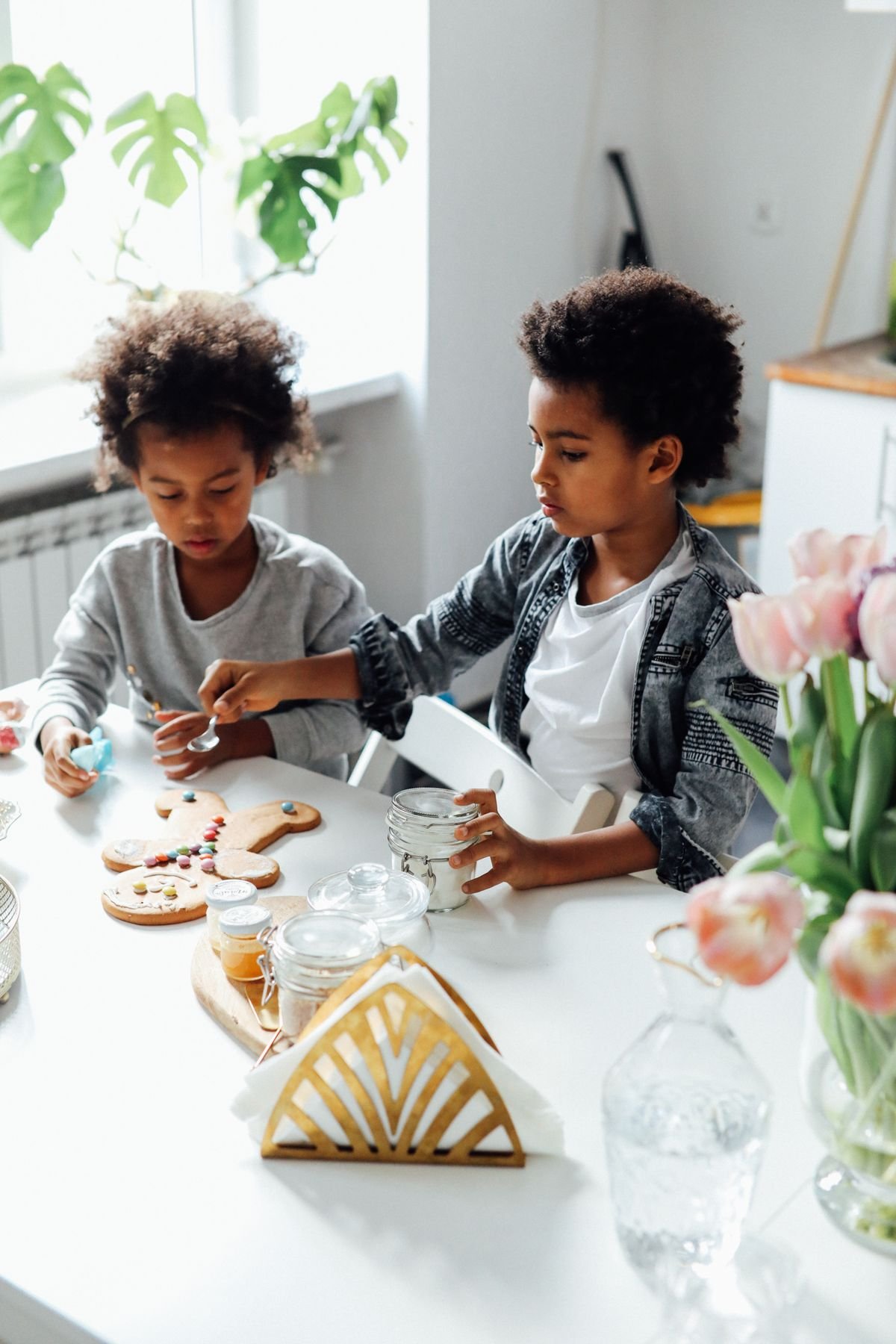
Let Kids Shake Dressings in a Jar — Pour dressing ingredients into a jar with a tight lid and let kids shake vigorously. Shaking is fun, safe, and teaches emulsification in action when the dressing thickens before their eyes.
14. Use a Salad Spinner as a Toy
Use a Salad Spinner as a Toy — Kids love pumping the salad spinner to dry lettuce, and the spinning is genuinely useful. The job turns a boring prep step into the most requested task in the kitchen.
15. Teach Stovetop Safety with a Tape Line
Teach Stovetop Safety with a Tape Line — Put a line of tape on the floor marking how far kids stand from the stove. The visual boundary is clearer than repeated warnings, and kids learn to respect the hot zone without fear.
16. Let Kids Decorate Finished Dishes
Let Kids Decorate Finished Dishes — Sprinkling herbs, arranging fruit, or piping frosting lets kids finish a dish creatively. Decoration is low-risk, high-reward, and children proudly present food they helped make beautiful.
17. Bake Muffins for Easy Portion Control
Bake Muffins for Easy Portion Control — Muffin tins give kids individual portions to fill, decorate, and claim as their own. The small scale suits small hands, and each child can customize their muffins with different mix-ins.
18. Use a Butter Knife to Spread
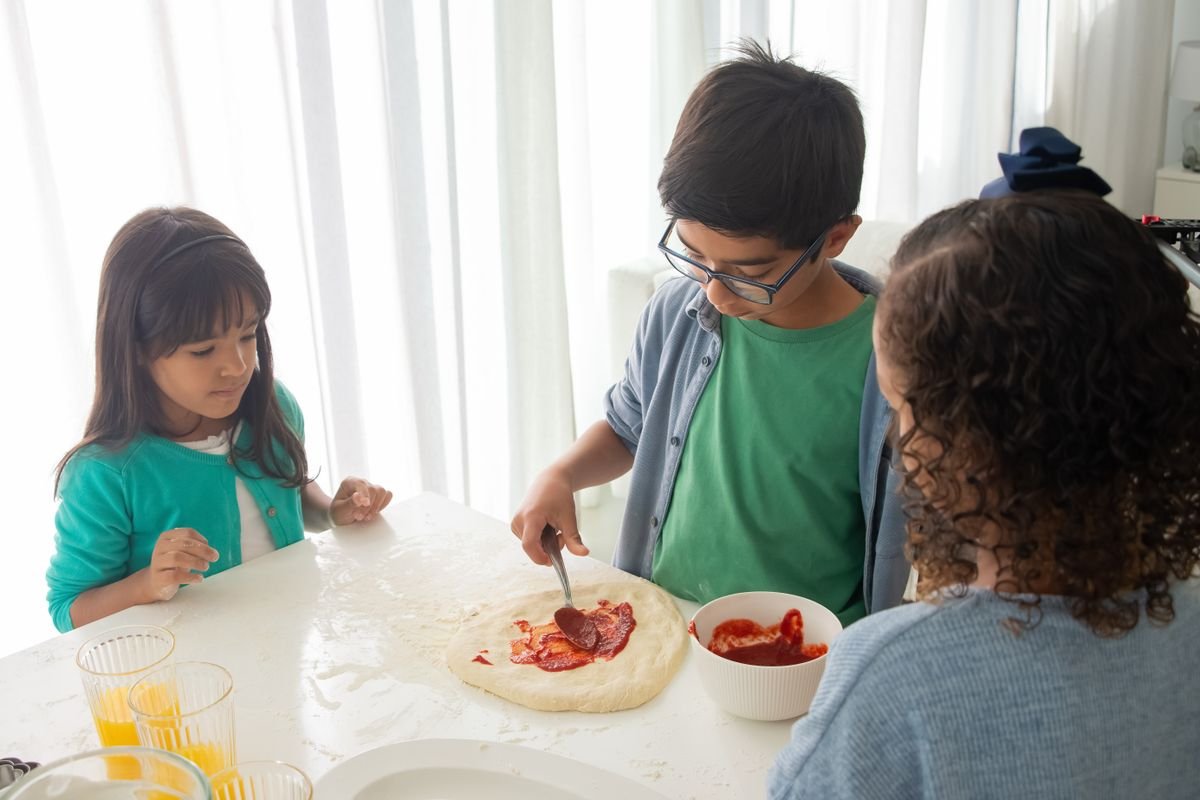
Use a Butter Knife to Spread — Let kids spread butter, cream cheese, and jam with a butter knife on bread or crackers. Spreading builds control and patience, and the result is immediately edible, which is satisfying.
19. Freeze Popsicles as a First Recipe
Freeze Popsicles as a First Recipe — Blending fruit and yogurt for popsicles is a nearly foolproof first recipe. Kids choose the flavors, pour the molds, and learn patience while waiting for them to freeze.
20. Read the Recipe Together Aloud
Read the Recipe Together Aloud — Take turns reading recipe steps aloud before starting, even if your child reads slowly. The habit builds literacy and sequencing skills, and kids who understand the plan follow it better.
21. Let Kids Taste and Adjust Seasoning
Let Kids Taste and Adjust Seasoning — Invite kids to taste sauces and soups and decide if they need more salt, lemon, or sweetness. Tasting builds a palate, and children who season food themselves are far more willing to eat it.
22. Use Ice Cube Trays for Small Portions
Use Ice Cube Trays for Small Portions — Freeze sauces, herbs, or smoothie mixtures in ice cube trays with kids helping to fill them. The small scale is perfect for little hands, and the cubes become ingredients for future cooking sessions.
23. Clean Up Together as Part of Cooking
Clean Up Together as Part of Cooking — Make wiping the table and washing tools part of the recipe, not a punishment after it. Kids who clean as they go develop a complete kitchen habit, and cleanup becomes a shared routine.
24. Celebrate Mistakes as Experiments
Celebrate Mistakes as Experiments — When a recipe goes wrong, taste it together and talk about what to change next time. Framing mistakes as experiments removes the fear of failure that stops many kids from trying new kitchen skills.
25. End Every Session with a Tasting
End Every Session with a Tasting — Always sit down and taste what you made together, even if it is imperfect. The shared tasting is the payoff that makes kids ask to cook again tomorrow, which is the real goal.