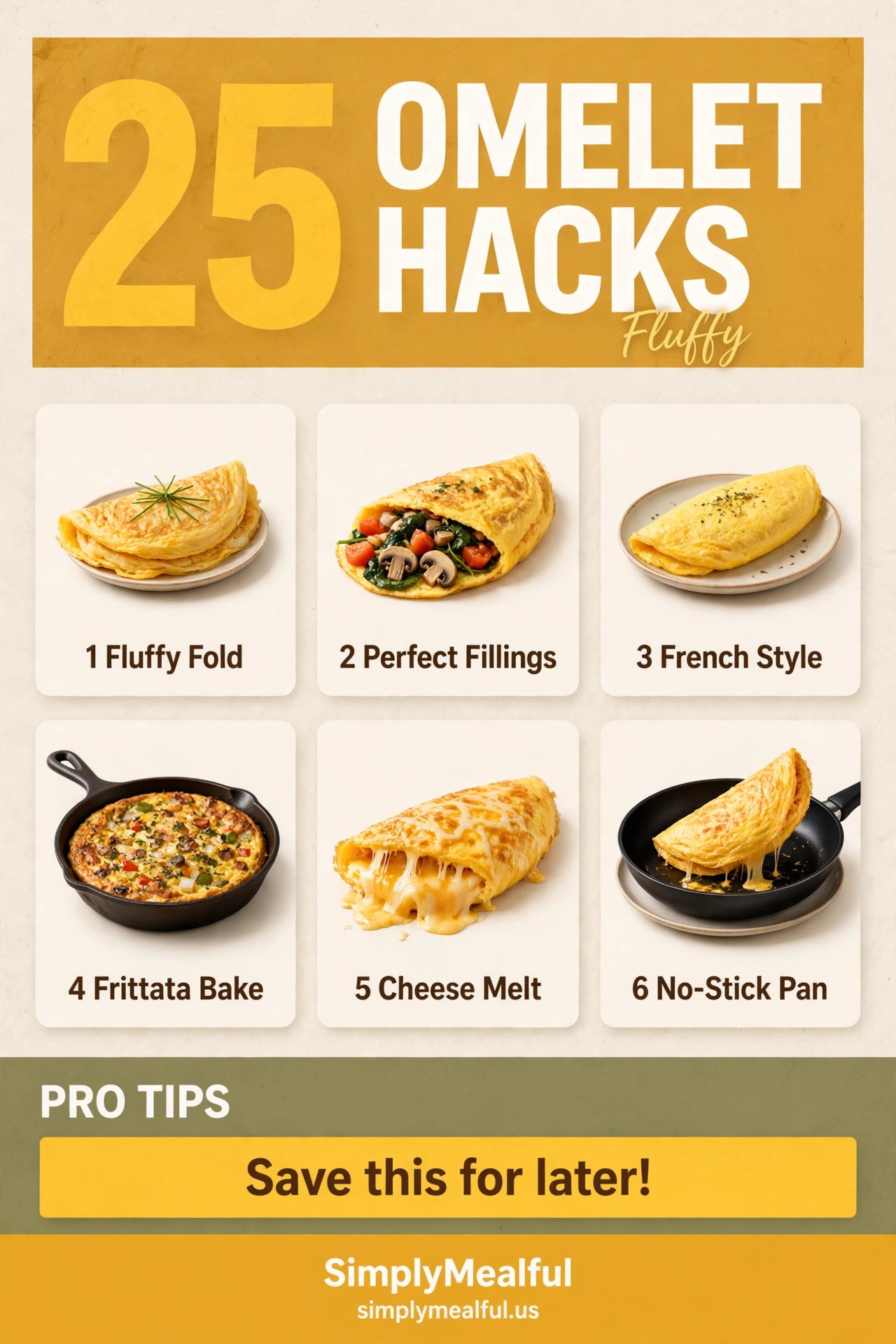
25 Omelet Hacks for Fluffy, Never-Rubbery Eggs
A great omelet is 90 seconds of technique, not talent. These 25 hacks fix rubbery texture, browned bottoms, torn folds and watery fillings — so your eggs come out fluffy, golden and diner-perfect every single morning.
1. Beat Eggs Until Completely Uniform
Beat Eggs Until Completely Uniform — Whisk until no streaks of white remain — about 30 seconds of real whisking. Streaky eggs cook into patchy white bits; fully beaten eggs set into one silky, even sheet.
2. Add a Splash of Water, Not Milk
Add a Splash of Water, Not Milk — A teaspoon of water per two eggs creates steam that puffs the omelet lighter. Milk’s proteins actually make eggs denser and can turn them rubbery at high heat.
3. Preheat the Pan Properly
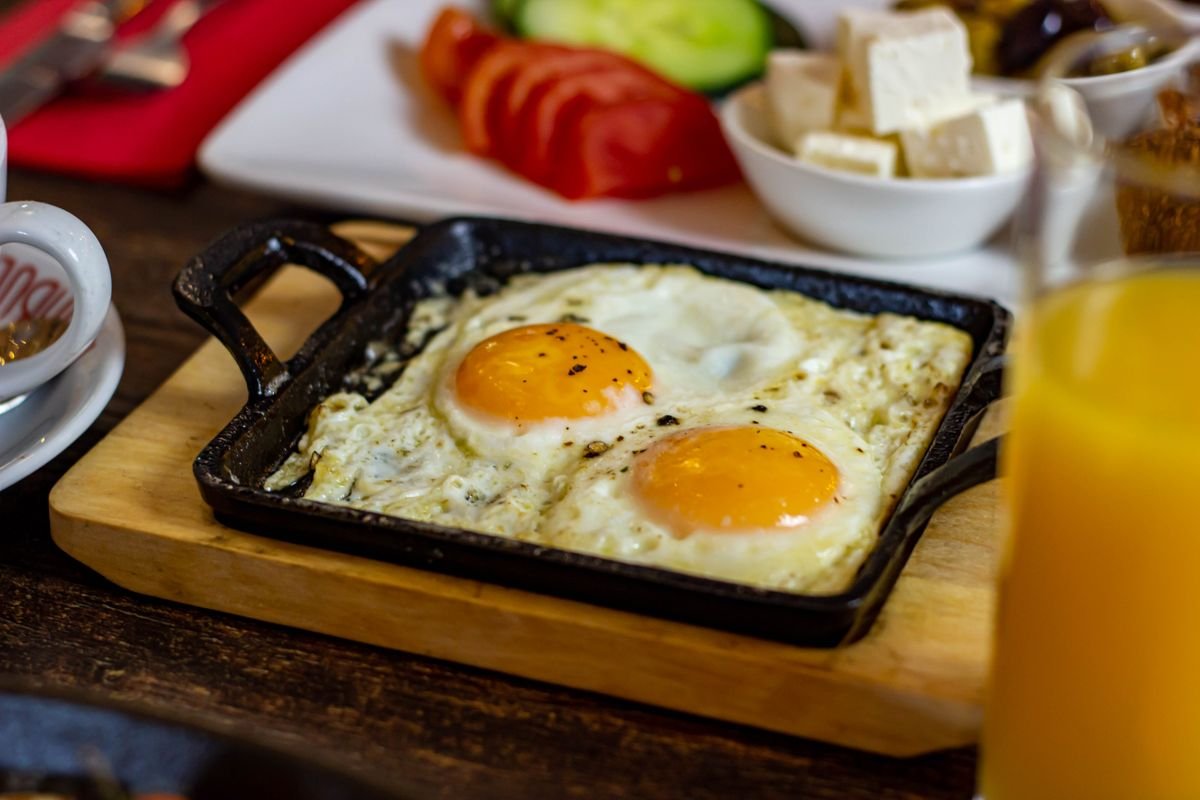
Preheat the Pan Properly — The pan is ready when a drop of water sizzles and dances, not when it just sits there. Eggs hitting a truly hot pan set instantly on contact instead of sticking and spreading thin.
4. Use Enough Butter
Use Enough Butter — A full tablespoon of butter for a 2-egg omelet isn’t indulgent — it’s structural. The foam should just subside before eggs go in; that’s the sweet spot between raw butter and browned butter.
5. Tilt and Pull, Don’t Stir
Tilt and Pull, Don’t Stir — As the edges set, tilt the pan and pull set egg toward the center with a spatula, letting raw egg flow underneath. Two or three pulls and the omelet is 80% set with a creamy top.
6. Cook Fillings Before the Eggs
Cook Fillings Before the Eggs — Mushrooms, peppers, onions and raw meats must be fully cooked before they meet the eggs — the omelet’s 90-second cook can’t do it. Sauté fillings first, set aside, then wipe the pan.
7. Warm Fillings, Don’t Chill Them
Warm Fillings, Don’t Chill Them — Cold cheese and fillings drop the pan temperature and make the eggs seize around them. Have fillings at room temperature so everything finishes together in the same minute.

8. Keep the Heat at Medium
Keep the Heat at Medium — High heat browns and toughens eggs in seconds; low heat overcooks them before they set. Medium gives you a golden exterior and a just-set, creamy interior — adjust the dial, not your technique.
9. Salt After, Not Before
Salt After, Not Before — Salt breaks down egg proteins and draws out water if it sits. Season the beaten eggs right as they hit the pan, or salt the finished omelet — never 10 minutes ahead.
10. Use a Nonstick or Well-Seasoned Pan
Use a Nonstick or Well-Seasoned Pan — Omelets are the one dish where nonstick earns its keep. If using carbon steel or cast iron, it must be truly seasoned and preheated — eggs find every flaw in the seasoning.
11. Don’t Overfill
Don’t Overfill — Two to three tablespoons of filling per 2-egg omelet is the max. Overstuffed omelets tear when folded and the fillings never warm through — restraint makes a better omelet.
12. Shred Cheese Fine
Shred Cheese Fine — Finely shredded cheese melts in the residual heat of a folded omelet; thick chunks stay cold and waxy. Grate it yourself — pre-shredded coatings resist melting.
13. Fold in Thirds, Not in Half
Fold in Thirds, Not in Half — A tri-fold (like a letter) gives a plumper, more even omelet that plates beautifully. Half-moons look flat and the filling slides to one end.
14. Finish with the Lid On
Finish with the Lid On — If the top is still runny, cover the pan for 20 seconds instead of flipping. The trapped steam sets the top gently while the bottom stays golden — no risky flip needed.
15. Rest 30 Seconds Before Plating
Rest 30 Seconds Before Plating — Let the folded omelet sit in the pan off the heat for half a minute. The center finishes setting from residual heat so it doesn’t weep onto the plate.
16. Add Fresh Herbs Off the Heat
Add Fresh Herbs Off the Heat — Chives, dill and parsley go on after folding, not in the pan — heat kills their brightness in seconds. The contrast of cool fresh herbs against hot eggs is the whole point.
17. Try the French Low-and-Slow
Try the French Low-and-Slow — For a classic French omelet, keep heat low and stir constantly with a fork for the first minute, then smooth and roll. You get a pale, custardy cylinder with zero browning — pure silk.
18. Drain Watery Vegetables First
Drain Watery Vegetables First — Tomatoes, spinach and mushrooms release liquid that turns omelets soupy. Sauté them until dry, or salt tomatoes and drain 10 minutes — watery filling is the top omelet complaint.
19. Use Room-Temperature Eggs
Use Room-Temperature Eggs — Cold eggs hit the pan and drop its temperature, cooking unevenly. Set eggs out 15 minutes ahead, or warm them in a bowl of warm water for 5 — small step, visibly better set.
20. Butter the Spatula Too
Butter the Spatula Too — A thin film of butter on your spatula keeps it gliding under the setting eggs without tearing. Dry spatulas drag and rip the delicate curd.
21. Make It a Frittata for a Crowd
Make It a Frittata for a Crowd — Feeding four? Skip individual omelets and bake one frittata — same flavors, one pan, zero timing stress. Start on the stove, finish 8 minutes in a 400°F oven.
22. Add a Teaspoon of Cornstarch Slurry
Add a Teaspoon of Cornstarch Slurry — Diner omelets stay fluffy on the steam table thanks to a little starch. Whisk 1 teaspoon cornstarch with the water before beating — it stabilizes the eggs against overcooking.

23. Serve on a Warm Plate
Serve on a Warm Plate — A cold plate shocks a hot omelet and it deflates on contact. Run plates under hot water and dry them — restaurant trick, zero cost.
24. Reheat Gently or Not at All
Reheat Gently or Not at All — Leftover omelet goes rubbery in the microwave. If you must, warm it 20 seconds at half power — or better, chop it into fried rice or a breakfast burrito where texture hides.
25. Log Your Winning Combo
Log Your Winning Combo — When you nail the perfect filling ratio, write it down — how many eggs, which cheese, what fillings. Great omelets are repeatable once you record what worked.