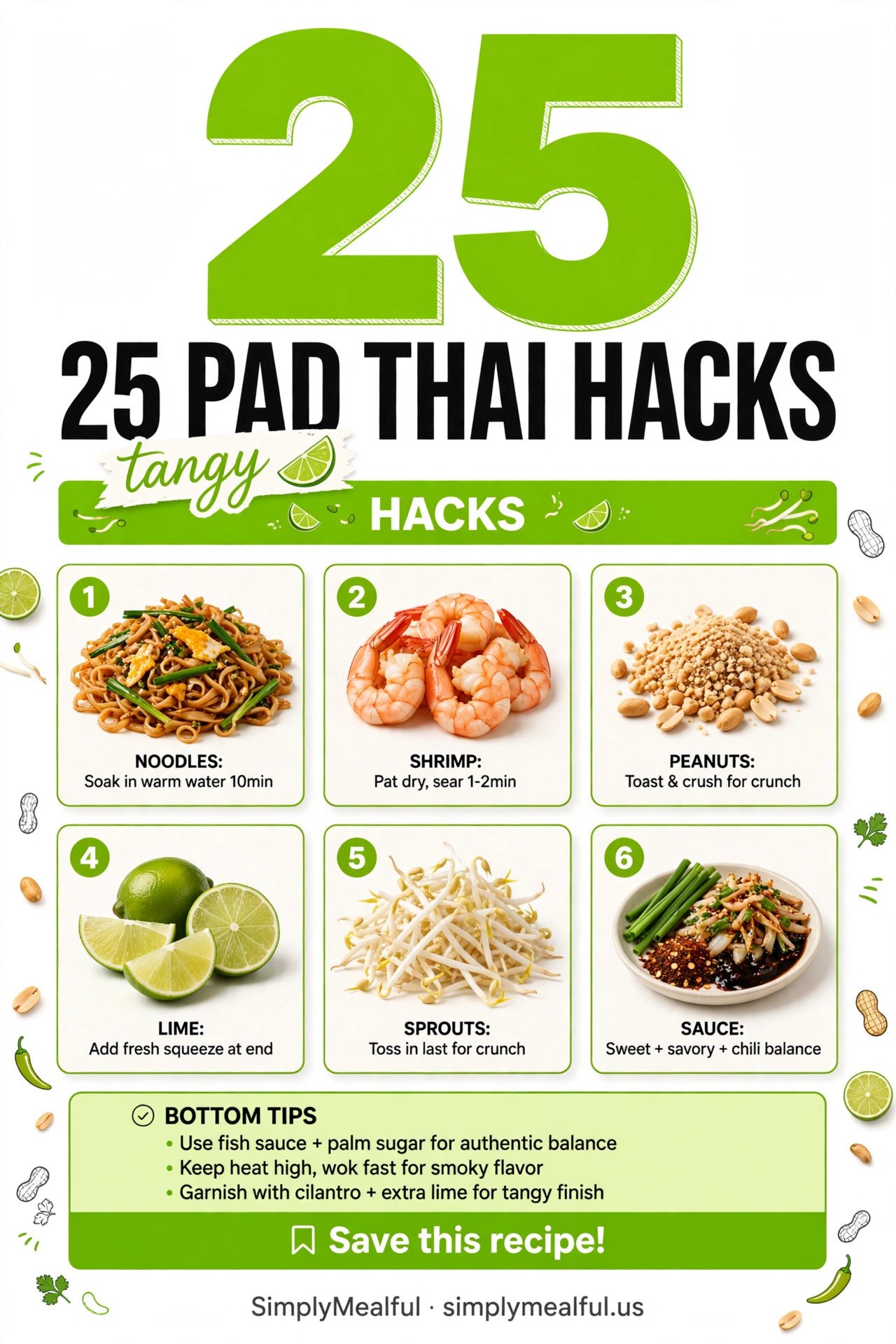
25 Pad Thai Hacks for Sweet, Tangy, Perfectly Chewy Noodles
Pad Thai should be sweet, tangy, salty, and chewy — never clumpy, greasy, or one-note. These 25 pad Thai hacks cover noodle soaking, sauce balance, egg technique, and toppings, so your homemade pad Thai tastes like your favorite Thai restaurant.
1. Soak Noodles, Do Not Boil Them
Soak Noodles, Do Not Boil Them — Soak rice noodles in warm water until pliable but still firm, usually 8 to 10 minutes. Boiled noodles turn mushy in the wok, while soaked noodles finish cooking in the sauce perfectly.
2. Balance Sweet, Sour, and Salty Equally
Balance Sweet, Sour, and Salty Equally — Taste the sauce before cooking and adjust so no single flavor dominates. Pad Thai sauce should hit sweet, sour, and salty in equal measure, with tamarind providing the signature tang.
3. Use Tamarind Paste for Real Flavor
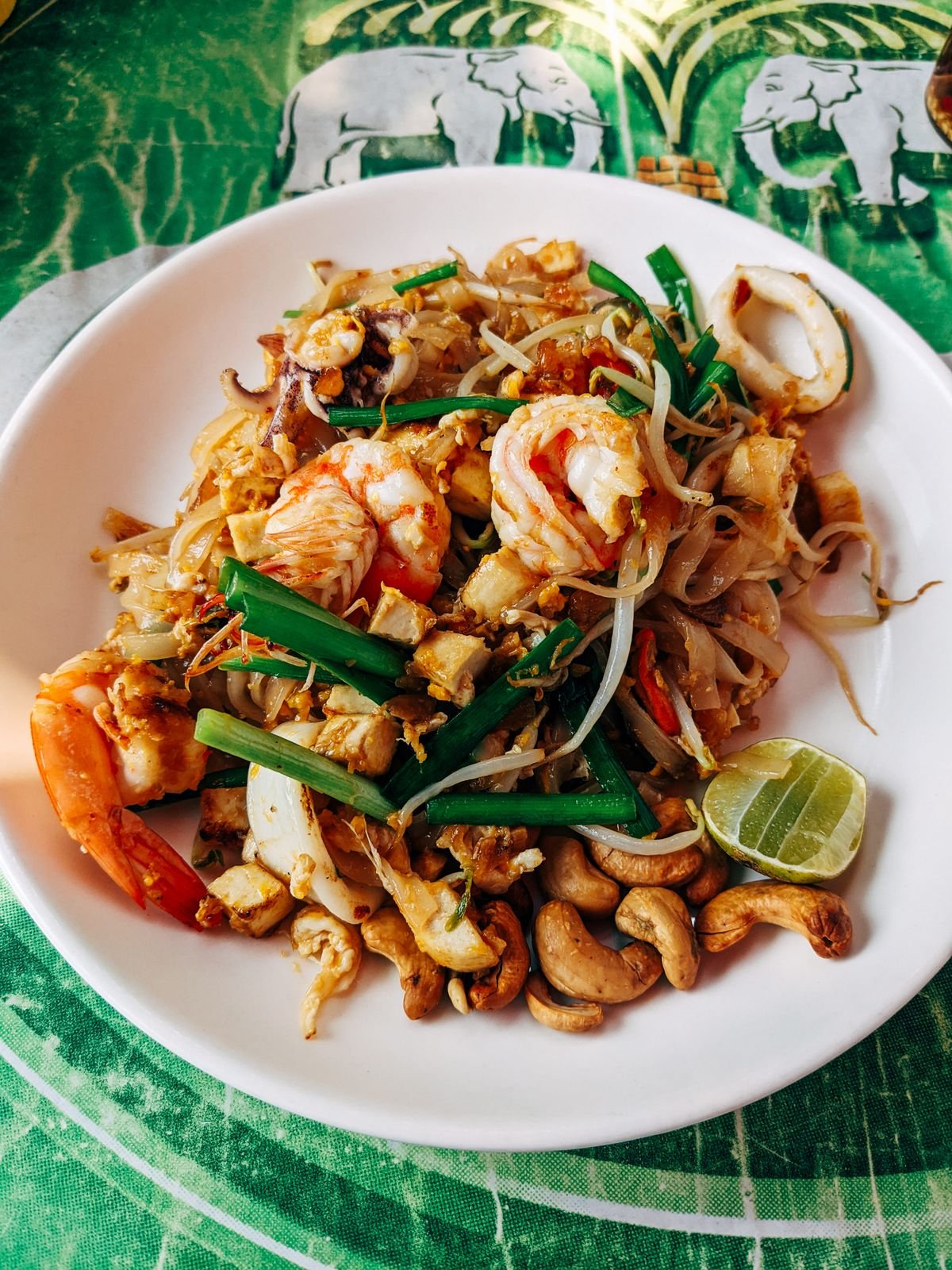
Use Tamarind Paste for Real Flavor — Use tamarind paste, not just lime juice, for the sauce's sour note. Tamarind gives pad Thai its distinctive fruity tang that lime alone cannot replicate.
4. Mix Sauce Before You Start Cooking
Mix Sauce Before You Start Cooking — Whisk the sauce together completely before heating the wok. Once noodles go in, everything moves fast, and there is no time to measure fish sauce mid-stir-fry.
5. Cook in Small Batches
Cook in Small Batches — Cook pad Thai in batches of two servings at most. A crowded wok steams the noodles into a clump instead of stir-frying them into separate, chewy strands.
6. Scramble Eggs in a Corner of the Wok
Scramble Eggs in a Corner of the Wok — Push noodles aside, scramble eggs in the empty space, then toss everything together. This keeps the egg in distinct ribbons instead of disappearing into the sauce.
7. Use Fish Sauce, Not Just Soy Sauce
Use Fish Sauce, Not Just Soy Sauce — Fish sauce is essential for authentic pad Thai flavor. Soy sauce alone tastes flat by comparison, while fish sauce adds the savory depth Thai cooking depends on.

8. Add Bean Sprouts at the Very End
Add Bean Sprouts at the Very End — Toss bean sprouts in off the heat so they stay crisp. Cooked sprouts turn limp and watery, while raw ones add a fresh crunch that balances the rich noodles.
9. Press Tofu Before Cooking
Press Tofu Before Cooking — Press extra-firm tofu for 15 minutes to remove water, then cube and fry until golden. Unpressed tofu stays soggy and falls apart in the wok.
10. Keep Noodles Moving in the Wok
Keep Noodles Moving in the Wok — Toss constantly once noodles hit the pan so they cook evenly and do not stick together. Rice noodles clump fast, and a few seconds of stillness can fuse them into a brick.
11. Add Peanuts Twice
Add Peanuts Twice — Mix half the crushed peanuts into the noodles and sprinkle the rest on top. The mixed peanuts add flavor throughout, while the topping adds crunch you notice in every bite.
12. Use a Nonstick Wok for Beginners
Use a Nonstick Wok for Beginners — If noodles keep sticking, use a well-seasoned nonstick wok or large skillet. Carbon steel is traditional, but nonstick is far more forgiving while you learn the timing.
13. Cut Lime Wedges, Not Just Juice
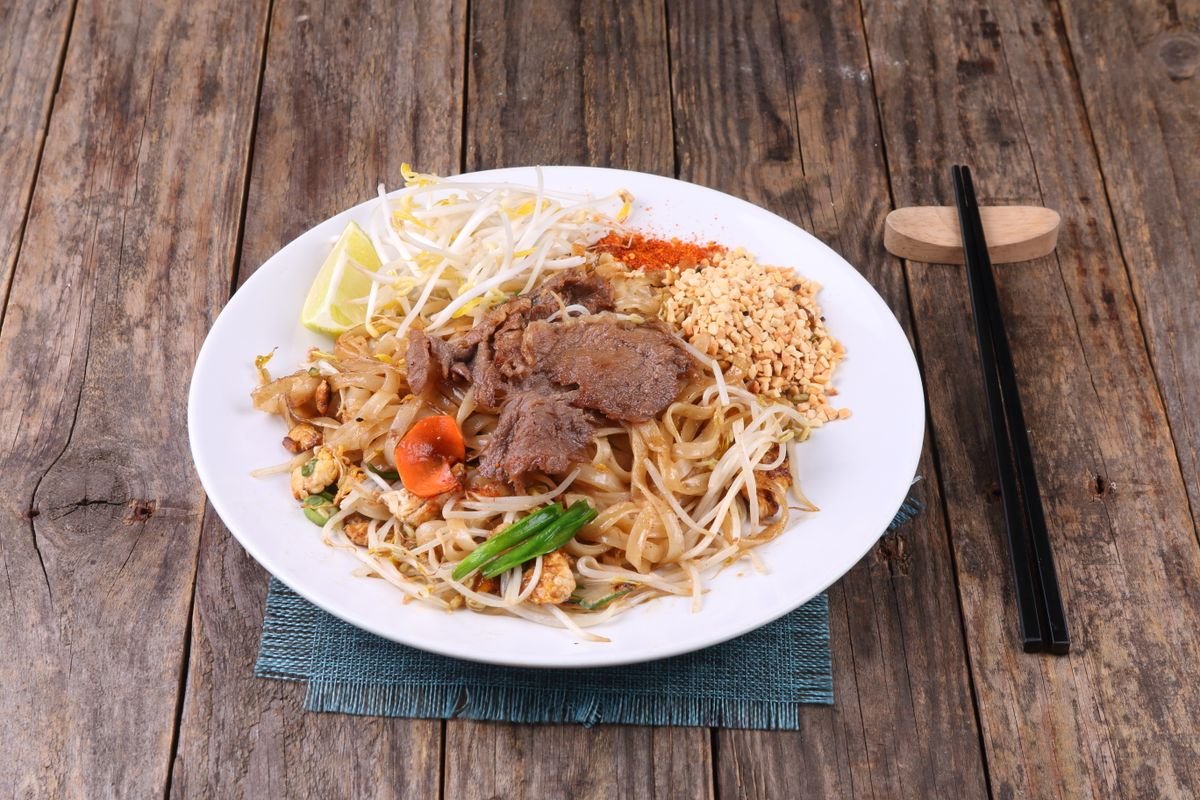
Cut Lime Wedges, Not Just Juice — Serve with lime wedges for squeezing at the table. Fresh lime juice added at serving brightens the dish in a way that cooked-in juice cannot.
14. Soak Noodles in Room-Temperature Water Longer
Soak Noodles in Room-Temperature Water Longer — If your noodles are thick, soak them in room-temperature water for 30 minutes instead of warm water for 10. Slow soaking gives you more control and less risk of over-softening.
15. Add Garlic Chives for Authentic Flavor
Add Garlic Chives for Authentic Flavor — Use garlic chives instead of regular chives if you can find them. Their mild garlic flavor is a signature pad Thai ingredient that regular chives cannot match.
16. Do Not Over-Sauce the Noodles
Do Not Over-Sauce the Noodles — Start with less sauce than you think you need and add more only if the noodles look dry. Too much sauce pools at the bottom and makes the dish soupy.
17. Dry Shrimp Thoroughly Before Cooking
Dry Shrimp Thoroughly Before Cooking — Pat shrimp completely dry before adding them to the hot wok. Wet shrimp steam instead of sear, and they release water that makes the noodles soggy.

18. Use Palm Sugar for Authentic Sweetness
Use Palm Sugar for Authentic Sweetness — Palm sugar gives a deeper, more caramel-like sweetness than white sugar. It dissolves easily in the sauce and is worth seeking out at an Asian grocery store.
19. Have All Ingredients Ready Before Heating
Have All Ingredients Ready Before Heating — Prep and arrange every ingredient beside the stove before you turn on the heat. Pad Thai cooks in about 5 minutes, and there is no time to chop mid-cook.
20. Add Chili Flakes to Taste at the Table
Add Chili Flakes to Taste at the Table — Serve chili flakes on the side so everyone controls their own heat. Cooking all the spice into the dish makes it too hot for some and too mild for others.
21. Rinse Soaked Noodles in Cold Water
Rinse Soaked Noodles in Cold Water — Rinse soaked noodles briefly in cold water to remove surface starch. This extra step prevents clumping and helps the noodles stay separate in the wok.
22. Use a Large, Wide Pan
Use a Large, Wide Pan — Use the widest pan you own so noodles spread out in a thin layer. A narrow, deep pot traps steam and turns noodles gummy instead of stir-fried.

23. Add a Splash of Water if Noodles Seize
Add a Splash of Water if Noodles Seize — If noodles clump or dry out mid-cook, splash in a tablespoon of water and toss vigorously. The steam loosens the noodles without adding more sauce or salt.
24. Garnish Generously — It Matters
Garnish Generously — It Matters — Do not skip the garnishes: peanuts, lime, sprouts, and cilantro are not decoration. They provide the crunch, acid, and freshness that make pad Thai taste complete.
25. Double the Sauce for Leftovers
Double the Sauce for Leftovers — Make a double batch of sauce and store half in the fridge. Leftover noodles absorb sauce overnight, and reheating with fresh sauce revives them beautifully.