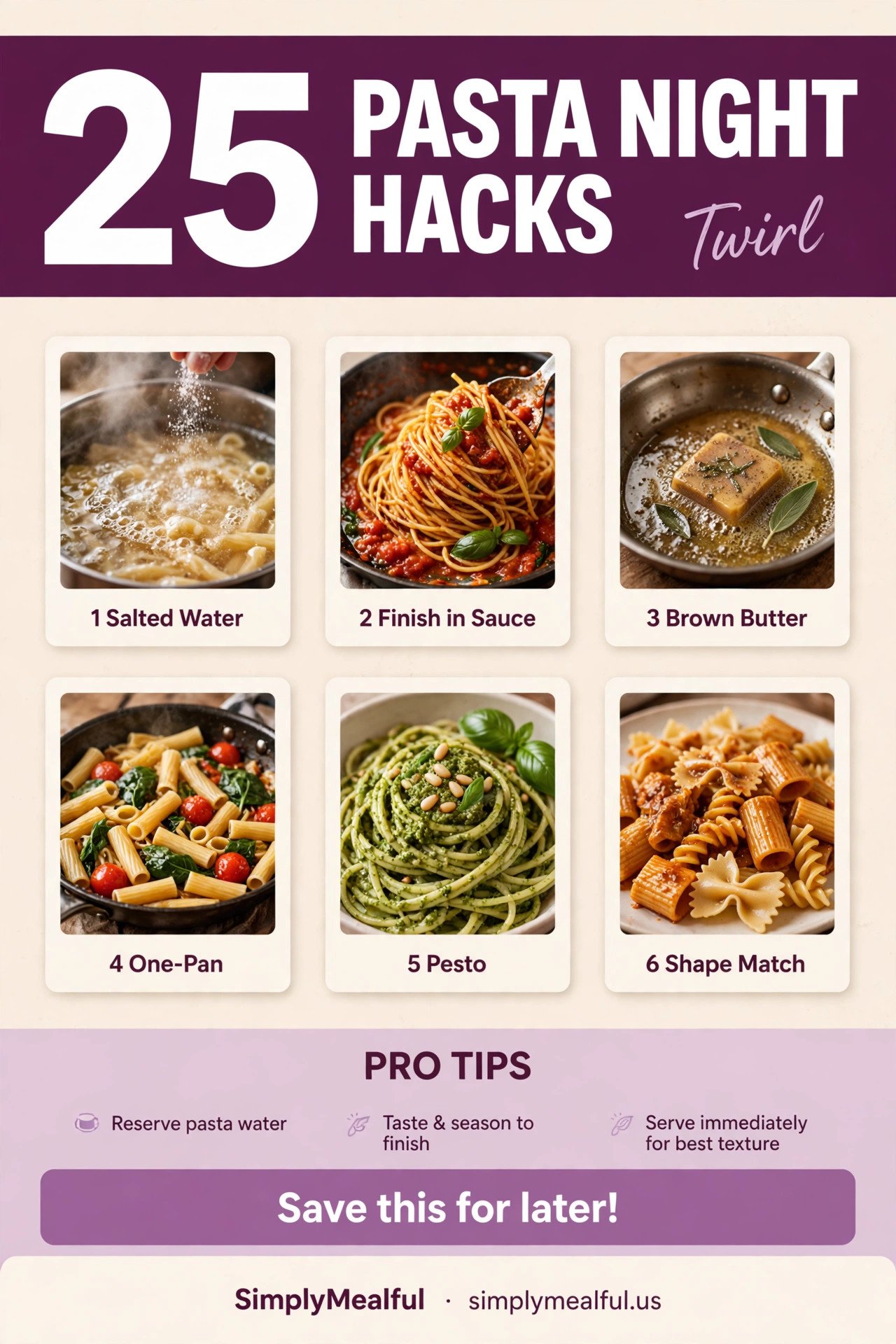
25 Pasta Night Hacks for Restaurant-Worthy Dinners
Pasta night is the easiest dinner to make — and the easiest to make boring. These 25 pasta night hacks cover water, timing, sauce technique, and upgrades that make a 20-minute weeknight pasta taste like a trattoria.
1. Salt the Water Like the Sea
Salt the Water Like the Sea — Use 1 tablespoon of kosher salt per quart of water — the pasta absorbs seasoning from the inside as it cooks. Under-salted water is why homemade pasta tastes flat no matter how good the sauce.
2. Save a Cup of Pasta Water
Save a Cup of Pasta Water — Before draining, scoop out a mug of the starchy water. It is liquid gold for sauces — the starch emulsifies oil and water into a glossy coating that clings to every strand.
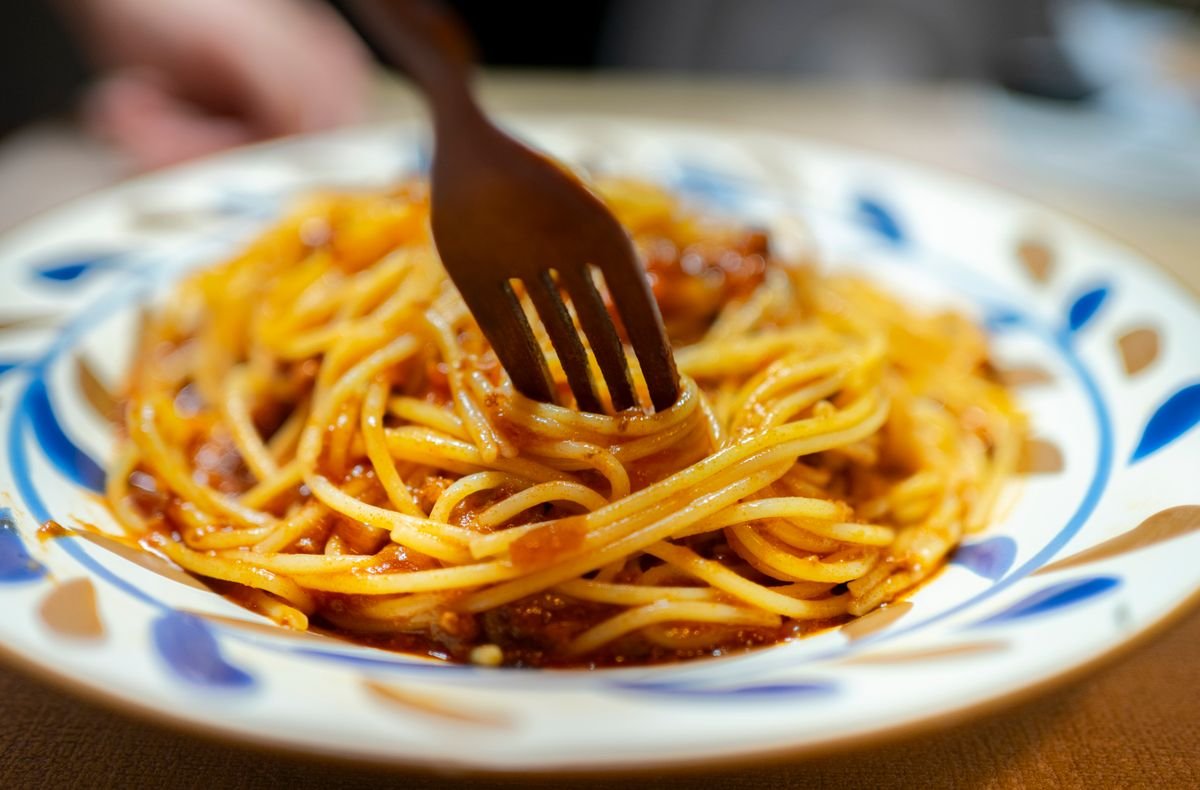
3. Finish Pasta in the Sauce
Finish Pasta in the Sauce — Drain pasta 2 minutes shy of al dente and finish it in the simmering sauce with a splash of pasta water. The noodles absorb flavor instead of just wearing it.
4. Don’t Add Oil to the Water
Don’t Add Oil to the Water — Oil floats on top and does nothing except make sauce slide off the pasta later. A big pot and plenty of water prevent sticking far better than oil ever could.
5. Toast Dry Pasta for Depth
Toast Dry Pasta for Depth — Toast spaghetti or orzo in a dry skillet until golden before boiling. The nutty, wheaty flavor is subtle but remarkable — try it once in a simple butter sauce.
6. Cold-Start Long Pasta
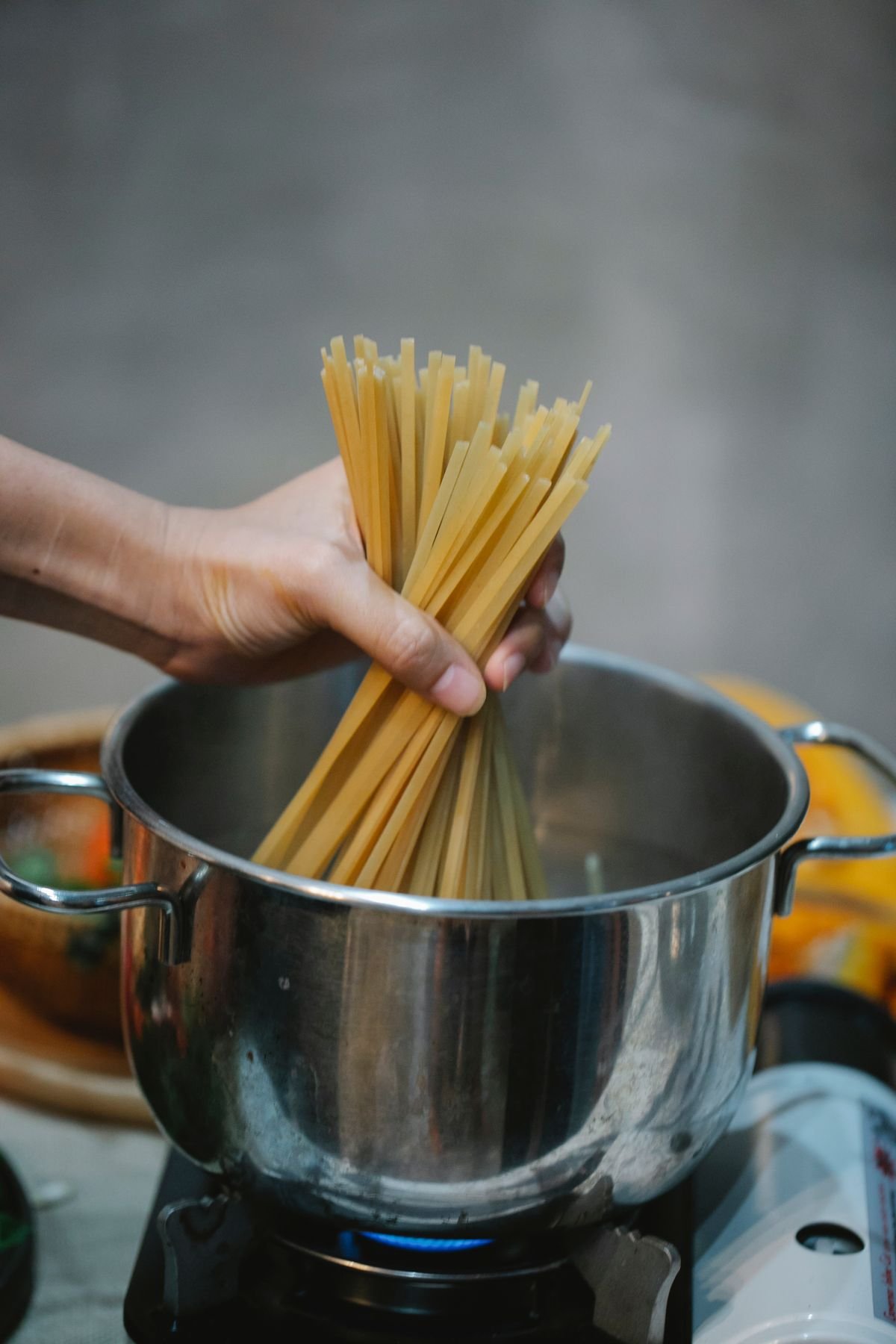
Cold-Start Long Pasta — Lay spaghetti in cold salted water, bring to a boil, and cook — it hydrates evenly and rarely sticks. It sounds wrong, but tests show it works beautifully for long shapes.
7. Sauce the Pan, Not the Plate
Sauce the Pan, Not the Plate — Toss pasta and sauce together in the hot pan for a full minute before plating. Restaurant pasta is married in the pan; home pasta too often meets only on the plate.
8. Grate Cheese Fine, Add Off Heat
Grate Cheese Fine, Add Off Heat — Microplane Parmesan finely and toss it in after the pan leaves the heat. Coarse cheese in a screaming-hot pan clumps; fine cheese off heat melts into silk.
9. One-Pan Pasta, Measured Water
One-Pan Pasta, Measured Water — Cover dry pasta with just enough salted water to submerge, simmer 10 minutes, stirring. The starch stays in the pan and thickens the sauce by itself — one pan, no colander.
10. A Pinch of Baking Soda in Tomato Sauce
A Pinch of Baking Soda in Tomato Sauce — A pinch of baking soda (⅛ teaspoon) in acidic tomato sauce neutralizes harshness without sugar. Stir well and wait 30 seconds — the fizzing means it is working.
11. Brown Butter for Any Pasta
Brown Butter for Any Pasta — Brown 4 tablespoons butter until nutty, toss with pasta, sage, and Parmesan. Five ingredients, ten minutes, and it tastes like a $24 restaurant primi.
12. Lemon Zest Wakes Up Cream Sauces
Lemon Zest Wakes Up Cream Sauces — A teaspoon of lemon zest cut through Alfredo or carbonara-style sauces lifts the richness. Acid is the missing ingredient in most heavy pasta dishes.
13. Double the Garlic, Add It Late
Double the Garlic, Add It Late — Sauté half the garlic at the start for base flavor, then stir in the rest raw-ish at the end for punch. Two-stage garlic gives depth and bite in the same dish.
14. Mushrooms Need Space
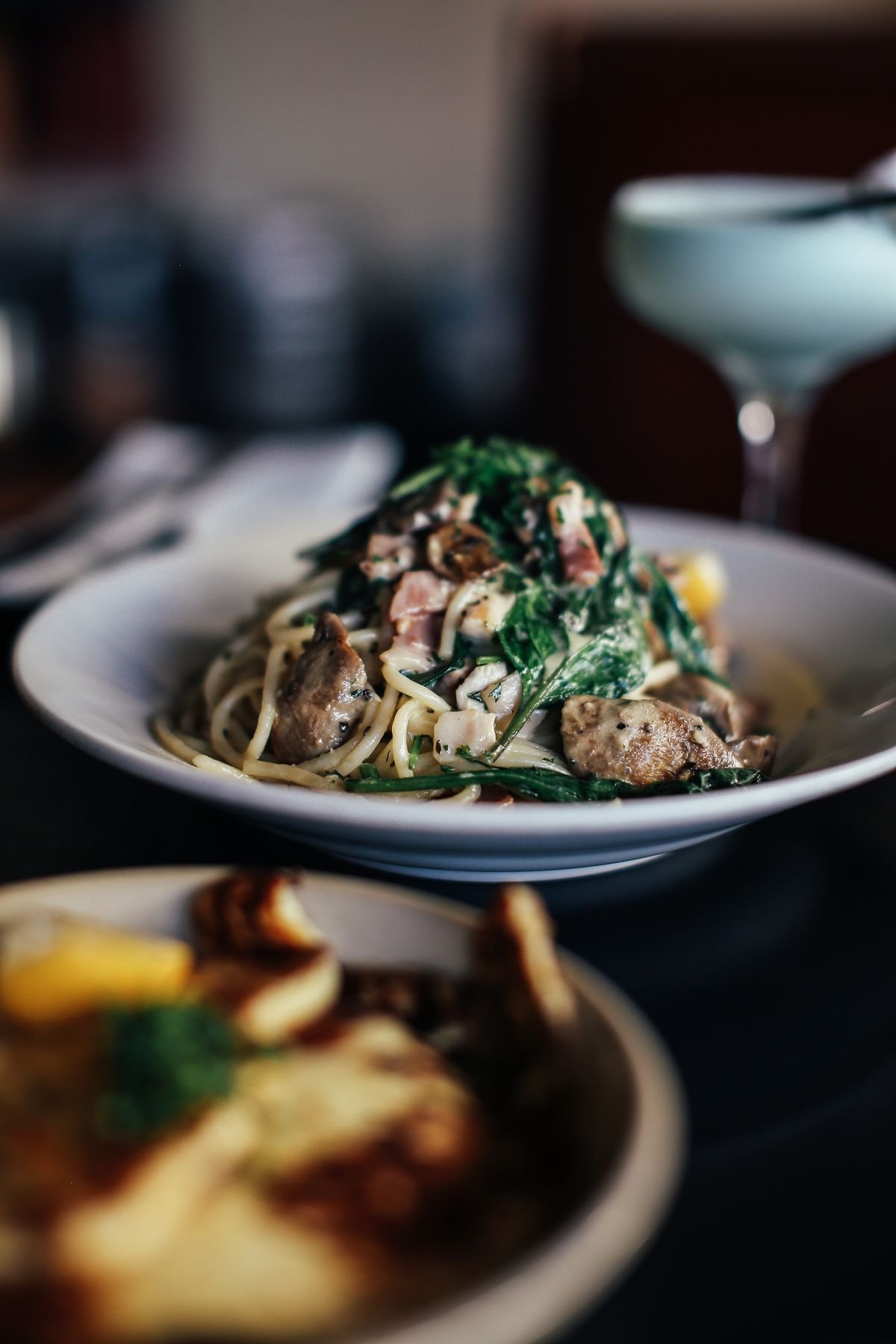
Mushrooms Need Space — Sear mushrooms in a single layer without crowding — they brown instead of steaming. Golden mushrooms have triple the flavor of gray steamed ones in the same pasta.
15. Pesto: Cold Pasta, Hot Pan Off
Pesto: Cold Pasta, Hot Pan Off — Toss pesto with pasta off the heat. High heat turns basil black and bitter; residual warmth blooms it perfectly green and fragrant.
16. Anchovy Paste, No Fish Taste
Anchovy Paste, No Fish Taste — A teaspoon of anchovy paste melted into the sauce base adds deep umami with zero fishiness. It is the secret in great puttanesca and Caesar-style dressings.
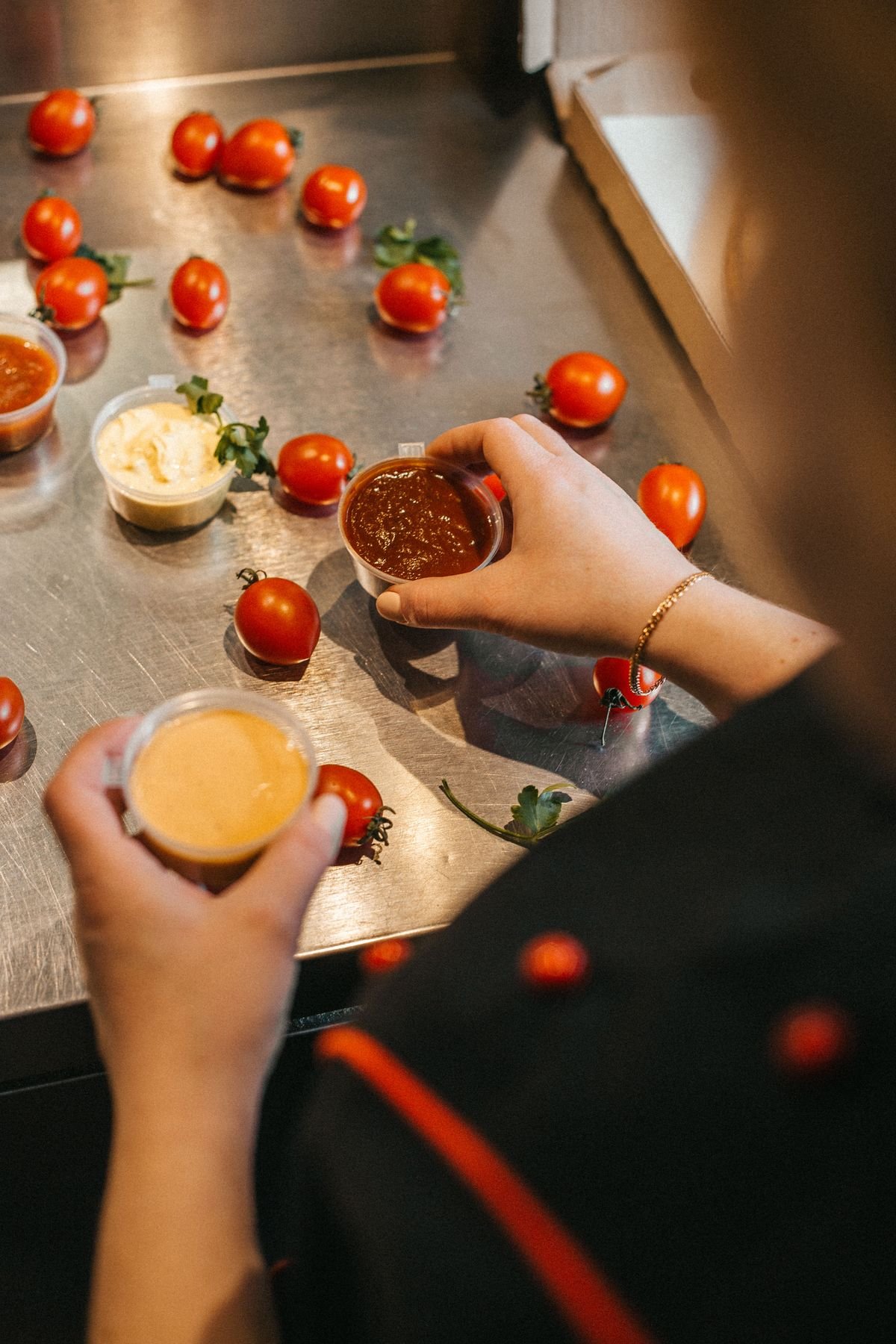
17. Roast Cherry Tomatoes Whole
Roast Cherry Tomatoes Whole — Blister cherry tomatoes in a hot oven with olive oil until they burst, then crush into pasta. Fifteen minutes of roasting beats an hour of simmering for fresh tomato flavor.
18. Reserve Crunchy Toppings
Reserve Crunchy Toppings — Toasted breadcrumbs, fried capers, or crispy pancetta go on at the table, not in the pot. They stay crunchy against the soft pasta instead of going soggy in the sauce.
19. Cook Lasagna Noodles Directly
Cook Lasagna Noodles Directly — No-boil or even regular lasagna noodles can go in dry — just add ¼ cup extra sauce and cover tightly with foil. They hydrate in the bake and the layers set cleaner.
20. Ricotta Dollops, Not Stirred
Ricotta Dollops, Not Stirred — Dollop ricotta over baked pasta instead of mixing it in. The cool creamy pockets contrast the hot pasta — stirred ricotta just disappears into the sauce.
21. Spaghetti Pie from Leftovers
Spaghetti Pie from Leftovers — Press leftover spaghetti mixed with egg and Parmesan into a pie dish, top with sauce and mozzarella, and bake at 375°F for 25 minutes. Day-two pasta becomes a crispy-edged second dinner.
22. Chili Crisp on Everything
Chili Crisp on Everything — A spoonful of chili crisp over cacio e pepe or aglio e olio adds heat and crunch. The chili oil clings to the noodles better than red pepper flakes.
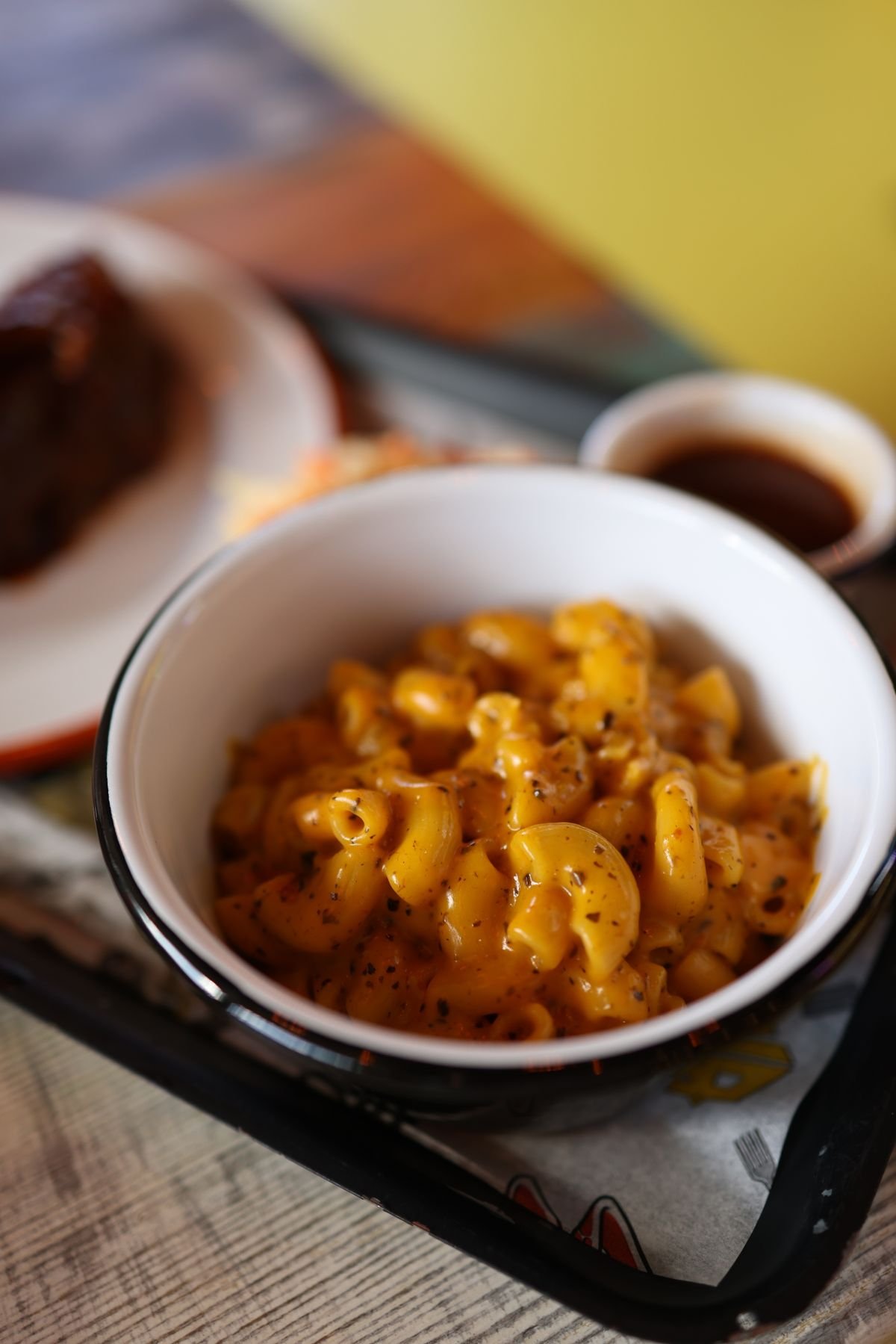
23. Match Shape to Sauce
Match Shape to Sauce — Ridges and tubes (rigatoni, penne) grab chunky sauces; long strands suit silky ones; shells cup small bits. The right shape can make the same sauce taste twice as good.
24. Warm the Serving Bowls
Warm the Serving Bowls — Rinse bowls with hot water before plating. Pasta cools fast, and cold bowls steal heat — warm bowls keep the first bite as good as the last.
25. Taste for Salt at the Very End
Taste for Salt at the Very End — Cheese and pasta water both add salt — season the finished dish, not the components. One final taste-and-adjust beats salting at three stages and overshooting.