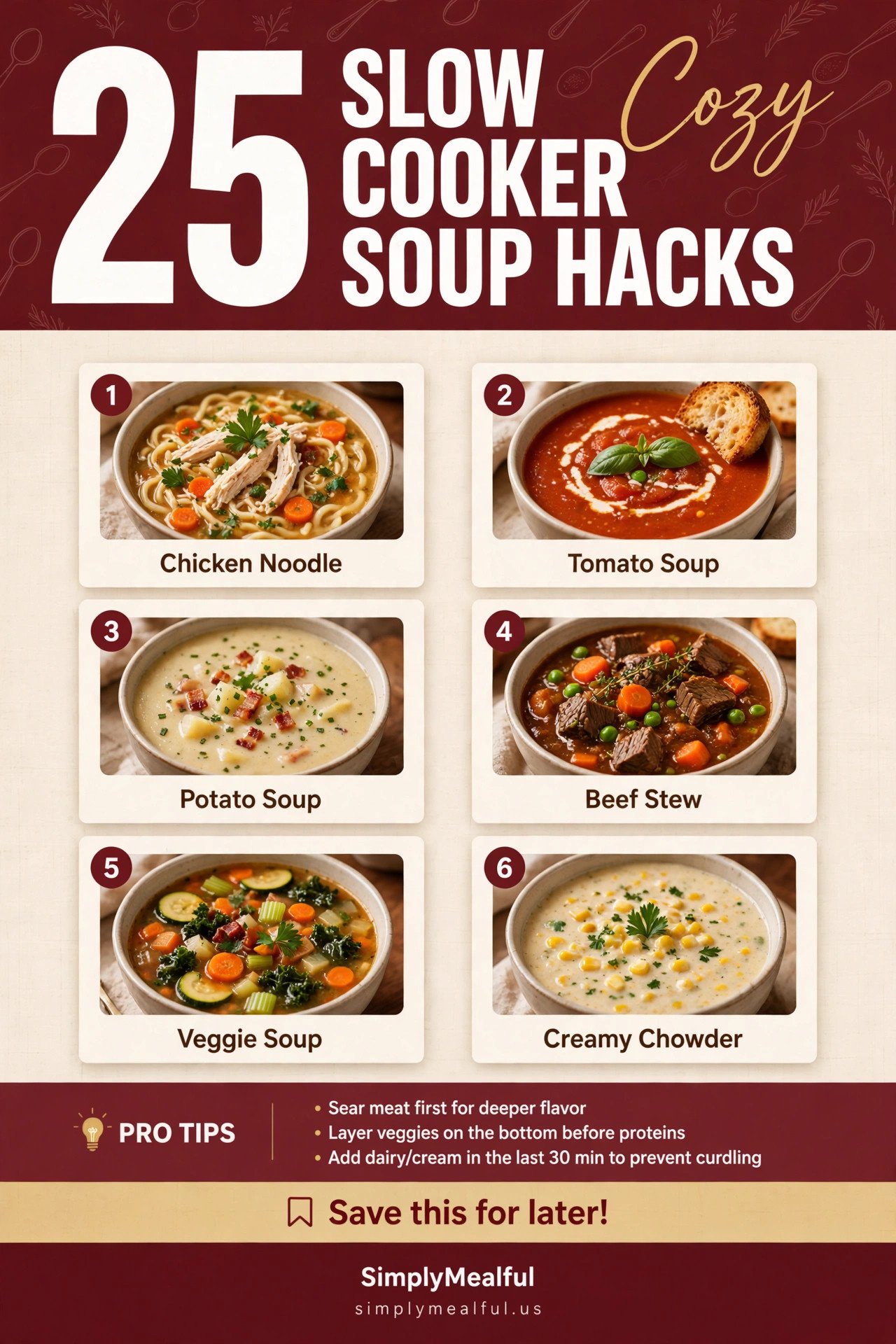
25 Slow Cooker Soup Hacks for Cozy Set-and-Forget Meals
Slow cooker soup should be the easiest dinner of the week, but a few wrong moves turn it watery, bland, or mushy. These 25 slow cooker soup hacks cover layering, timing, thickening, and finishing, so every pot tastes like it simmered all day on the stove.
1. Brown Meat Before It Goes In
Brown Meat Before It Goes In — Sear beef or sausage in a skillet first for deep, caramelized flavor. The slow cooker never gets hot enough to brown, so skipping this step leaves soup tasting flat.
2. Layer Hard Vegetables on the Bottom
Layer Hard Vegetables on the Bottom — Put carrots, potatoes, and onions at the bottom nearest the heat, with meat on top. Hard vegetables cook through properly instead of floating half-raw on top.
3. Use Less Liquid Than Stovetop Recipes
Use Less Liquid Than Stovetop Recipes — Cut the liquid by about a third when adapting a stovetop soup. The sealed lid traps steam, so full amounts leave you with watery, diluted soup.
4. Add Dairy in the Last 30 Minutes
Add Dairy in the Last 30 Minutes — Stir in cream, milk, or cheese only at the end of cooking. Dairy curdles and separates during long, hot cooks, but a late addition stays silky.
5. Add Pasta and Rice Near the End
Add Pasta and Rice Near the End — Cook noodles or rice separately, or add them in the final 30 minutes. All-day pasta turns to mush, while late-added pasta stays distinct and tender.
6. Season in Two Stages
Season in Two Stages — Season lightly at the start and adjust again before serving. Long cooking dulls salt and spices, so a final taste-and-adjust pass brings the soup back to life.
7. Deglaze the Browning Pan into the Pot
Deglaze the Browning Pan into the Pot — Splash broth into the hot skillet after browning meat and scrape up the browned bits. Those caramelized bits carry huge flavor that belongs in the soup, not the sink.
8. Keep the Lid On
Keep the Lid On — Resist lifting the lid to peek, since each lift drops the temperature and adds 20 minutes of cooking. Trust the timer and let the slow cooker do its job.
9. Bloom Tomato Paste First
Bloom Tomato Paste First — Cook tomato paste in a little oil for a minute before adding it. Blooming removes the tinny raw taste and gives tomato soups a richer, rounder base.
10. Freeze Soup Flat in Bags
Freeze Soup Flat in Bags — Cool soup completely, then freeze it flat in zip-top bags. Flat bags stack neatly, thaw fast, and save a fortune in freezer space versus bulky containers.
11. Add a Parmesan Rind While Cooking
Add a Parmesan Rind While Cooking — Drop a saved parmesan rind into the pot and fish it out before serving. It melts into the broth, adding savory depth that tastes like hours of extra work.
12. Use a Tea Towel Under the Lid for Bread
Use a Tea Towel Under the Lid for Bread — For slow cooker breads and dumplings, lay a tea towel under the lid to catch condensation. It stops drips from making the top soggy.
13. Thicken with a Cornstarch Slurry
Thicken with a Cornstarch Slurry — Whisk cornstarch with cold water and stir it in during the last 30 minutes. It thickens smoothly without lumps, unlike flour dumped straight into hot soup.
14. Add Fresh Herbs at the End
Add Fresh Herbs at the End — Stir in parsley, dill, or basil just before serving. Delicate herbs lose their brightness over hours of cooking, but a fresh finish keeps soup tasting alive.
15. Cook Beans from Dry with Enough Time
Cook Beans from Dry with Enough Time — Dry beans need a full 8 hours on low and should never be undercooked. Kidney beans especially must reach a full boil-safe temperature, so give them the time they need.
16. Make a Double Batch and Freeze Half
Make a Double Batch and Freeze Half — Double the recipe and freeze half before adding cream or pasta. You get a second dinner for almost no extra effort on a night you do not feel like cooking.
17. Use Broth, Not Water, as the Base
Use Broth, Not Water, as the Base — Build soup on stock or broth rather than plain water for instant depth. Water dilutes flavor over a long cook, while broth layers it.

18. Add Acid at the End
Add Acid at the End — A squeeze of lemon or splash of vinegar right before serving brightens the whole pot. Acid is the finishing touch that makes rich soups taste balanced instead of heavy.
19. Cut Vegetables in Uniform Pieces
Cut Vegetables in Uniform Pieces — Keep vegetable chunks roughly the same size so they cook evenly. Mixed sizes mean some pieces dissolve while others stay crunchy.
20. Warm the Crock on Cold Days
Warm the Crock on Cold Days — On cold mornings, run the empty crock on high for 15 minutes before filling. A cold crock steals heat and can stretch cooking time noticeably.
21. Label Freezer Bags with Name and Date
Label Freezer Bags with Name and Date — Write the soup name, date, and reheating notes on every freezer bag. Mystery bags get ignored, but labeled ones become easy weeknight dinners.
22. Sauté Onions and Garlic First
Sauté Onions and Garlic First — Soften onions and garlic in a pan before adding them, even for dump recipes. Raw alliums can stay harsh after slow cooking, while sautéed ones turn sweet and mellow.
23. Add Greens in the Last 15 Minutes
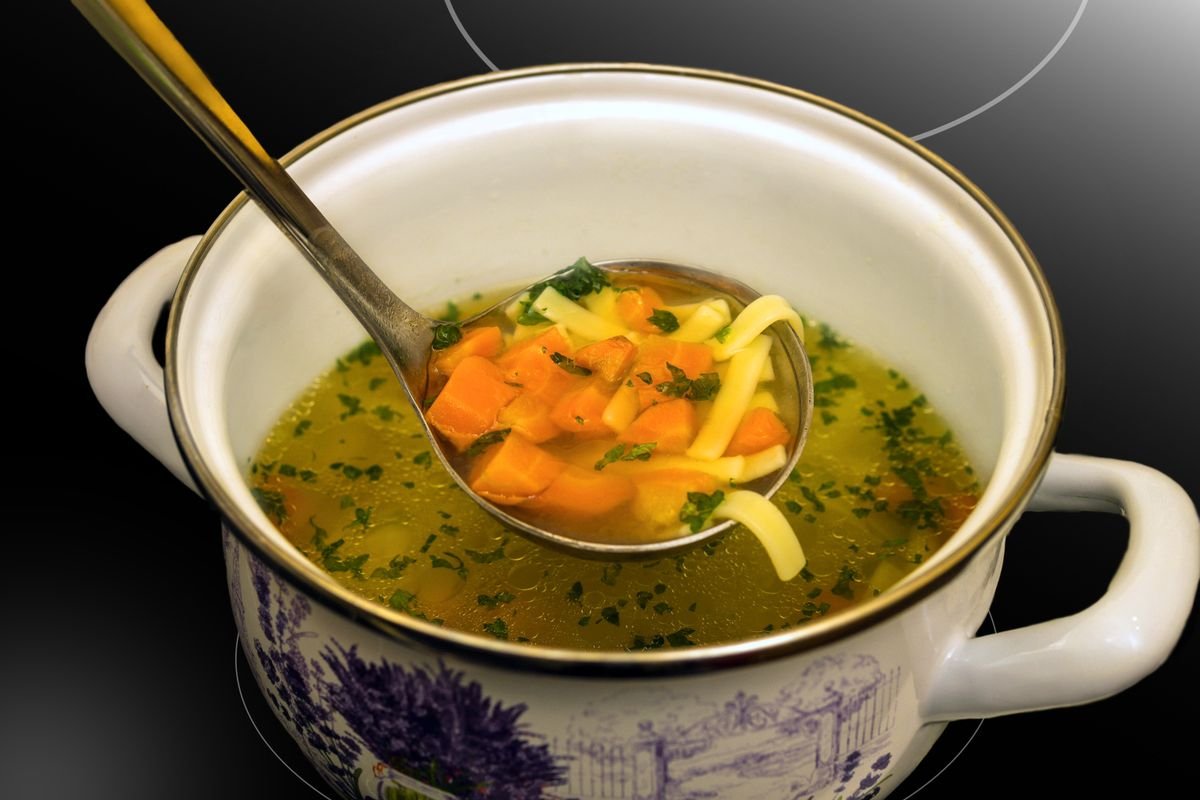
Add Greens in the Last 15 Minutes — Stir spinach, kale, or chard in near the end so they wilt but keep color. Greens cooked all day turn dark, slimy, and bitter.
24. Use the Warm Setting for Serving
Use the Warm Setting for Serving — Switch to warm once soup is done and hold it there for guests. Warm keeps soup at serving temperature safely without overcooking it further.
25. Save the Cooking Liquid for the Next Pot
Save the Cooking Liquid for the Next Pot — Freeze leftover flavorful broth in ice cube trays for future soups and sauces. Those concentrated cubes add instant homemade depth to quick weeknight meals.