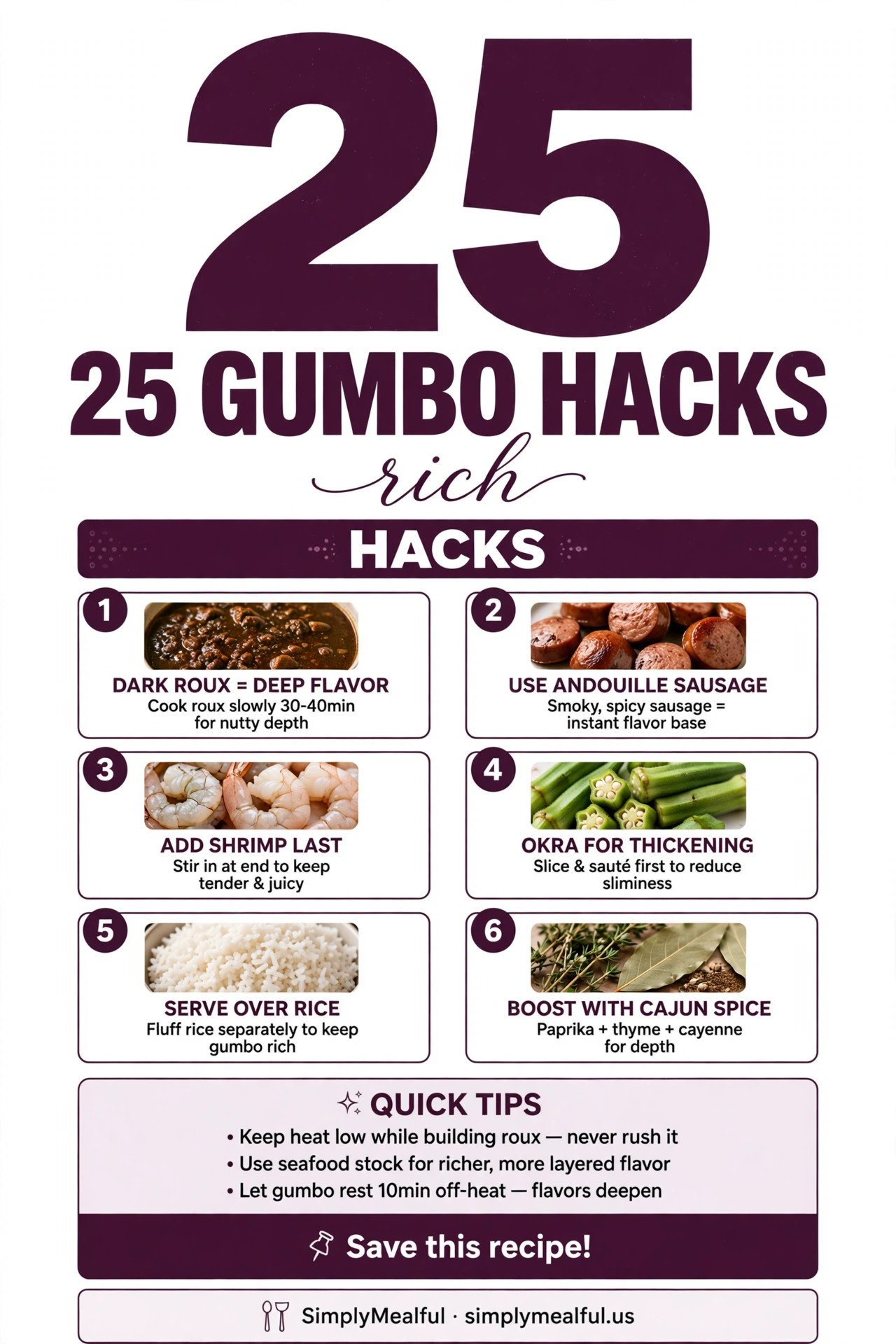
25 Gumbo Hacks for Dark Roux and Deep Louisiana Flavor
Gumbo is Louisiana soul food — a dark, rich stew built on a patient roux and the holy trinity of vegetables. These 25 gumbo hacks cover roux color, stock, sausage and seafood timing, and serving, so your gumbo tastes like it simmered all day in New Orleans.
1. Be Patient with the Roux
Be Patient with the Roux — Stir the flour and oil roux constantly over medium heat for 20 to 30 minutes until it turns the color of dark chocolate. A pale roux makes pale, floury gumbo; a dark roux makes deep, nutty gumbo.
2. Use Oil, Not Butter, for Dark Roux
Use Oil, Not Butter, for Dark Roux — Use vegetable oil for the roux because butter burns before the roux gets dark enough. Butter is fine for light roux, but dark gumbo roux needs oil's higher smoke point.
3. Never Walk Away from the Roux
Never Walk Away from the Roux — Stay at the stove and stir the roux the entire time. Roux goes from perfect to burnt in under a minute, and burnt roux cannot be saved — you must start over.
4. Add the Trinity to Stop the Cooking
Add the Trinity to Stop the Cooking — Toss in the chopped onion, bell pepper, and celery the moment the roux reaches color. The vegetables' moisture stops the roux from darkening further and starts the flavor base.
5. Use Homemade Stock if Possible
Use Homemade Stock if Possible — Homemade chicken or seafood stock makes a noticeable difference in gumbo. Store-bought stock works, but homemade adds body and depth that bottled stock cannot match.
6. Brown Sausage Before Adding It
Brown Sausage Before Adding It — Brown andouille sausage slices in the pot before building the gumbo. Browning renders fat and adds caramelized flavor that boiled sausage never develops.
7. Add Seafood at the Very End
Add Seafood at the Very End — Add shrimp and crab in the last 5 minutes of cooking only. Seafood overcooks fast in hot gumbo, turning rubbery and tough if simmered for the full cooking time.

8. Use Okra as a Thickener
Use Okra as a Thickener — Add sliced okra during the simmer; it releases natural thickeners that give gumbo its signature body. If you dislike okra's texture, cook it until it fully breaks down.
9. Season in Layers, Not All at Once
Season in Layers, Not All at Once — Season the roux, the vegetables, the meat, and the finished pot separately. Layered seasoning builds depth, while one big dump of salt at the end tastes flat.
10. Let Gumbo Rest Overnight
Let Gumbo Rest Overnight — Gumbo tastes better the next day after the flavors meld in the fridge. Make it a day ahead whenever possible, and reheat gently for the best flavor.
11. Serve Rice in the Bowl First
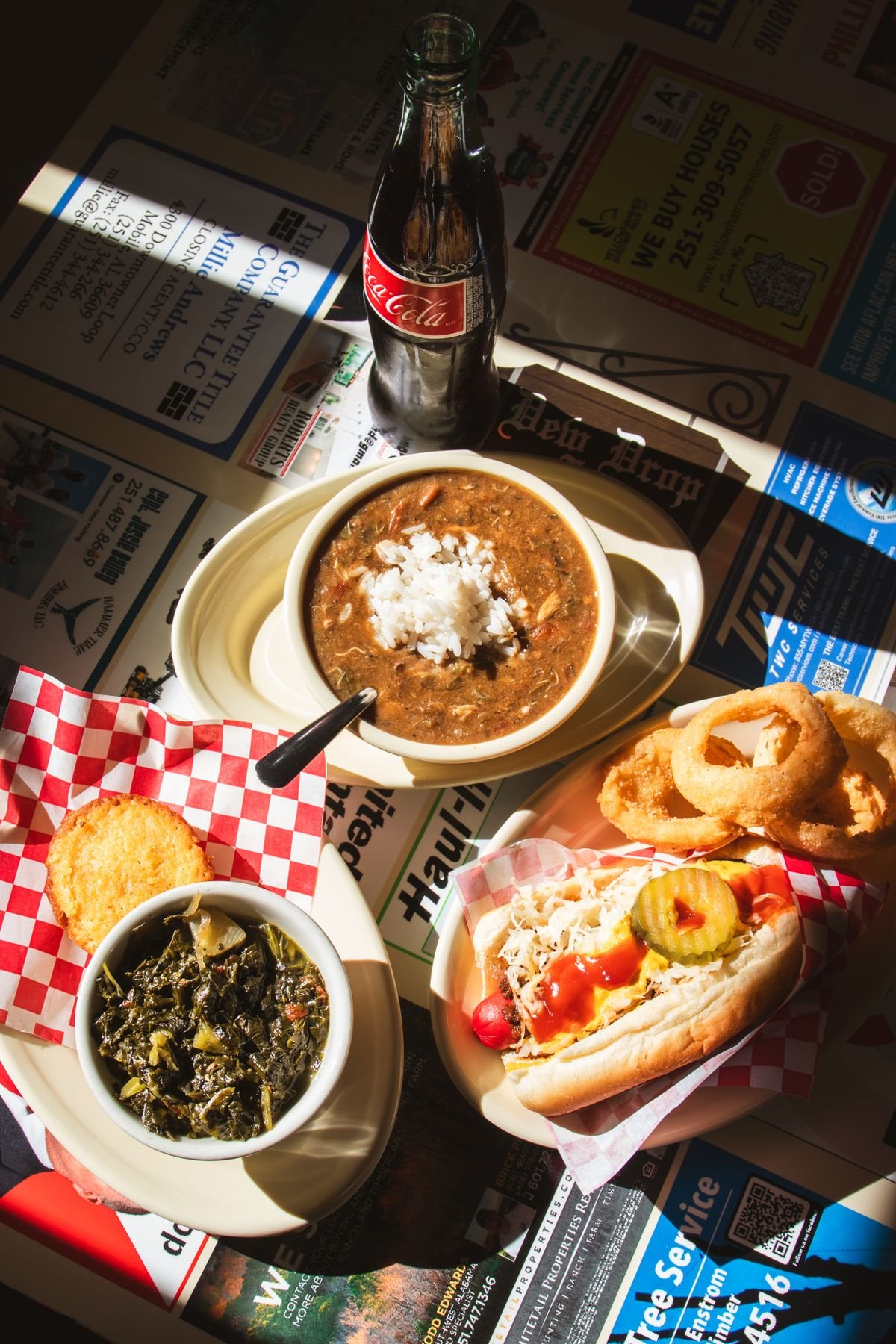
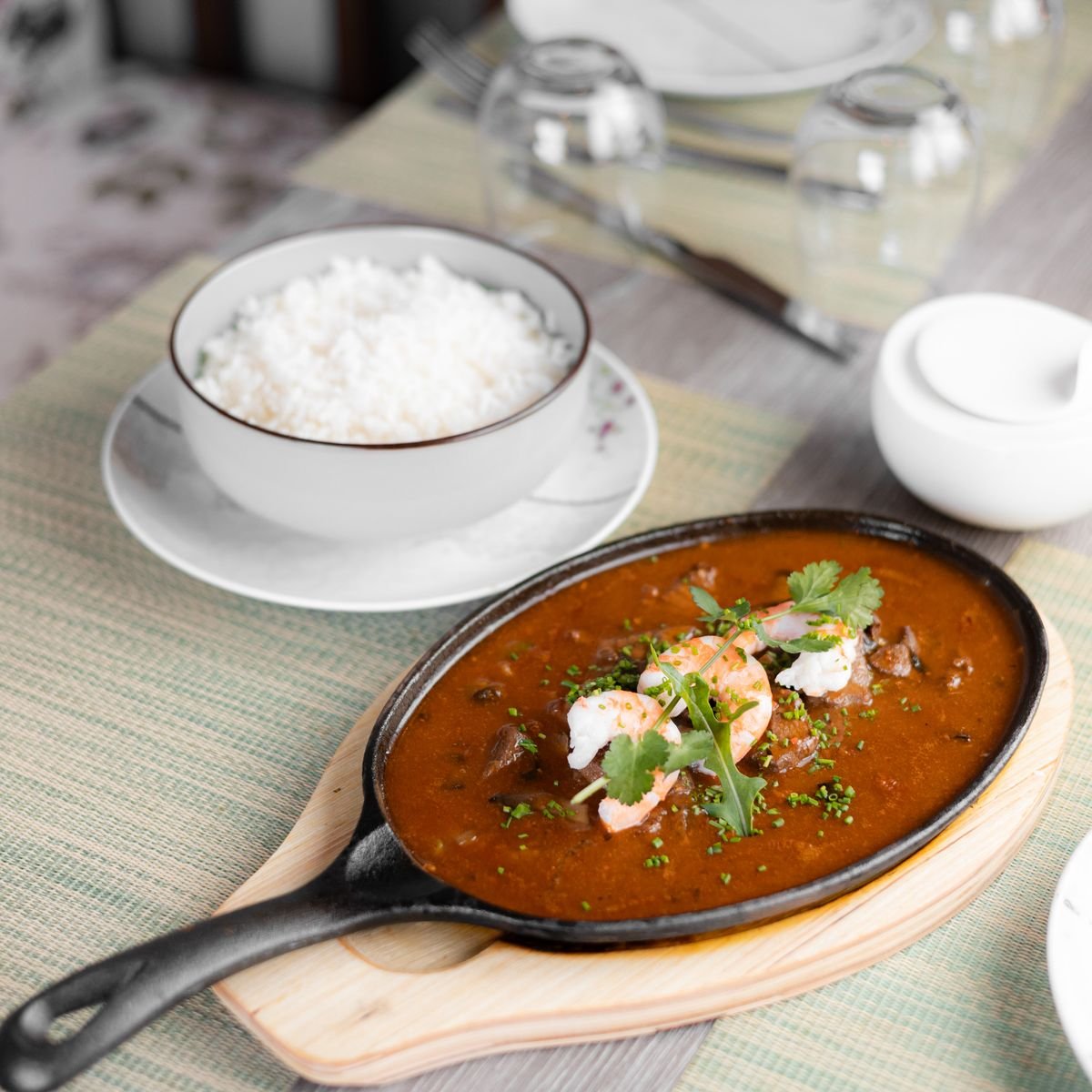
Serve Rice in the Bowl First — Spoon rice into the bowl first, then ladle gumbo over it. This keeps the rice from turning to mush and lets each person control their rice-to-gumbo ratio.
12. Use the Holy Trinity in Equal Parts
Use the Holy Trinity in Equal Parts — Chop onion, bell pepper, and celery in roughly equal amounts for the classic Louisiana base. Skimping on any one of the three throws the flavor balance off.
13. Add File Powder Off the Heat
Add File Powder Off the Heat — Stir file powder into individual bowls, not the whole pot, and never while it is boiling. Boiled file turns stringy and slimy, while off-heat file thickens gently.
14. Deglaze with Beer for Depth
Deglaze with Beer for Depth — Pour in a bottle of lager after the vegetables soften and scrape up the browned bits. Beer adds a malty depth that complements the dark roux beautifully.
15. Do Not Use Tomatoes in Cajun Gumbo
Do Not Use Tomatoes in Cajun Gumbo — Traditional Cajun gumbo skips tomatoes, while Creole gumbo includes them. Pick a style and commit — mixing them without intention muddles the flavor.
16. Freeze Gumbo Without the Rice
Freeze Gumbo Without the Rice — Freeze gumbo in portions without rice, which turns mushy when frozen. Cook fresh rice when serving, and the reheated gumbo tastes freshly made.
17. Use Chicken Thighs, Not Breast
Use Chicken Thighs, Not Breast — Chicken thighs stay tender through a long simmer, while breast meat dries out and shreds into strings. Thighs also add richness from their higher fat content.

18. Skim Fat from the Surface
Skim Fat from the Surface — Skim fat from the surface during the simmer with a ladle or paper towel. A little fat adds richness, but too much leaves a greasy film on every spoonful.
19. Add Garlic After the Trinity Softens
Add Garlic After the Trinity Softens — Add minced garlic after the onion, pepper, and celery have softened for a few minutes. Garlic added too early burns in the hot roux and turns bitter.
20. Use a Heavy Pot for Even Heat
Use a Heavy Pot for Even Heat — Cook gumbo in a heavy Dutch oven or cast iron pot for even heat distribution. Thin pots create hot spots that scorch the roux and ruin the batch.
21. Taste and Adjust Before Serving
Taste and Adjust Before Serving — Taste the finished gumbo and adjust salt, heat, and acid before serving. A splash of hot sauce or vinegar at the end can wake up a pot that tastes flat.
22. Add Smoked Turkey for Extra Depth
Add Smoked Turkey for Extra Depth — Add smoked turkey necks or wings during the simmer for a deep, smoky backbone. Remove them before serving, shred the meat, and stir it back in.

23. Keep the Simmer Gentle
Keep the Simmer Gentle — Simmer gumbo gently, never at a rolling boil. A hard boil breaks down the roux's emulsion and can make the texture grainy instead of silky.
24. Serve with Potato Salad on the Side
Serve with Potato Salad on the Side — In Louisiana, gumbo is often served with a scoop of potato salad right in the bowl or on the side. The cool, creamy salad balances the hot, spicy stew perfectly.
25. Label Freezer Bags with the Date
Label Freezer Bags with the Date — Write the date and contents on freezer bags before filling them. Frozen gumbo all looks the same, and unlabeled bags lead to mystery meals months later.