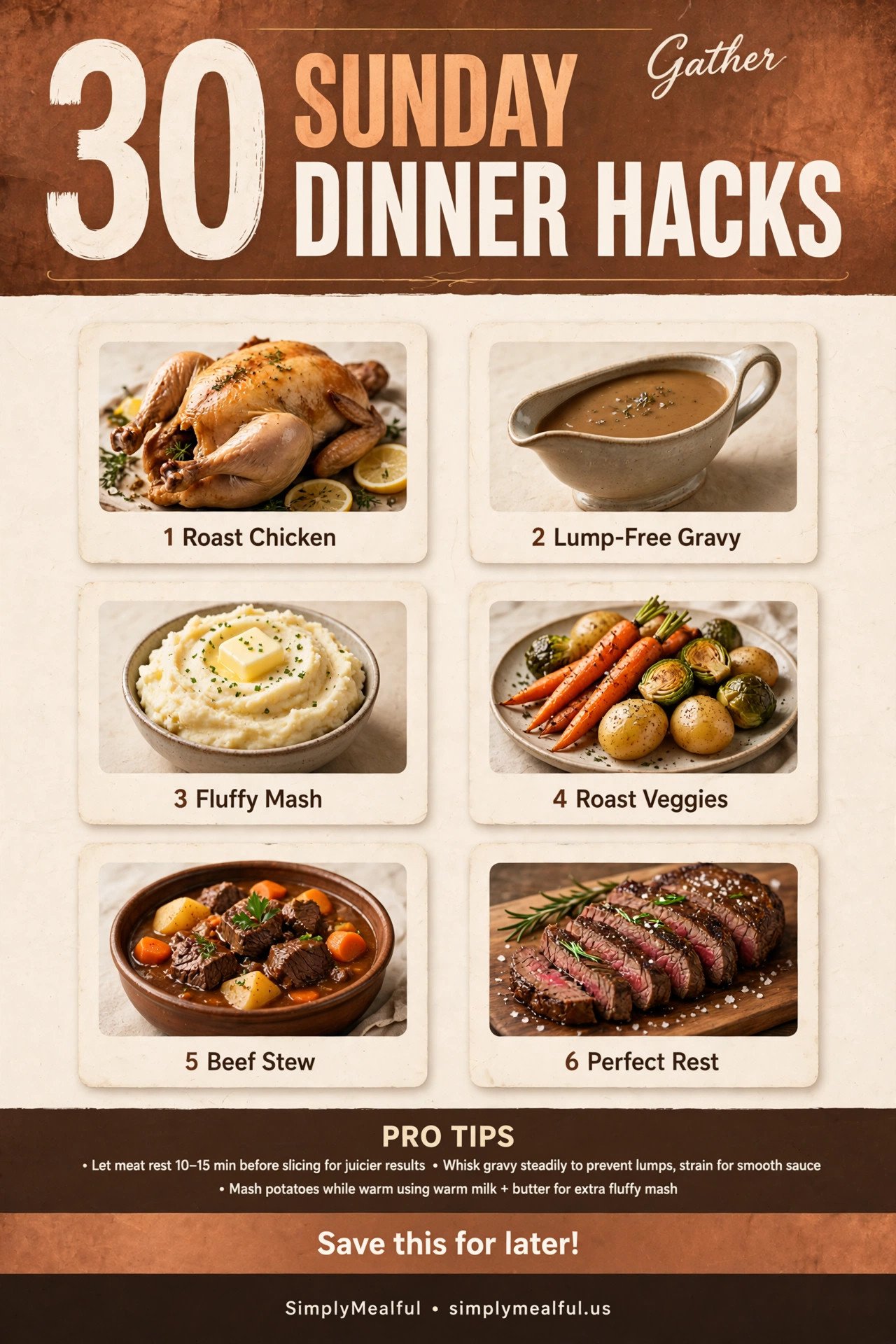
30 Sunday Dinner Hacks for Effortless Family Feasts
Sunday dinner should feel abundant, not exhausting. These 30 hacks streamline the roast, perfect the sides, and fix the gravy — so you actually sit down and enjoy the meal instead of recovering from it.
1. Choose One-Pan Mains
Choose One-Pan Mains — Sheet-pan chicken with vegetables or a Dutch-oven pot roast cooks the whole meal in one vessel. One-pan mains cut active work by half and the shared pan juices flavor everything.
2. Brine the Bird
Brine the Bird — A simple saltwater brine overnight (1 cup salt per gallon) makes roast chicken or turkey dramatically juicier. The salt relaxes proteins so they hold moisture through roasting — the single biggest roast upgrade.
3. Roast at Two Temperatures
Roast at Two Temperatures — Start the roast at 450°F for 20 minutes for browning, then drop to 325°F to finish gently. You get crackling skin and evenly cooked meat — one temperature can’t do both.
4. Rest Meat Before Carving
Rest Meat Before Carving — Rest roasts 15–20 minutes under loose foil — juices redistribute instead of flooding the board. The internal temp also coasts up a few degrees, so pull it slightly early.
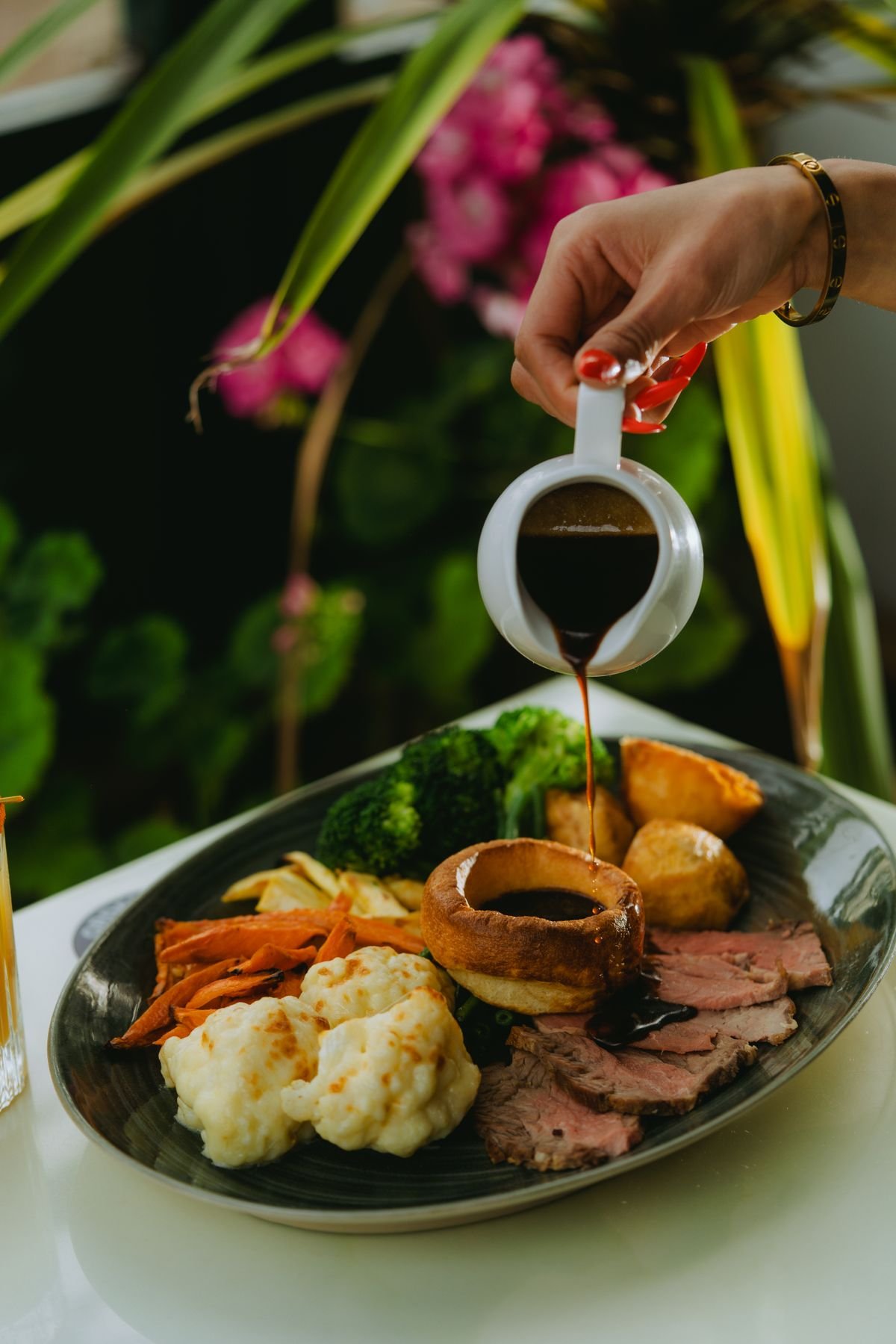
5. Make Gravy from Drippings
Make Gravy from Drippings — Whisk flour into the roasting pan’s drippings, then add stock gradually — real dripping gravy beats any mix. Scrape up every browned bit; that’s pure flavor.
6. Use a Slurry, Not a Roux, for Fixes
Use a Slurry, Not a Roux, for Fixes — Lumpy gravy? Whisk a tablespoon each of flour and cold water, drizzle in while whisking over heat. Slurry fixes gravy in 60 seconds with zero lumps.
7. Par-Boil Potatoes Before Roasting
Par-Boil Potatoes Before Roasting — Simmer potato chunks 8 minutes, rough up the edges, then roast in hot fat. The roughed edges turn into shattering crisp crusts — the crispiest roast potatoes of your life.
8. Cook Vegetables in the Drip Pan
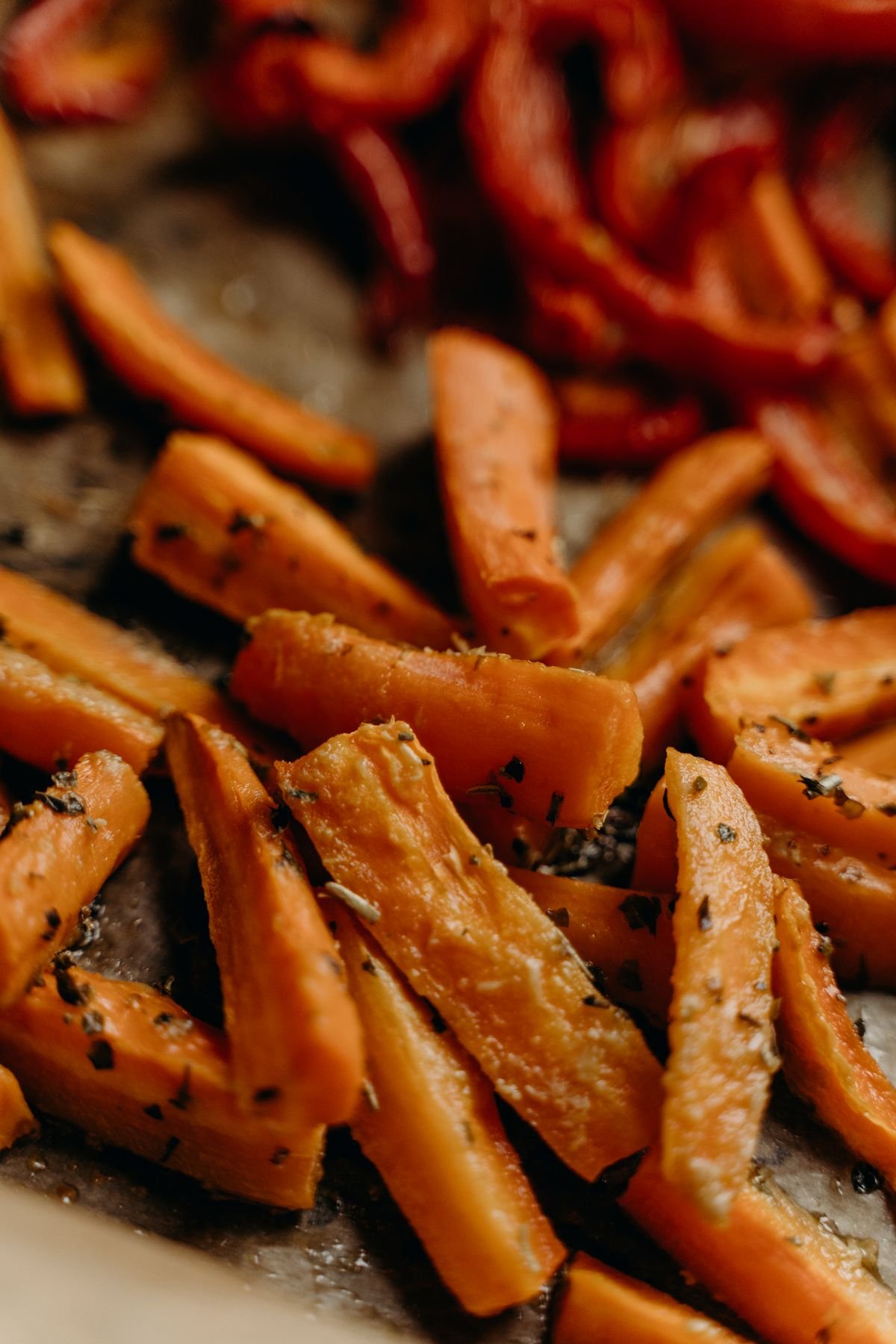
Cook Vegetables in the Drip Pan — Nest carrots, onions and potatoes under the roasting meat — they baste in drippings all afternoon. These taste better than any separately cooked vegetable, with zero extra effort.
9. Mash Potatoes with Warm Dairy
Mash Potatoes with Warm Dairy — Warm the milk and melt the butter before mashing — cold dairy cools potatoes into glue. Warm dairy absorbs smoothly for fluffy, lump-free mash.
10. Rice the Potatoes, Don’t Mash
Rice the Potatoes, Don’t Mash — Push cooked potatoes through a ricer instead of mashing — zero lumps, zero overworking, cloud-like texture. Overworked potatoes turn gummy; riced ones never do.
11. Blanch Green Vegetables Ahead
Blanch Green Vegetables Ahead — Blanch green beans or broccoli in the morning, shock in ice water, and sauté to finish at dinner. They stay bright green and take 3 minutes at serving time.
12. Make Yorkshire Pudding in a Hot Pan
Make Yorkshire Pudding in a Hot Pan — The pan and fat must be smoking hot before batter hits — that’s what makes them puff dramatically. Cold pan equals flat, greasy discs.
13. Time Backwards from Serving
Time Backwards from Serving — Write the serving time, then schedule everything backwards — roast rests 20 min, potatoes roast 45, etc. A written timeline turns chaos into calm; winging it turns dinner into stress.
14. Use the Oven’s Full Capacity
Use the Oven’s Full Capacity — Roast meat on the middle rack with sides above and below — everything shares the heat. Sunday dinner is an oven-tetris game; plan the rack layout before preheating.
15. Warm the Serving Plates
Warm the Serving Plates — Stack plates in the warming oven or run under hot water — hot food on cold plates goes lukewarm in minutes. Restaurants do this for a reason.
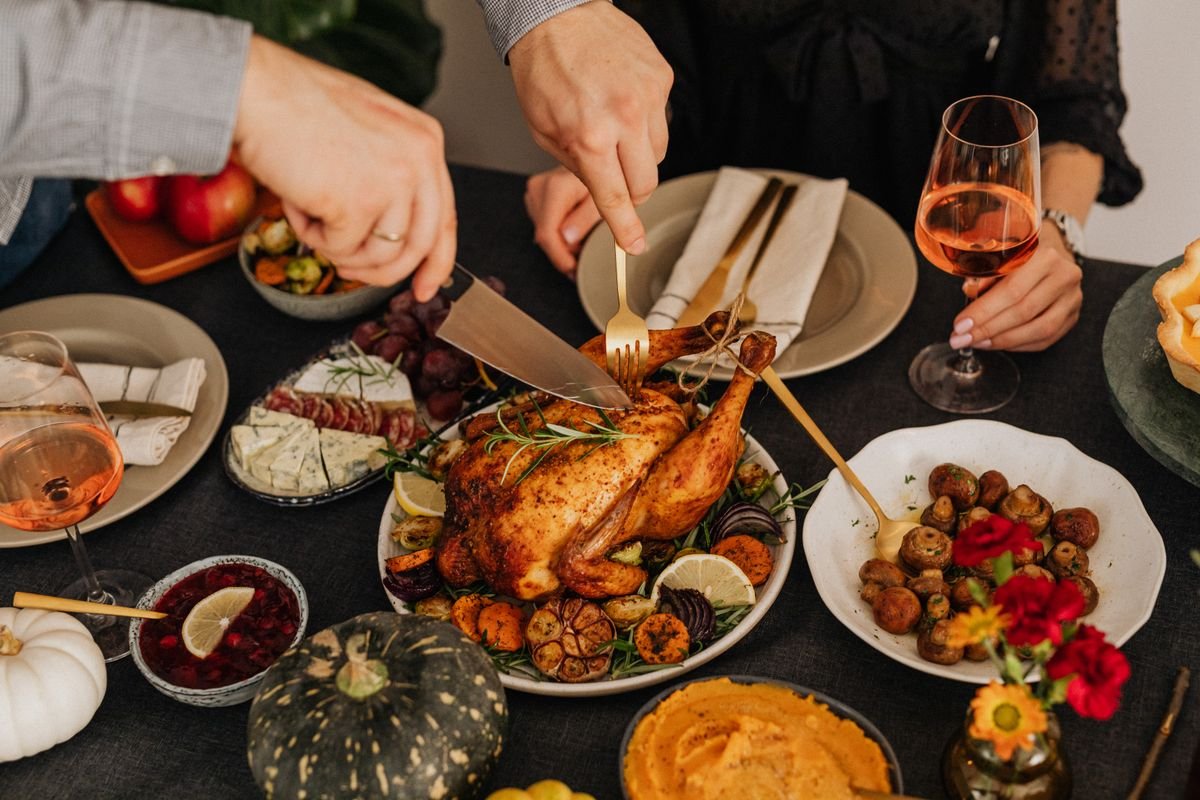
16. Carve at the Table
Carve at the Table — Carving the roast tableside turns dinner into an event and keeps meat hotter than pre-sliced platters. One sharp knife and a little theater go a long way.
17. Save Vegetable Trimmings for Stock
Save Vegetable Trimmings for Stock — Onion ends, carrot peels and celery tops go in a freezer bag for stock — Sunday’s trimmings become next week’s soup base. Waste nothing from a big cook.
18. Deglaze the Roasting Pan
Deglaze the Roasting Pan — After the meat rests, splash wine or stock into the hot roasting pan and scrape — instant jus in 2 minutes. The fond on that pan is the best flavor in the kitchen.
19. Season in Layers
Season in Layers — Salt the meat a day ahead, season vegetables before roasting, adjust gravy at the end. Layered seasoning builds depth; last-minute salting only seasons the surface.
20. Make Extra for Monday
Make Extra for Monday — Roast a slightly bigger joint or double the potatoes deliberately — Sunday’s leftovers are Monday’s easiest dinner. Plan the second meal, don’t just hope for it.
21. Keep Sides Simple
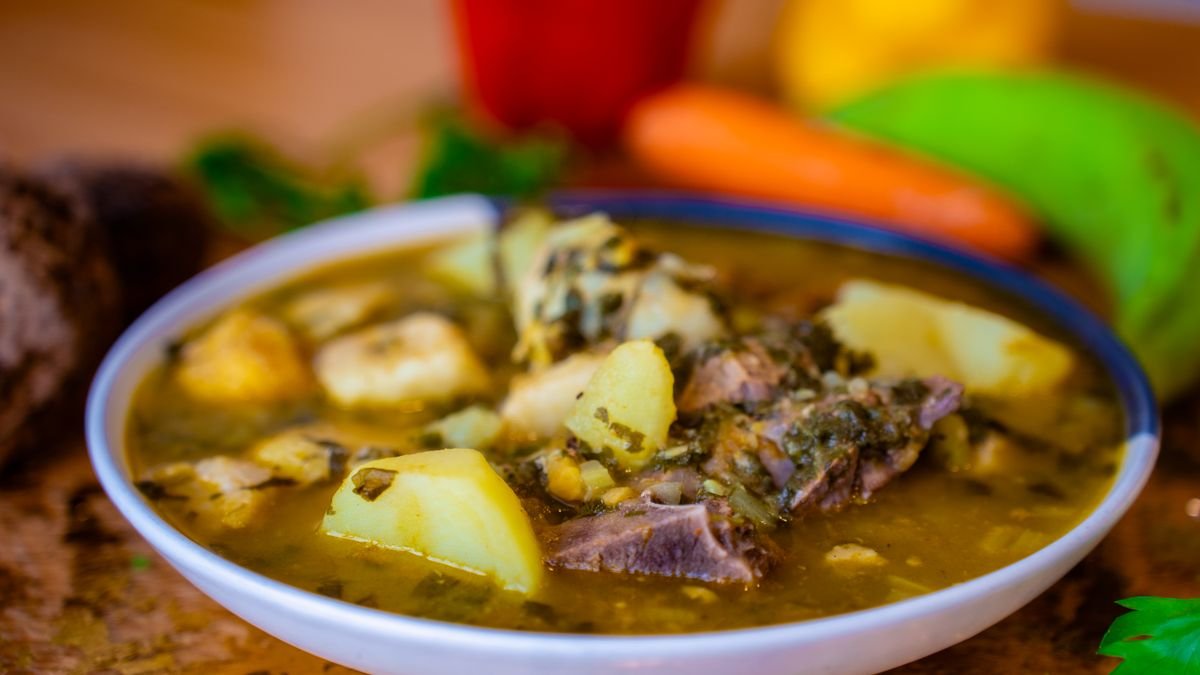
Keep Sides Simple — One star protein, two simple sides, one salad — restraint beats a sprawling, stressful spread. Three perfect dishes impress more than six mediocre ones.
22. Use Compound Butter on Everything
Use Compound Butter on Everything — Mash softened butter with garlic, herbs and lemon zest — melt over roast meat, vegetables and rolls. One batch elevates the entire table.
23. Tent Foil to Control Browning
Tent Foil to Control Browning — If the roast browns too fast, tent loosely with foil and continue cooking. Foil shields without steaming when tented, not wrapped tight.
24. Let the Oven Do the Work
Let the Oven Do the Work — Choose braises and slow roasts over fussy techniques for Sunday — the oven’s steady heat is more reliable than stovetop babysitting. Low and slow forgives; high and fast punishes.
25. Serve Family Style
Serve Family Style — Platters in the center beat individual plating for Sunday dinner — less work, warmer food, better conversation. Passing dishes is part of the ritual.
26. Make Dessert Ahead
Make Dessert Ahead — Sunday dessert should be fully done by Saturday — pies, cobblers and trifles all improve with a rest. Dessert should never compete with dinner for oven space.
27. Keep a Carving Board with a Groove
Keep a Carving Board with a Groove — A board with a juice groove catches the runoff that would otherwise flood the table. Pour those juices back over the sliced meat — free flavor.
28. Reheat Leftovers Low and Slow
Reheat Leftovers Low and Slow — Warm leftover roast at 300°F covered with a splash of broth — gentle heat keeps it juicy. The microwave is where good roast goes to become shoe leather.
29. End with Coffee and Something Small
End with Coffee and Something Small — A proper Sunday dinner ends lingering — coffee plus one small sweet. The unhurried ending is what makes it feel like Sunday, not just dinner.
30. Write Down What Worked
Write Down What Worked — Note the roast weight, temp, timing and what everyone loved. Next Sunday you repeat the wins instead of re-guessing — tradition is just recorded success.